
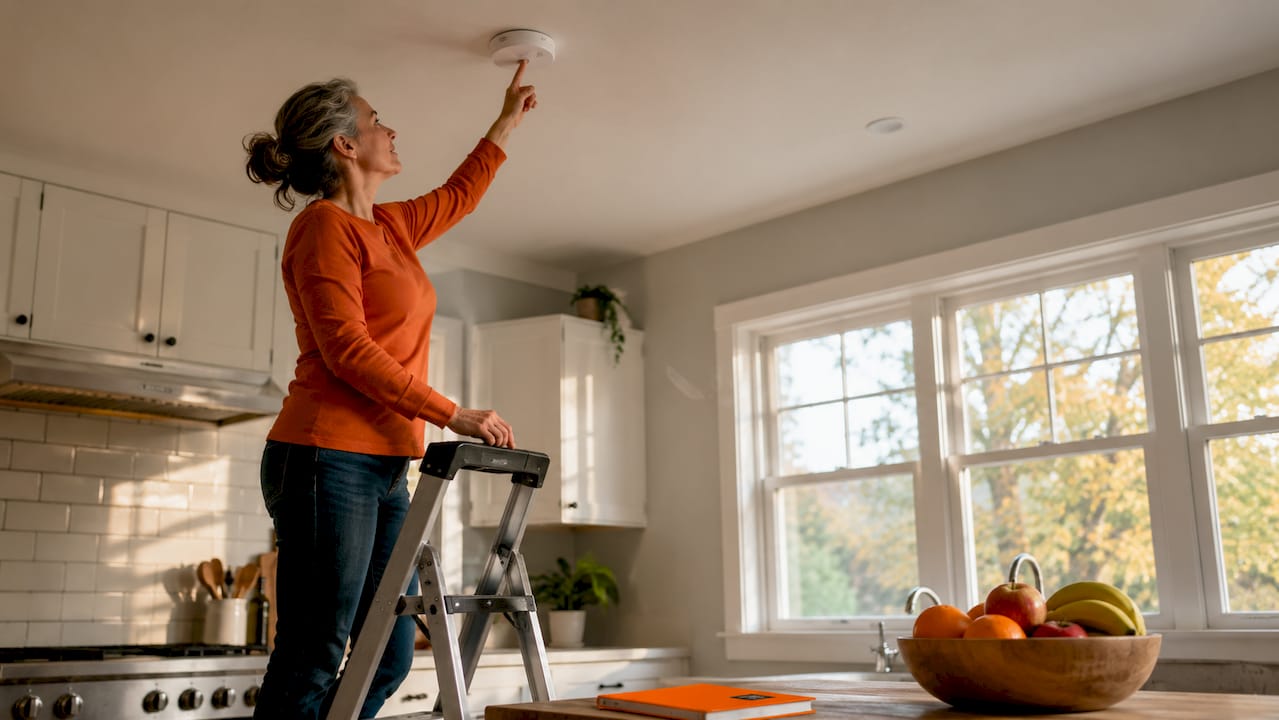
Working smoke alarms reduce the risk of dying in a home fire by approximately 60%, making regular testing one of the highest-value safety habits a homeowner or renter can build. Checking smoke alarms means more than pressing a button once a year. It covers monthly functional tests, annual battery replacement, sensor cleaning, and full unit replacement every 10 years. The National Fire Protection Association (NFPA) and the U.S. Fire Administration (USFA) both publish clear guidelines on smoke alarm testing frequency, yet millions of homes remain unprotected because alarms are ignored, disabled, or simply too old to work. This guide explains exactly why smoke alarm checks matter, how to do them correctly, and what to watch for when something goes wrong.
Why check smoke alarms every single month
Three out of five home fire deaths occur in homes without working smoke alarms. That single statistic defines the entire case for regular testing. A detector mounted on your ceiling is not automatically a working detector. Dust, aging sensors, dead batteries, and accidental disabling all create the same outcome: silence when a fire starts.
The USFA and NFPA both recommend testing every smoke alarm in your home once a month. Monthly testing catches battery drain, sensor faults, and wiring issues before they become fatal gaps in your protection. Fire safety experts caution against treating alarms as “set and forget” devices because dust and environmental factors reduce reliability over time. Active monthly testing is the only way to confirm your alarms will actually sound during an emergency.
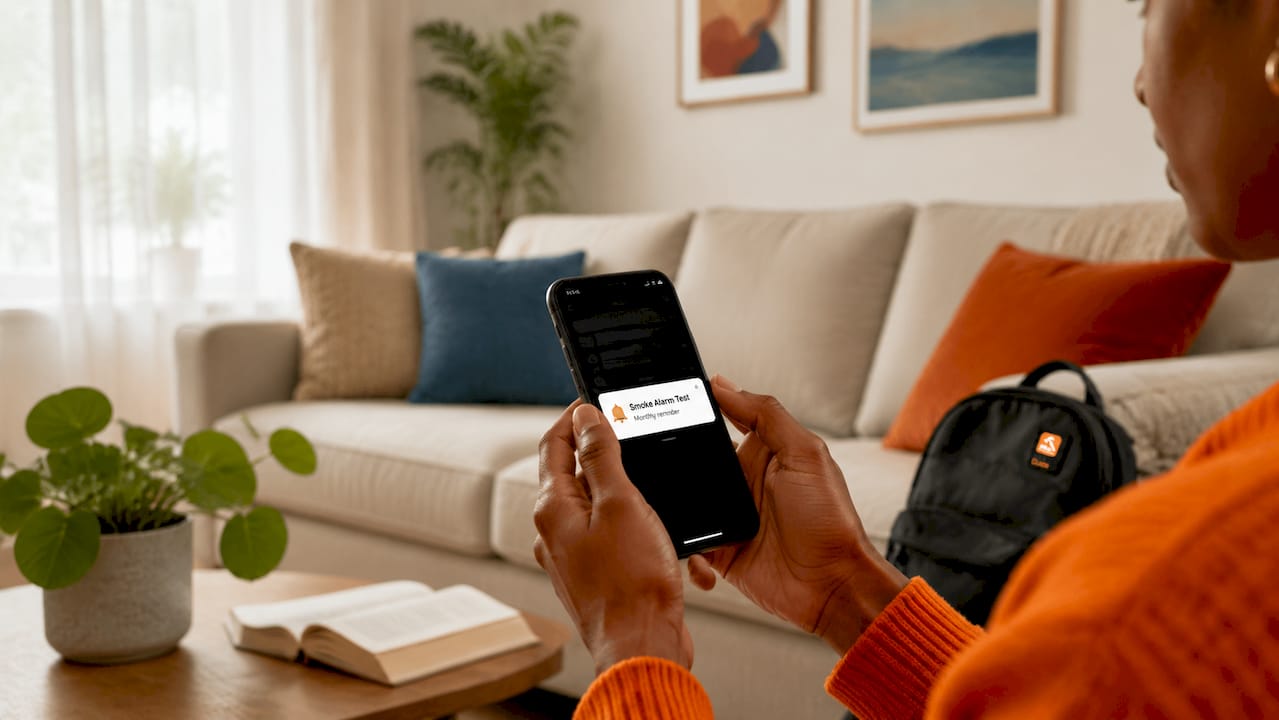
The gap between intention and action is wide. Approximately 31% of residents admit to never having checked their smoke alarms in the last year, and 1 in 4 lack confidence in how to test them correctly. That means roughly a third of households are operating on assumption rather than verified safety. Pairing your monthly test with an existing habit, such as the first day of each month or a recurring calendar reminder, removes the friction that causes most people to skip it.
Here is a simple monthly and annual schedule to follow:
- Monthly: Press and hold the test button on every alarm until you hear a loud, continuous tone.
- Monthly: Walk through each room to confirm the sound is audible from every sleeping area.
- Annually: Replace all batteries, even if the alarm has not chirped a low-battery warning.
- Every 10 years: Replace the entire unit, regardless of whether it appears to be functioning.
- After any trigger event: Test immediately after a nuisance alarm, power outage, or battery swap.
Pro Tip: Set a recurring phone reminder on the first of every month labeled “Smoke Alarm Test.” It takes under two minutes and removes the guesswork entirely.
What does checking a smoke alarm actually involve?
Testing a smoke alarm correctly takes less than two minutes per unit, but most homeowners have never been shown the right way to do it. The process starts with pressing and holding the test button, which is typically located on the face of the unit. A working alarm sounds loud and steady when the button is held. A weak, brief, or absent sound signals a low battery or internal fault that needs immediate attention.
Battery replacement is the most common smoke detector maintenance task. Replace batteries at least once a year, or immediately when you hear the low-battery chirp, which is typically a single beep every 30 to 60 seconds. After replacing the battery, some alarms require a full reset by holding the test button for several seconds to clear any stored fault codes and stop continued chirping. Skipping this reset step is why many homeowners think a new battery did not fix the problem.
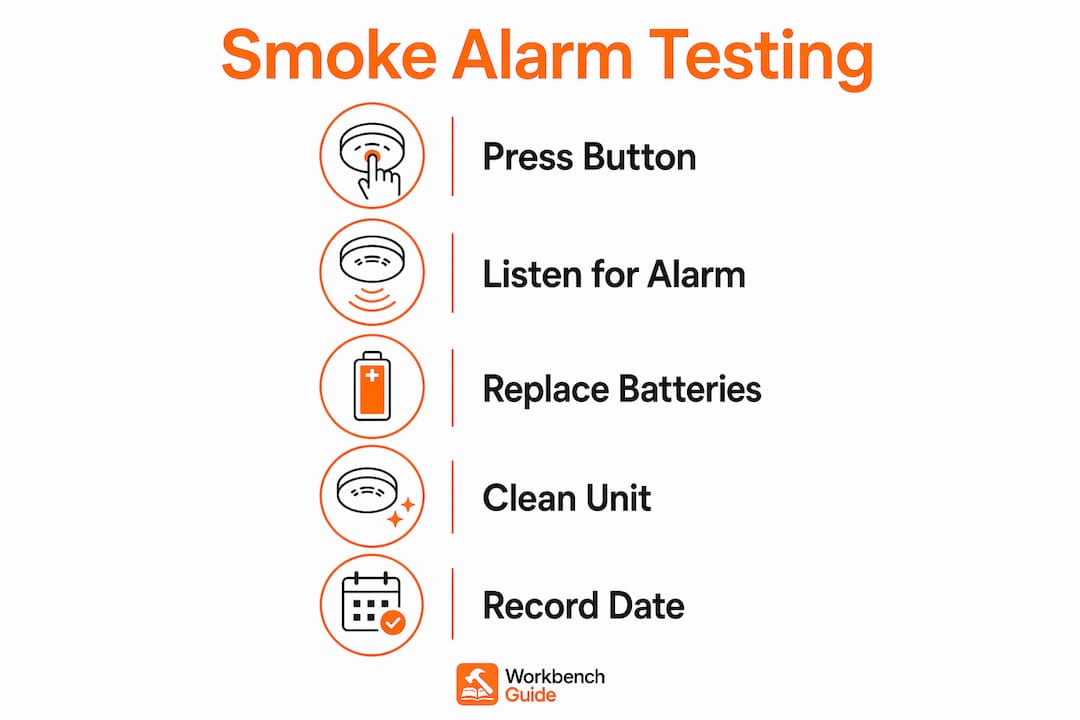
Cleaning is an underrated part of smoke alarm upkeep. Dust and insects can clog the sensing chamber and trigger false alarms or, worse, block real smoke from reaching the sensor. Use a vacuum with a soft brush attachment around the vents every six months. Avoid spraying cleaning products directly on the unit.
Watch for these signs that your alarm needs replacing rather than just servicing:
- The unit is more than 10 years old. Manufacturers recommend replacement every 10 years because sensor sensitivity degrades even when the alarm appears functional.
- The alarm chirps continuously after a fresh battery and a reset attempt.
- The test button produces no sound at all, even with a new battery installed.
- The unit has visible yellowing, cracks, or physical damage to the casing.
Pro Tip: Write the installation date in marker on the back of every alarm when you mount it. You will never have to guess whether it is time for replacement.
Ionization vs. photoelectric: which type needs what kind of care?
Not all smoke alarms detect fire the same way, and the type you own affects both your testing routine and your false alarm rate. Understanding the difference helps you make smarter decisions about placement and replacement.
| Feature | Ionization alarms | Photoelectric alarms |
|---|---|---|
| Detection strength | Fast-flaming fires | Slow, smoldering fires |
| False alarm risk | Higher near kitchens and bathrooms | Lower near kitchens and bathrooms |
| Best placement | Bedrooms, hallways away from cooking | Near kitchens, living areas |
| Nuisance trigger cause | Steam, cooking aerosols | Less susceptible to steam |
| Recommended for budget buyers | Secondary choice | Primary choice |
Photoelectric alarms are less prone to nuisance triggering from steam and cooking aerosols, making them the better choice near kitchens and bathrooms. Ionization alarms respond faster to open, flaming fires and work well in bedrooms and hallways. Combination alarms containing both sensor types provide the fastest response across all fire types and are the gold standard when budget allows.
The practical implication for your testing routine is straightforward. Photoelectric alarms near the kitchen are less likely to produce false positives during your monthly test, so a failed test there is a genuine red flag. Ionization alarms in bedrooms may occasionally chirp from humidity, but a failed test button response is always a problem regardless of type.
Interconnected alarm systems add another layer of protection by triggering all units simultaneously when one detects smoke. This matters most in larger homes where a fire starting in the basement might not be audible from a second-floor bedroom with the door closed. A closed bedroom door reduces the audible alarm level by 20 to 25 decibels, which is enough to prevent a sleeping occupant from waking up. Interconnected systems eliminate that risk entirely.
Common challenges with smoke alarm upkeep and how to fix them
The most dangerous smoke alarm is one that has been deliberately disabled. Low-battery chirps and nuisance false alarms are the two leading reasons homeowners remove batteries or take units off the ceiling entirely. Both problems are solvable without sacrificing protection.
Nuisance alarms from cooking are the most common complaint. The fix is not to remove the alarm. It is to relocate it or replace it with a photoelectric model. NFPA guidelines recommend placing alarms at least 10 feet from cooking appliances to reduce false triggers. If your kitchen alarm fires every time you make toast, that is a placement problem, not a reason to disable the device.
Misconceptions about alarm functionality create a false sense of security. Many homeowners believe that if an alarm has not chirped or gone off recently, it must be working fine. Visible indicator lights and silence do not guarantee sensor functionality. Dust and aging degrade the sensing chamber without producing any outward sign of failure. The only way to confirm function is to press the test button.
“During sleep, humans lose the ability to smell smoke. Only a loud, functioning alarm provides the critical seconds needed to escape a fire.” — Fire Rescue Victoria
Placement errors are another overlooked issue. Alarms installed only in hallways outside bedrooms can fail to wake sleeping occupants because a closed door absorbs too much sound. Place alarms inside every bedroom, on every level of the home, and near attached garages. This is not optional for renters either. Landlords in most U.S. states are legally required to provide working alarms, but tenants are responsible for reporting failures and, in many cases, replacing batteries.
Smart smoke alarms from brands like Nest Protect and First Alert Onelink address several of these challenges at once. Modern smart alarms with internet connectivity can notify homeowners remotely and reduce false alarms through smarter sensor calibration. They also send low-battery alerts to your phone before the chirping starts, removing the most common trigger for disabling. The technology does not replace monthly testing, but it does make consistent upkeep significantly easier.
Key takeaways
Working smoke alarms, tested monthly and replaced every 10 years, are the single most effective tool for surviving a home fire.
| Point | Details |
|---|---|
| Monthly testing saves lives | Three out of five fire deaths happen in homes with non-working alarms; monthly tests catch failures early. |
| Replace batteries annually | Swap batteries every year and reset the unit after replacement to clear fault codes. |
| Sensor type affects placement | Use photoelectric alarms near kitchens to cut false triggers; use combination alarms for full coverage. |
| Never disable a chirping alarm | Relocate or replace nuisance-triggering alarms instead of removing batteries or taking units down. |
| Replace every 10 years | Sensor sensitivity degrades silently; replace the entire unit on schedule regardless of apparent function. |
The habit most homeowners skip until it’s too late
I have talked with enough homeowners to know that smoke alarm testing falls into the same category as changing the furnace filter or flushing the water heater. Everyone knows it should happen. Almost no one does it on schedule. The difference is that a dirty filter costs you money. A dead smoke alarm can cost you everything.
What surprises me most is how many people believe their alarm is fine simply because it went off last time they burned dinner. A nuisance alarm from cooking smoke tells you the horn works. It tells you nothing about whether the sensor will detect a slow, smoldering fire at 2 a.m. Those are two completely different functions, and only a monthly button test covers both.
I am genuinely enthusiastic about smart alarms for this reason. Nest Protect, for example, sends a phone notification when the battery is low and lets you silence a nuisance alarm from your phone without standing on a chair waving a dish towel. That kind of friction reduction actually changes behavior. People stop disabling alarms when disabling them is no longer the easiest option. That said, smart alarms still need the same 10-year replacement cycle and the same monthly test. Technology does not change the physics of sensor degradation.
My practical advice: treat smoke alarm checks as part of your annual home safety routine, not a separate task you will get to someday. Build it into a monthly walkthrough alongside checking door locks and testing GFCI outlets. Two minutes a month is a reasonable trade for the protection it provides.
— Sean
Make smoke alarm checks part of your home maintenance routine
Smoke alarm testing does not exist in isolation. It belongs inside a broader monthly and annual home maintenance schedule that keeps your entire property safe and functional. Workbenchguide’s home maintenance checklist includes smoke alarm testing alongside other critical safety tasks like carbon monoxide detector checks, chimney inspections, and roof and gutter maintenance. Having everything in one place means nothing gets skipped. If you want to go further in protecting your home from fire-related losses, pairing working alarms with fireproof storage for important documents adds another layer of protection. Use Workbenchguide’s checklists to stay organized, stay safe, and stop relying on memory to protect your home.
FAQ
How often should you test smoke alarms?
Test every smoke alarm in your home once a month by pressing and holding the test button until a loud, steady tone sounds. The NFPA and USFA both recommend this monthly schedule to catch battery failures and sensor faults before they create a safety gap.
What happens if you never check your smoke alarms?
Sensors degrade silently over time, and batteries drain without warning. Homes with non-working alarms account for three out of five home fire deaths, making unchecked alarms one of the most preventable fire risks in any household.
How do you know when to replace a smoke alarm?
Replace the entire unit every 10 years from the installation date, regardless of whether it appears to be working. Sensor sensitivity degrades with age, and no indicator light or test result can confirm full sensor reliability in an aging unit.
Why does my smoke alarm keep chirping after a new battery?
A persistent chirp after battery replacement usually means the unit needs a full reset. Hold the test button for 10 to 20 seconds after installing the new battery to clear stored fault codes. If chirping continues, the unit likely needs to be replaced.
Are photoelectric smoke alarms better than ionization alarms?
Photoelectric alarms are better at detecting slow, smoldering fires and produce fewer false alarms near kitchens and bathrooms. Combination alarms with both sensor types offer the broadest protection and are the recommended choice when replacing older units.