

Skipping routine home inspections feels harmless until a pipe bursts, the furnace quits in January, or a leaky roof quietly destroys your attic insulation. The 60% of fatal home fires that occur in homes without working smoke detectors is just one example of how overlooked maintenance turns into tragedy. Regular inspections are not a luxury for detail-obsessed homeowners. They are the single most reliable way to keep repair costs predictable, your family safe, and your property’s value intact. This guide breaks down exactly what to inspect, when to do it, and when to call a pro.
Table of Contents
- What does a regular home inspection involve?
- How inspections help prevent costly repairs
- Key safety risks: What regular checks really protect against
- DIY vs. pro inspections: What experts recommend
- Why most homeowners skip inspections — and why that’s a mistake
- Next steps: Streamline your inspection routine and protect your investment
- Frequently asked questions
Key Takeaways
| Point | Details |
|---|---|
| Prevention is cheaper | Regular inspections reveal issues early, saving you from major repairs and expenses. |
| Not all tasks need pros | Homeowners can handle many inspection tasks themselves with the right guidance. |
| Safety checks save lives | Routine safety inspections, especially smoke detectors, dramatically reduce life-threatening risks. |
| Simple routines work | Breaking inspections into seasonal or monthly checklists makes upkeep manageable and stress-free. |
What does a regular home inspection involve?
With the stakes clear, let’s outline what regular inspections actually look like for your home.
A home inspection is not one task. It is a layered system of checks spread across different timeframes, from quick monthly tests to full professional evaluations every few years. The goal is to catch deterioration early, before small problems compound into expensive crises. Think of it the way a mechanic thinks about oil changes. You are not waiting for the engine to seize.
The core systems covered in a thorough inspection:
- Roof and attic: Missing shingles, flashing damage, ventilation blockages, and signs of moisture intrusion
- HVAC system: Filter condition, thermostat calibration, visible ductwork, and refrigerant line integrity
- Plumbing: Pipe connections under sinks, water heater age and temperature settings, visible signs of corrosion or slow drainage
- Electrical: Panel labeling, GFCI outlet function, visible wiring condition, and breaker behavior
- Exterior: Foundation cracks, grading slope away from the home, siding condition, and caulking around windows and doors
- Smoke and CO detectors: Battery condition, sensor age (replace every 10 years), and alarm function
- Gutters and drainage: Debris buildup, downspout direction, and signs of water pooling near the foundation
Following preventive home maintenance tasks consistently is what separates homeowners who manage their properties proactively from those who are always reacting to emergencies.
Inspection frequency by system
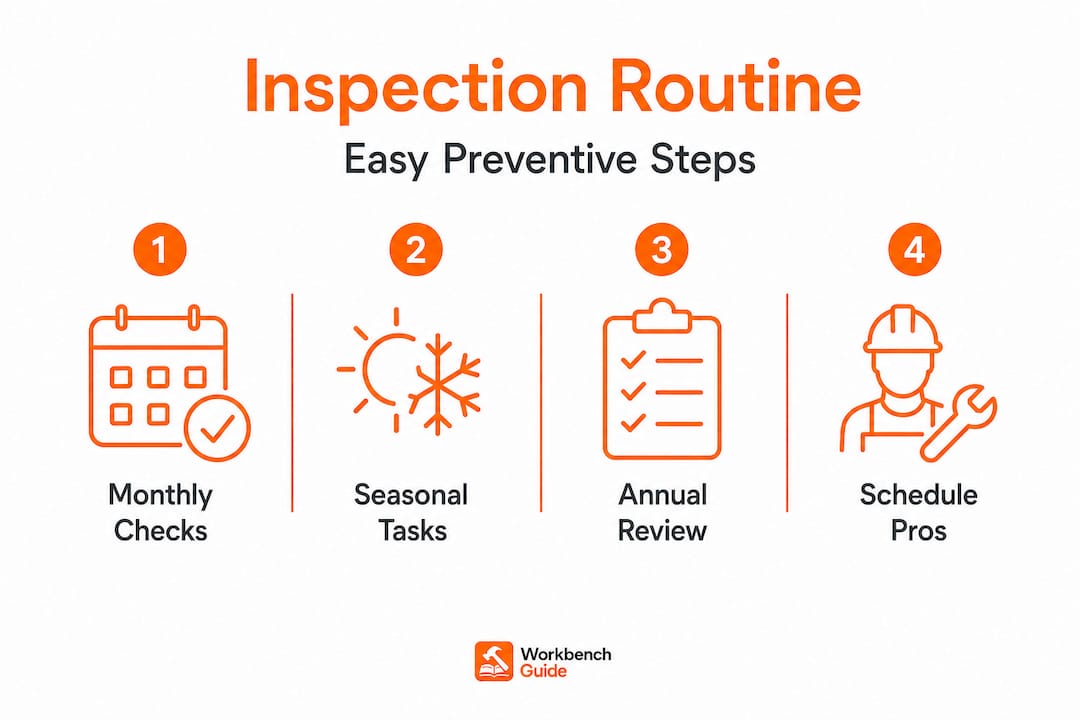
Not every check needs to happen at the same time. According to Freddie Mac’s home maintenance guide, homeowners should test smoke detectors monthly, clean gutters seasonally, and have the roof professionally inspected every three years. Here is how that breaks down practically:
| Frequency | Task | DIY or Pro? |
|---|---|---|
| Monthly | Test smoke and CO detectors, check HVAC filter | DIY |
| Seasonally | Clean gutters, inspect caulking, check sump pump | DIY |
| Annually | HVAC tune-up, water heater flush, pest inspection | Pro recommended |
| Every 3 years | Roof inspection, chimney cleaning, electrical panel check | Pro |
| Every 5+ years | Full exterior waterproofing review, major appliance check | Pro |
The maintenance checklist details behind each of these tasks make it far easier to stay on schedule without feeling overwhelmed.
Pro Tip: Set calendar reminders for every task the moment you move in or when you start your inspection routine. A five-minute detector test on the first day of every month takes less time than filling out a homeowner’s insurance claim.
Homeowners can handle a surprising number of these checks themselves. Changing air filters, cleaning gutters, testing detectors, and visually inspecting your foundation are all well within reach. Where you need a licensed professional is anywhere involving live electrical work, roof repairs, gas lines, or the mechanical components of your HVAC system. Explore detailed home maintenance guides to get step-by-step directions for tasks you can safely tackle on your own.
How inspections help prevent costly repairs
Understanding what inspections cover raises the next question: are they really worth the time and money?
The financial case for regular inspections is overwhelming when you look at real numbers. Emergency repairs almost always cost dramatically more than preventive maintenance. A neglected HVAC system that fails during a heatwave can cost $3,000 to $7,000 to replace, versus $150 for an annual tune-up. A clogged gutter that causes water to back up under your roofline can trigger $5,000 to $15,000 in water damage repairs, versus $100 to clean them out yourself.
Here is a breakdown of common problems and what they cost at the preventive stage versus the repair stage:
| Problem | Preventive cost | Emergency repair cost |
|---|---|---|
| HVAC breakdown | $150 annual tune-up | $3,000 to $7,000 replacement |
| Gutter overflow and roof leak | $0 to $100 DIY cleaning | $5,000 to $15,000 water damage |
| Water heater failure | $50 annual flush | $800 to $1,500 emergency replacement |
| Foundation crack from drainage | $20 caulk and grade fix | $5,000 to $30,000 structural repair |
| Smoke detector failure | $5 to $15 for batteries | Incalculable in fire damage |
Annual HVAC tune-ups do more than just keep the system running. They prevent 70 to 80% of breakdowns and can save 10 to 30% on energy every single month. That combination of avoided repairs and monthly energy savings adds up fast over even a two to three year period.
The real cost of deferred maintenance: Every dollar you save by skipping an inspection can easily turn into ten dollars in emergency repair costs. The math never favors waiting.
Here is a practical numbered sequence for how preventive inspection pays off over time:
- You identify a problem early (cracked caulking around a window, for example)
- You spend $10 and 20 minutes to reseal it this weekend
- Without action, water infiltrates over months, warping the sill and damaging interior drywall
- That ignored problem becomes a $1,500 to $3,000 repair with contractor involvement
- The inspection paid for itself 100 to 300 times over in pure cost avoidance
Consistent preventative maintenance tips like these make the financial case for inspections impossible to argue against. The hardest part is building the habit, not doing the work itself.
Key safety risks: What regular checks really protect against
Cost is not the only motivator. Let’s look at the life-safety risks regular inspections are designed to minimize.
Some maintenance failures are just expensive. Others are deadly. That distinction is important when prioritizing what to check first and how seriously to take it.
NFPA data shows that 60% of fatal home fires occur in homes without working smoke detectors. A monthly 30-second test is all it takes to protect against that statistic.
Smoke detectors and carbon monoxide detectors are non-negotiable. Detectors older than 10 years lose sensing accuracy even if they still beep when tested. Knowing your detector’s manufacture date (printed on the back) is a simple inspection step that could save your life. Replace them on schedule, not just when the battery chirps.
Critical safety checks that regular inspections cover:
- Electrical panel: Overloaded circuits and improperly labeled breakers are among the leading causes of electrical fires. A licensed electrician should inspect your panel every three to five years, especially in homes built before 1990.
- GFCI outlets: These are required near water sources and prevent electrocution. Press the test button on each one monthly. If the outlet does not trip and reset, it needs replacement.
- Sump pump: A failed sump pump during a heavy rain event can flood a basement in hours. Test it seasonally by pouring water into the pit and confirming it activates.
- Gutters and downspouts: Water that pools against your foundation in freezing weather expands and creates cracks. Redirecting downspouts just two to three feet away from the home can prevent major structural damage over time.
- Gas appliances: Inspect connections to your water heater, stove, and dryer annually. A faint sulfur smell near any gas appliance is an immediate call-a-pro situation.
Your annual safety check guide covers each of these in detail with specific steps and what to look for. For seasonal readiness, reviewing seasonal safety prep tasks before winter and spring helps ensure nothing falls through the cracks.
Pro Tip: Walk through your home once a season specifically looking for water stains on ceilings and walls. Brown rings or bubbling paint are almost always signs of an active leak that has been developing for months before it becomes obvious.
DIY vs. pro inspections: What experts recommend
Knowing the risks, it is essential to match the right inspection with the right approach.
Not every inspection task requires writing a check to a contractor. Many of the most valuable checks are genuinely DIY-friendly. The key is understanding where amateur oversight ends and professional expertise begins.
Tasks that are safe and practical for DIY:
- Changing HVAC filters every 1 to 3 months depending on filter rating and household conditions
- Testing smoke and CO detectors monthly
- Inspecting and cleaning gutters each fall and spring
- Checking under sinks and around the toilet base for moisture or soft flooring
- Examining caulking around tubs, showers, and exterior windows
- Testing GFCI outlets
- Visually scanning the attic with a flashlight for daylight gaps or moisture stains
- Flushing the water heater annually to remove sediment buildup
When to call a licensed professional:
- Any electrical work beyond outlet replacement in a code-compliant setting
- Roof repairs or a full roof inspection (walking on a roof without proper gear causes more damage)
- HVAC refrigerant checks and mechanical servicing
- Gas line connections or appliance hookups
- Structural cracks in the foundation that exceed 1/4 inch
- Chimney cleaning and flue inspection
- Full home inspection prior to a purchase or major renovation
The NAHB guidance on routine home maintenance makes an important point: not all identified issues require an immediate fix. Professional inspection reports prioritize urgency and estimate system lifespans, which helps you plan a realistic maintenance budget over one to three years rather than panicking over every finding.
Use step-by-step repair guides for DIY-appropriate tasks and a licensed contractor for everything else. The HVAC maintenance how-to at Workbench Guide walks you through exactly what you can do yourself before calling for a professional tune-up. For situations that get out of hand, having a plan through emergency repair steps can limit damage while you wait for help.
Pro Tip: After any professional inspection, ask your contractor to rate each finding on a scale of urgent, important, and monitor. This turns a potentially overwhelming list into a manageable, prioritized roadmap you can budget against over the next 12 to 36 months.
Why most homeowners skip inspections — and why that’s a mistake
Let’s be honest about why inspections slip off the radar for most people. It is not laziness. It is the same logic that makes us skip the dentist when nothing hurts: if nothing seems wrong, why invest time and money to check?
That thinking is exactly backwards. The entire value of a routine inspection is that it finds the problems before they announce themselves. By the time your HVAC is making noise, your roof is leaking visibly, or your circuit breaker is tripping regularly, the easy window to fix things cheaply has already closed.
There is also a real mental barrier around not knowing what you are looking at. Many homeowners walk past warning signs, like slight discoloration on a ceiling, a slow-draining shower, or a musty smell in the basement, because they do not confidently connect them to specific issues. That uncertainty breeds inaction.
The conventional advice is to “just call a pro once a year.” That is fine as far as it goes, but it misses the bigger habit problem. Annual professional inspections catch things. But the 11 months in between are where small issues turn into big ones. Monthly and seasonal DIY checks fill that gap.
The real solution is not more willpower. It is a better system. When inspection tasks are broken into bite-sized, time-blocked actions tied to seasons or calendar dates, they stop feeling like a burden and start functioning like a routine. A 20-minute walkthrough each season, paired with a clear checklist, accomplishes more than an annual inspection marathon that exhausts you and still misses things.
The homeowners who do this well are not more motivated than everyone else. They have simply built the structure that makes doing the right thing easier than skipping it. Investing in preventative maintenance insights now is what separates property owners who feel in control from those who are always dreading the next expensive surprise.
Next steps: Streamline your inspection routine and protect your investment
If you are ready to move from worry to action, here is how to get started with simple, effective routines.
The first step is having a clear, organized checklist that tells you exactly what to do and when. Workbench Guide’s complete home maintenance checklist breaks every task down by frequency so you never have to wonder what is due next. Pair it with the more preventative maintenance tips on the site to build a custom routine around your home’s specific systems and age. For homeowners who want structured, printable tools, the downloadable guides and checklists library covers everything from seasonal walkthroughs to appliance-specific inspection forms. Workbench Guide is designed to be your maintenance partner year-round, keeping you organized, ahead of repairs, and confident about what comes next.
Frequently asked questions
How often should I schedule professional home inspections?
Most experts recommend an annual inspection for major systems, with the roof inspected every three years and HVAC serviced annually by a licensed technician.
What are the most important checks I can do myself?
Test smoke detectors monthly, change your HVAC filter every one to three months, and clean gutters each spring and fall to prevent the most common and costly home issues.
How do regular inspections save me money?
Small problems caught early, like a worn HVAC component or slow drain, cost a fraction of what they grow into. Annual HVAC tune-ups alone prevent 70 to 80% of breakdowns, which can each cost thousands of dollars.
Are smoke detector checks really that important?
Absolutely. 60% of fatal home fires happen in homes where smoke detectors are not working, making monthly tests one of the highest-value maintenance habits you can build.