
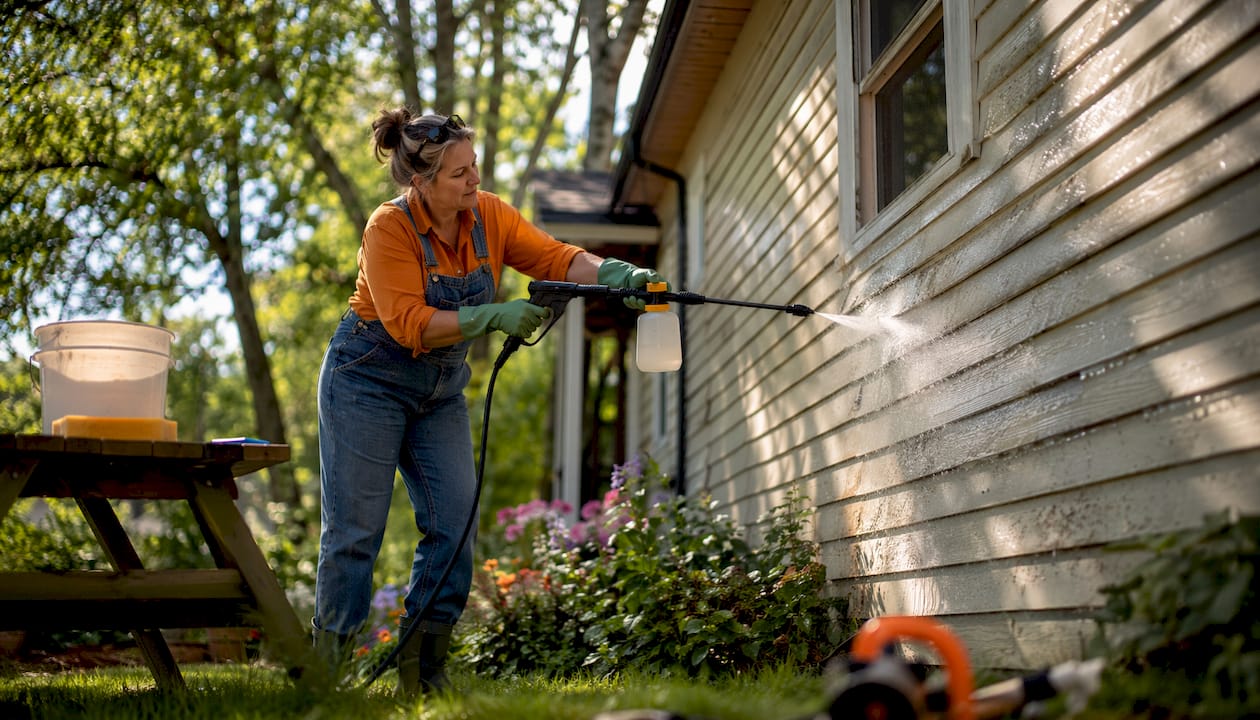
Exterior cleaning is the process of safely removing dirt, mold, algae, and pollutants from your home’s outdoor surfaces to protect its structure and maintain curb appeal. Most homes require thorough cleaning 1–2 times per year to prevent permanent damage from organic buildup. Skip that schedule and you risk mold working into your siding, staining concrete, and quietly eroding the materials that hold your home together. The right exterior cleaning tips make the difference between a surface that lasts decades and one that needs replacing far too soon.
1. What are the best exterior cleaning methods for each surface?
The surface you are cleaning determines the method you use. Choosing the wrong technique causes more damage than the dirt itself.
Soft washing is the industry standard for delicate surfaces like vinyl siding, stucco, and wood. It operates at 40–60 PSI with specialized detergents that kill mold and algae at the root. That low pressure prevents water from being forced behind siding, which is the hidden cause of most moisture damage homeowners never see coming.
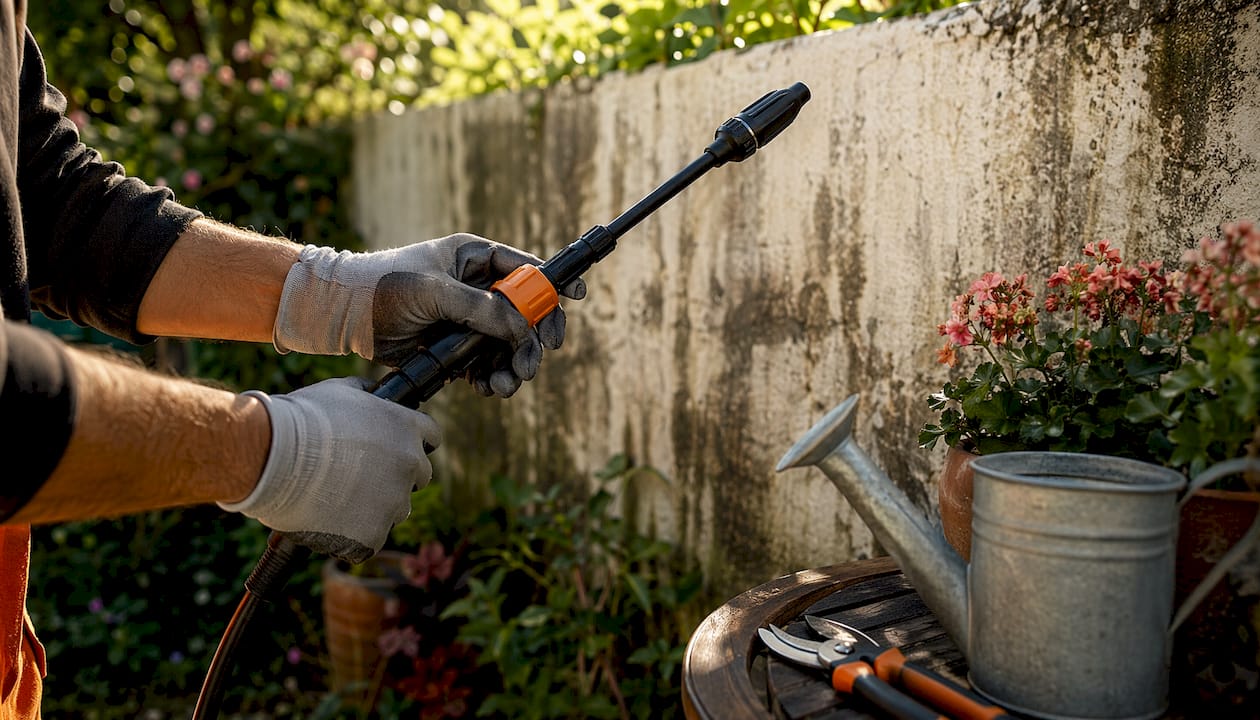
Pressure washing works well on hard surfaces like concrete driveways, brick walls, and stone paths. These materials can handle higher PSI without damage, but you still need to match the nozzle to the job. A 25-degree nozzle suits most concrete work, while a 40-degree nozzle is safer for brick. Concrete and stone surfaces also benefit from surface cleaner attachments, which spin the water evenly and eliminate the streaking that a single wand creates.
Manual cleaning is the right call for trim, window frames, decorative features, and spot stains. A soft-bristled brush with a mild solution of 1 cup white vinegar per gallon of water handles most light mildew and grime without any risk to the finish.
- Vinyl siding: soft wash at 40–60 PSI, eco-friendly detergent
- Wood siding: soft wash only, no high pressure
- Stucco: soft wash with low-alkaline cleaner
- Brick: pressure wash at medium PSI, 25-degree nozzle
- Concrete: pressure wash with surface cleaner attachment
- Trim and window frames: manual scrub with mild solution
Pro Tip: Never use a zero-degree (red) nozzle on any residential surface. It concentrates pressure into a pinpoint stream that cuts into wood, etches concrete, and strips paint.
2. How to prepare your home before cleaning the exterior
Preparation prevents the two most common DIY mistakes: water intrusion and plant damage. Spend 20 minutes on prep and you will save hours of cleanup and repair.
- Inspect siding and trim. Walk the full perimeter and look for caulk failures, loose panels, and stucco cracks. Water pushed into even a small gap during washing can cause hidden mold behind the wall.
- Close all windows and doors. Check that every window is fully latched. Cover exterior electrical outlets and light fixtures with plastic sheeting and painter’s tape.
- Pre-wet your plants. Soak all shrubs, grass, and garden beds near the house before you start. Saturated soil and leaves absorb less chemical runoff. You can find a full seasonal prep checklist at Workbenchguide to make this step easier.
- Move furniture and obstacles. Clear patio furniture, potted plants, grills, and toys at least 10 feet from the work area.
- Set up your ladder safely. Place it on firm, level ground. Never lean a ladder against vinyl gutters. Use a standoff bracket to keep the ladder away from the siding surface.
Pro Tip: Cover your AC condenser unit with a plastic tarp before washing nearby walls. Cleaning solution that coats the fins can corrode the coil over time.
3. Step-by-step exterior cleaning process
A consistent process produces a streak-free result and protects both your surfaces and your landscaping.
Step 1: Remove loose debris. Use a broom or leaf blower to clear cobwebs, leaves, and dirt from walls, soffits, and corners before any water touches the surface.
Step 2: Pre-rinse with plain water. Wet the entire section you plan to clean. This loosens surface grime and gives cleaning solutions a wet surface to work with, which improves coverage.
Step 3: Apply cleaning solution from the bottom up. Working upward prevents the solution from running down dry siding and leaving streaks. The bottom-up application rule is one of the most overlooked steps in DIY cleaning. Let the solution dwell for 5–10 minutes, but do not let it dry on the surface.
Step 4: Test before you commit. Apply your cleaning solution to a small, hidden area first. Testing on an inconspicuous spot prevents discoloration and finish damage that cannot be undone. This one step separates careful DIYers from expensive mistakes.
Step 5: Rinse from the top down. Start at the roofline and work toward the ground. This washes loosened dirt and chemicals downward in a single pass, leaving no residue behind.
Step 6: Rinse your landscaping continuously. Pre-wetting and rinsing plant life throughout the cleaning cycle protects roots and leaves from chemical burns. Do not wait until the end.
Common mistakes to avoid:
- Using high pressure on wood or stucco, which forces water behind the surface
- Letting cleaning solution dry before rinsing
- Skipping the test patch on new or painted surfaces
- Washing in direct sunlight, which causes solutions to evaporate too fast
- Pointing the pressure wand upward at siding seams, which drives water inside
4. Maintenance tips for long-lasting exterior cleanliness
Regular outdoor cleaning advice goes beyond the annual wash. A consistent maintenance routine catches small problems before they become expensive repairs.
Cleaning frequency. Most homes need exterior washing 1–2 times per year. Homes in humid climates, near the coast, or under heavy tree cover may need cleaning every six months. That frequency prevents mold and algae from establishing deep roots in porous surfaces.
Seasonal timing. Spring is the best time for a full exterior wash because it removes the salt, grime, and biological growth that built up over winter. A lighter fall cleaning before cold weather sets in protects surfaces through the freeze-thaw cycle.
Inspections between cleanings. Walk your exterior every three months and look for new caulk failures, paint bubbling, or dark staining. Catching a small crack early costs a tube of caulk. Missing it can cost thousands in water damage repair. Workbenchguide’s siding inspection guide covers exactly what to look for between cleaning cycles.
Roof and gutter care. Gutters clogged with debris overflow onto siding and accelerate staining and mold growth. Clean gutters at least twice a year as part of your exterior maintenance routine.
Eco-friendly practices. Use biodegradable detergents wherever possible. They break down safely in soil and protect the plants and waterways near your home. Avoid bleach-heavy solutions on surfaces near gardens or painted wood unless the product is specifically rated for that use.
Key takeaways
Effective exterior maintenance combines the right cleaning method for each surface, thorough preparation, and a consistent annual schedule to prevent costly structural damage.
| Point | Details |
|---|---|
| Match method to surface | Use soft washing at 40–60 PSI for vinyl and stucco; pressure washing for concrete and brick. |
| Prepare before you clean | Inspect for caulk failures, close windows, and pre-wet plants before any water or chemical is applied. |
| Apply bottom-up, rinse top-down | This sequence prevents streaking and removes all chemical residue in a single pass. |
| Test every new solution | Apply to a hidden area first to avoid discoloration or finish damage on siding. |
| Clean 1–2 times per year | Annual or biannual cleaning prevents mold, algae, and pollutant buildup from causing permanent damage. |
What I have learned from years of DIY exterior cleaning
The mistake I see most often is homeowners renting a pressure washer and turning the PSI up as high as it will go. The logic makes sense on the surface: more pressure means cleaner results. The reality is the opposite. High-pressure washing on delicate surfaces drives water behind siding, creates invisible moisture pockets, and sets up the exact mold problem you were trying to prevent.
Soft washing changed how I approach every exterior job. Once you understand that the chemical does the work and the water just rinses it away, you stop reaching for pressure as the solution. A well-mixed detergent at 50 PSI outperforms brute force every time on wood, vinyl, and stucco.
The other habit worth building is patience with the test patch. I know it feels like an extra step when you are ready to get started. But I have seen a single untested cleaning solution strip the finish off painted fiber cement siding in under two minutes. That repair cost more than a professional cleaning would have. Test first, clean second, and you will never have that conversation with a contractor.
Exterior cleaning fits naturally into a broader home maintenance routine. Treat it like an oil change, not a one-time event, and your home’s surfaces will last significantly longer.
— Sean
Workbenchguide makes exterior maintenance easier
Keeping your home’s exterior in good shape requires more than a single annual wash. It takes a system: scheduled reminders, step-by-step guides, and a checklist that tells you what to do and when. Workbenchguide is built for exactly that. The platform gives homeowners access to DIY maintenance guides covering exterior cleaning, seasonal prep, inspections, and repairs, all organized by task and timing. Whether you are tackling siding for the first time or building a year-round maintenance schedule, Workbenchguide keeps you organized and ahead of costly problems. Check the home maintenance checklist to see where exterior cleaning fits into your full property care plan.
FAQ
How often should I clean my home’s exterior?
Most homes need exterior cleaning 1–2 times per year. Homes in humid or heavily wooded areas may need cleaning every six months to prevent mold and algae buildup.
Is soft washing safe for all siding types?
Soft washing at 40–60 PSI is safe for vinyl, wood, and stucco siding. It uses low pressure and detergent to remove growth without forcing water behind panels.
What is the best DIY cleaning solution for exterior surfaces?
A mix of 1 cup white vinegar or dish soap per gallon of water works well for light mildew and general grime on most exterior surfaces.
Can I pressure wash my own home without experience?
Yes, but start with a 40-degree nozzle, keep the wand moving, and avoid pointing it upward at siding seams. Test pressure on a hidden area before cleaning visible sections.
When is the best time of year to clean the exterior?
Spring is the best time for a full exterior wash. It removes winter buildup before the growing season and gives you a clear view of any damage that needs repair.
Leave a Reply