
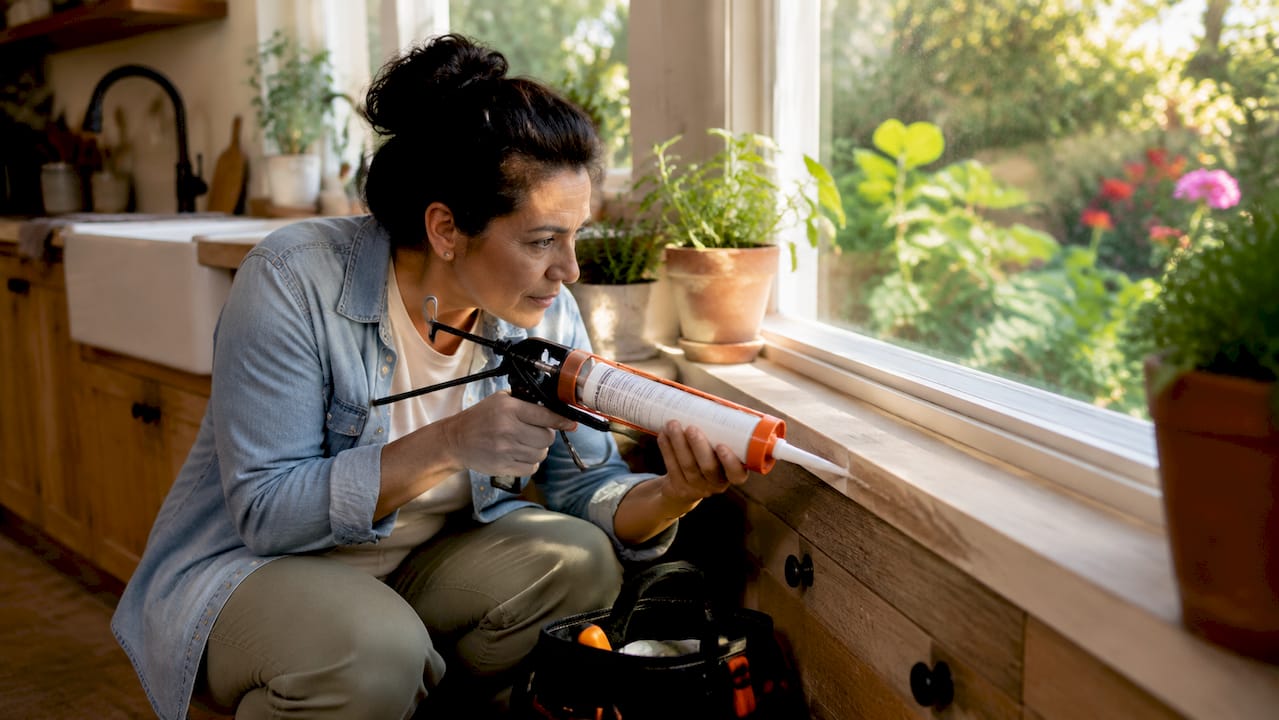
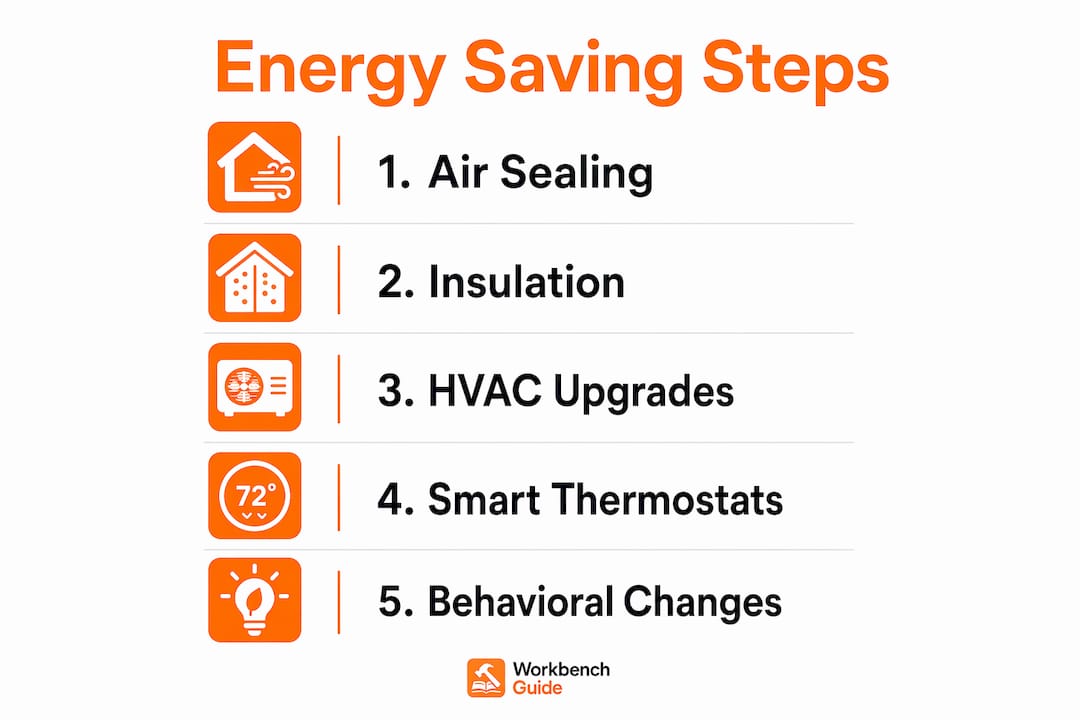
Home energy savings steps are proven methods that reduce utility bills, improve comfort, and lower your home’s environmental footprint. The U.S. Department of Energy and the Environmental Protection Agency confirm that air sealing and insulation alone can cut heating and cooling costs by 10–15%. That single improvement pays for itself within a few seasons. Add smart thermostats, appliance upgrades, and behavioral changes, and the savings compound quickly. The home energy efficiency improvements covered here are ranked by impact, so you can act on the highest-return fixes first.
What are the best home energy savings steps to start with?
Air sealing is the highest-return starting point for most homeowners. Gaps and cracks let conditioned air escape constantly, forcing your heating and cooling system to work harder than it should. The most overlooked leak points are not windows and doors. They are utility penetrations, recessed lighting fixtures, and the spaces behind kitchen and bathroom cabinets.
You can find leaks yourself with a few simple methods:
- Draft feeling: Run your hand along baseboards, window frames, and outlet covers on a cold day. Any cool air movement signals a gap.
- Smoke stick or incense test: Hold a lit incense stick near suspected leak points. Smoke that wavers or bends toward the wall confirms airflow.
- Infrared thermometer: Point it at walls and ceilings to spot cold patches that indicate air infiltration.
- Professional blower-door test: A contractor depressurizes your home and uses a fan to reveal every leak simultaneously. This is the most thorough method available.
Once you find the leaks, the fix is straightforward. Use caulk for gaps around window and door frames. Apply spray foam for larger gaps around pipes and utility penetrations. Add weatherstripping to door edges and door sweeps to the base of exterior doors.
Pro Tip: Prioritize the unsexy leaks. Gaps around pipes in your basement ceiling and behind recessed lights in your attic often waste more energy than a drafty window. Seal those first.
How does insulation affect your heating and cooling costs?
Insulation keeps conditioned air inside your home by slowing heat transfer through walls, floors, and ceilings. Without adequate insulation, your HVAC system runs longer cycles and burns more fuel to maintain the same temperature. The attic is the single most important area to address because heat rises and escapes through the roof.
The U.S. Department of Energy recommends attic insulation levels between R-38 and R-60 depending on your climate zone. Homes in colder northern states need the higher end of that range. Homes in the South can often get by with R-38. Check your current attic insulation depth. If you can see the floor joists, you do not have enough.
Follow these steps to assess and upgrade your insulation:
- Run the touch test. On a cold day, press your hand flat against an interior wall. A cold or damp wall surface signals missing or settled insulation behind it.
- Check the attic floor. Measure insulation depth with a ruler. Anything below 10 inches likely falls short of current recommendations.
- Inspect the crawl space and basement rim joists. These areas are frequently uninsulated and account for significant heat loss in winter.
- Choose the right material. Blown-in cellulose or fiberglass works well for attics and hard-to-reach spaces. Batt insulation suits open wall cavities during a renovation.
- Add insulation in layers. For attics, lay new batts perpendicular to existing ones to cover gaps and eliminate thermal bridging.
Improving home insulation delivers a compounding benefit. Better insulation reduces the load on your HVAC system, which extends equipment life and lowers repair costs over time.
How do HVAC and water heater upgrades reduce home energy costs?
Your heating and cooling system accounts for the largest share of your home’s energy use. Keeping it efficient requires both regular maintenance and strategic upgrades. Annual HVAC maintenance prevents unnoticed efficiency losses and extends equipment life. A tune-up includes cleaning coils, lubricating moving parts, and checking refrigerant levels. Skipping it for even one season can quietly raise your energy bills.
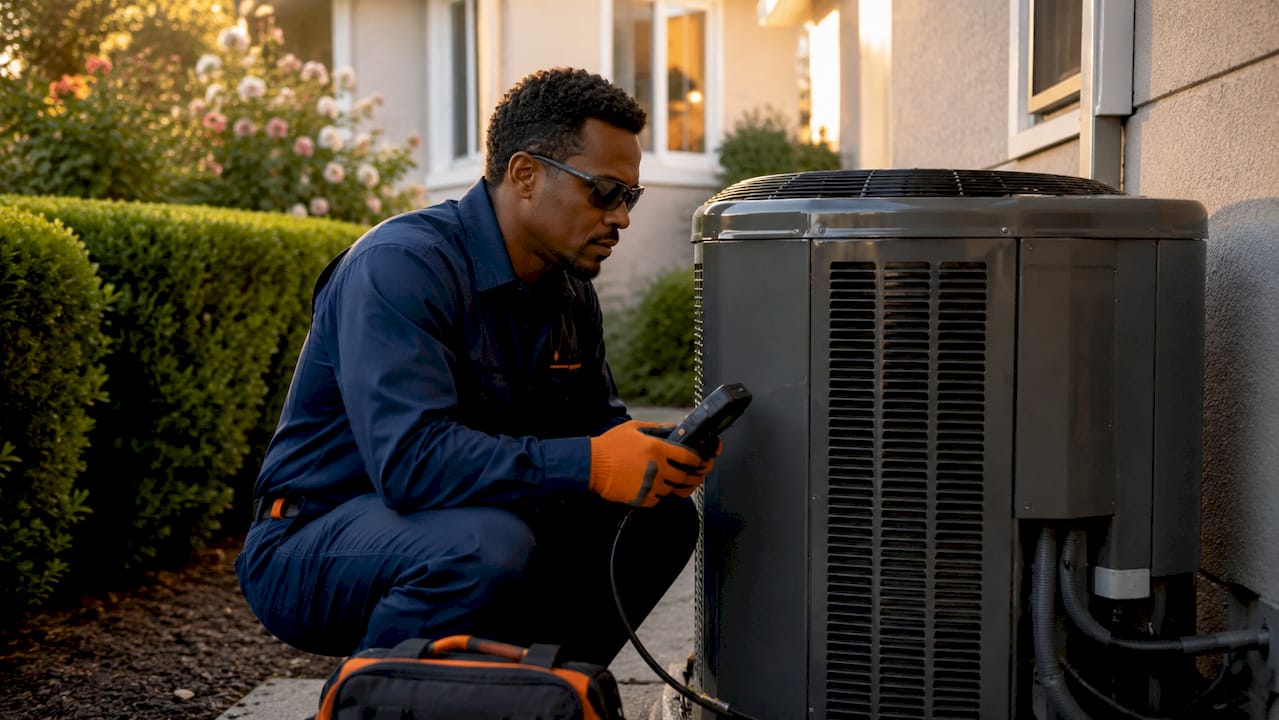
Smart thermostats deliver measurable savings with minimal effort. Models with occupancy sensors or geofencing detect when you leave home and adjust the temperature automatically. Smart thermostat savings average around 8% on annual heating and cooling bills. That adds up to a meaningful amount over a full year, especially in climates with extreme winters or summers.
Your water heater is another significant energy draw that most homeowners ignore. Lowering the water heater temperature from 140°F to 120°F cuts annual energy costs by 4–22% with no noticeable change in shower comfort. Wrapping an older tank with an insulating blanket and insulating the first few feet of hot water pipes further reduces standby heat loss.
Key upgrades and maintenance actions to prioritize:
- Schedule annual HVAC service every fall before heating season starts.
- Replace HVAC filters every 1–3 months depending on household dust levels and pet hair.
- Seal leaky ductwork with mastic sealant or metal tape. Leaky ducts can waste 20–30% of conditioned air before it reaches living spaces.
- Set your water heater to 120°F and service it regularly to flush sediment and maintain efficiency.
- Look for Energy Star certified equipment when replacing any major system.
Pro Tip: Seal your ductwork before upgrading to a higher-efficiency HVAC unit. A new system pushing air through leaky ducts performs no better than the old one.
What behavioral and appliance changes lower energy bills fast?
Structural upgrades matter, but daily habits and appliance choices drive a significant portion of your monthly bill. LED bulbs use up to 90% less energy than incandescent bulbs and last years longer. Replacing every bulb in your home costs less than $100 and pays back within months.
Electronics in standby mode are a hidden drain. Vampire energy from standby devices accounts for 5–10% of household energy use. That is a meaningful slice of your bill for devices that are not actively doing anything. Smart power strips cut power completely to idle devices and eliminate this waste more effectively than standard strips.
Additional ways to save on energy through daily habits:
- Thermostat setbacks: Setting your thermostat 7–10 degrees lower during sleep or when you leave home saves about 10% on heating and cooling costs. Target 68°F in winter and 78°F in summer when home.
- Shorter showers and low-flow fixtures: Installing a low-flow showerhead reduces hot water use without sacrificing pressure. Cutting a 10-minute shower to 6 minutes trims water heating costs noticeably over a month.
- Off-peak appliance use: Running dishwashers, washing machines, and dryers after 9 p.m. takes advantage of lower electricity rates in areas with time-of-use pricing.
- Window management: Closing blinds on south-facing windows in summer blocks solar heat gain. Opening them in winter captures free passive solar warmth.
- Appliance maintenance: Clean refrigerator coils twice a year and check door seals. A refrigerator with dirty coils uses more electricity to maintain temperature. Workbenchguide’s appliance maintenance guide walks through each major appliance step by step.
How do you perform a DIY home energy audit?
A DIY home energy audit is a structured walkthrough of your home to identify where energy is being wasted. You do not need special equipment to get started. A notepad, a flashlight, and your hands are enough for a first pass.
Follow these steps:
- Check all draft points. Walk the perimeter of every exterior wall, window, and door. Note any spots where you feel air movement or see daylight around frames.
- Inspect your insulation. Use the touch test on interior walls and check the attic depth with a ruler.
- Evaluate your HVAC system. Check the filter condition, listen for unusual sounds, and note the age of the unit. Systems older than 15 years often run at significantly reduced efficiency.
- Audit your lighting. Count incandescent or halogen bulbs still in use. Each one is a candidate for an LED swap.
- Review your appliances. Check the age and Energy Star status of your refrigerator, dishwasher, and washing machine. Older appliances without Energy Star ratings use substantially more electricity.
Pro Tip: Take photos during your audit and organize them by room. When you get quotes from contractors or buy materials, you will have a clear record of exactly what needs attention and where.
A DIY audit identifies the obvious problems. A professional audit goes further. Certified energy auditors use blower-door tests and infrared cameras to find leaks and insulation gaps invisible to the naked eye. If your bills remain high after sealing and insulating, a professional audit is worth the cost. Workbenchguide’s home audit guide explains what to expect from both approaches.
Key Takeaways
The most effective approach to reducing home energy costs combines air sealing, insulation upgrades, system maintenance, and consistent behavioral habits applied in order of return on investment.
| Point | Details |
|---|---|
| Air sealing first | Seal utility penetrations, recessed lights, and door frames before any other upgrade. |
| Insulation pays long-term | Attic insulation at R-38 to R-60 reduces HVAC load and extends equipment life. |
| Smart thermostat savings | Occupancy-based setbacks save around 8% on annual heating and cooling bills. |
| Water heater adjustment | Dropping temperature from 140°F to 120°F cuts water heating costs by 4–22%. |
| Audit before spending | A DIY or professional audit identifies the highest-return fixes before you invest. |
What I’ve learned after years of watching homeowners overspend on energy
Most homeowners spend money on the visible upgrades and ignore the invisible ones. New windows get all the attention. Duct sealing and attic bypasses get none. The data tells a different story. A house with perfectly sealed ducts and R-50 attic insulation will outperform a house with brand-new triple-pane windows and a leaky attic every single time.
The other mistake I see constantly is treating energy efficiency as a one-time project. You seal the gaps, add insulation, and consider it done. Then the HVAC filter goes unchanged for 18 months, the water heater sediment builds up, and the savings quietly erode. Energy efficiency is a maintenance practice, not a renovation. The homeowners who keep their bills low year after year are the ones who schedule seasonal checks the same way they schedule oil changes.
Start with a DIY audit. Fix the air leaks. Check your insulation. Then build a maintenance schedule and stick to it. The small checks that prevent big repairs are the same ones that keep your energy bills predictable. That combination of upfront fixes and ongoing care is what actually moves the needle on your utility costs.
— Sean
Workbenchguide makes energy-efficient home care easier
Keeping up with every maintenance task that affects your energy bills is hard to do from memory alone. Workbenchguide gives homeowners a structured system to stay on top of it. The platform includes step-by-step DIY guides for HVAC maintenance, insulation checks, and appliance care, plus seasonal reminders so nothing falls through the cracks. When a job calls for a professional, Workbenchguide connects you with expert advice to make the right call. Start with the home maintenance checklist to build a year-round schedule that covers every system in your home and keeps your energy costs under control.
FAQ
How much can air sealing and insulation save on energy bills?
Air sealing and insulation upgrades reduce heating and cooling costs by 10–15%, according to the U.S. Department of Energy and the Environmental Protection Agency. The exact savings depend on your climate and how leaky your home currently is.
What temperature should I set my thermostat to save energy?
Set your thermostat to 68°F in winter and 78°F in summer when you are home. Dropping or raising it 7–10 degrees during sleep or absence cuts heating and cooling costs by about 10%.
What is vampire energy and how do I stop it?
Vampire energy is the electricity electronics draw while in standby mode, accounting for 5–10% of household energy use. Smart power strips that cut power completely to idle devices eliminate this waste more effectively than standard power strips.
When should I hire a professional energy auditor?
Hire a professional auditor when your bills remain high after completing basic air sealing and insulation improvements. Professionals use blower-door tests and infrared cameras to find hidden leaks and insulation gaps that DIY methods miss.
Does lowering my water heater temperature actually save money?
Lowering your water heater from 140°F to 120°F reduces annual energy costs by 4–22% with no meaningful loss in comfort. It also reduces the risk of scalding and slows mineral buildup inside the tank.