

Pest prevention is the practice of stopping pests from entering and thriving in your home by controlling their access, food, and shelter. The U.S. EPA classifies prevention as the first and most effective step in any pest management strategy, placing it above chemical treatments in priority. Unlike reactive pest control, which responds to an existing infestation, prevention removes the conditions that make your home attractive to pests in the first place. Homeowners and renters who build consistent prevention habits spend less on treatments, face fewer structural risks, and avoid the stress of dealing with established colonies or nests.
What is pest prevention and why does it matter?
Pest prevention is a proactive set of strategies designed to deny pests the three things they need to survive: access, food, and water. The EPA’s access-plus-opportunity model defines this clearly: seal entry points, eliminate moisture, and remove food sources to reduce infestation risks. This framework applies to every common household pest, from rodents and cockroaches to ants and termites.
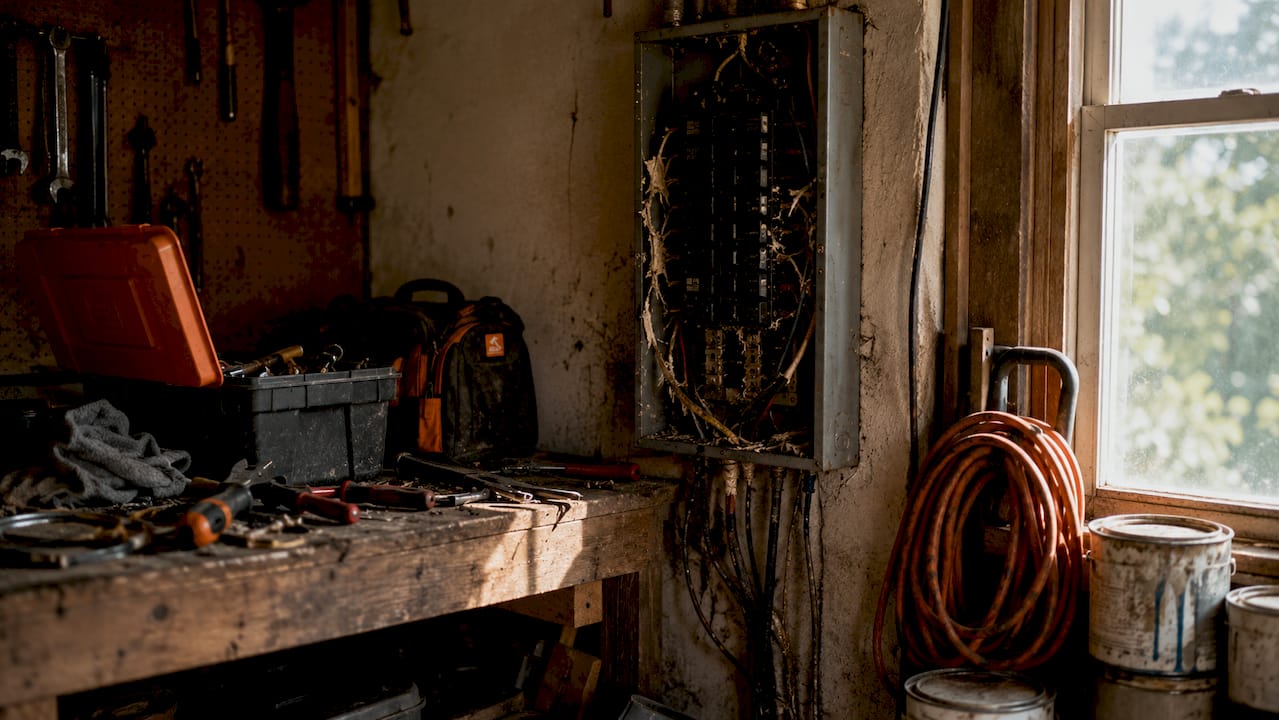
The importance of pest prevention goes beyond comfort. Rodents chew through electrical wiring, cockroaches trigger asthma in children, and termites cause billions of dollars in structural damage across the U.S. each year. Preventing these pests from establishing a foothold costs far less than treating an active infestation. Preventative home care consistently reduces repair costs over time.
Prevention also reduces your household’s exposure to pesticides. When you stop pests before they arrive, you rarely need chemical treatments at all. That protects your family, your pets, and the beneficial insects in your yard.
What are the key pest prevention methods homeowners can use?
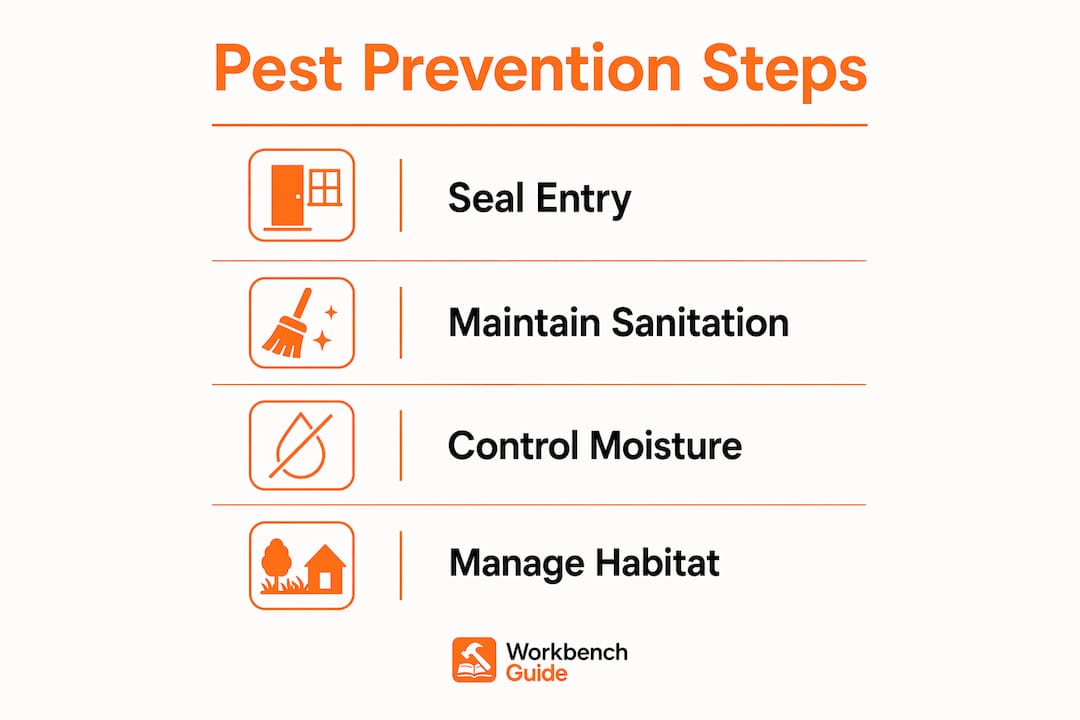
The best pest prevention methods fall into four categories: sealing, sanitation, moisture control, and habitat management. Each one targets a different resource pests depend on.
Sealing entry points
Every gap around pipes, vents, windows, and doors is a potential pest highway. Caulk small cracks in your foundation and exterior walls. Use weatherstripping on doors and windows that don’t close tightly. Pay special attention to utility penetrations, where gas lines, water pipes, and electrical conduits enter the home. Utility line entry points should be sealed with steel wool or professional foam, since rodents can chew through standard caulk but not steel wool.
Sanitation and food storage
Pests follow food. Store dry goods like flour, rice, and cereal in airtight glass or hard plastic containers. Take out garbage regularly and use bins with tight-fitting lids. Wipe down counters and sweep floors after every meal. Pet food left out overnight is one of the most common reasons cockroaches and ants establish themselves in kitchens.
Moisture control
Standing water and persistent dampness attract mosquitoes, cockroaches, silverfish, and rodents. Fix leaky faucets and pipes promptly. Check under sinks and around water heaters for slow drips. Empty saucers under houseplants after watering. In basements and crawl spaces, run a dehumidifier if humidity stays above 50%.
Habitat and clutter management
Clutter gives pests places to hide and nest. The EPA recommends keeping vegetation at least 20 feet from your home’s foundation to reduce harborage zones. Firewood stacked against the house invites termites and carpenter ants. Inside, replacing cardboard boxes with heavy-duty plastic bins removes nesting material, since cardboard absorbs moisture and creates ideal conditions for pests to breed.
Pro Tip: Inspect your home’s exterior every spring and fall. Walk the perimeter and look for new cracks, gaps around utility lines, and areas where soil has shifted away from the foundation. A 30-minute inspection twice a year catches problems before pests do.
How does Integrated Pest Management support effective pest prevention?
Integrated Pest Management, or IPM, is the structured framework that pest control professionals and the EPA use to manage pests with the least environmental impact. IPM prioritizes non-chemical methods such as sanitation, mechanical barriers, and biological controls before reaching for pesticides. It organizes pest management into four control types, applied in order of impact and risk.
| Control type | Method | Example |
|---|---|---|
| Cultural | Change conditions that support pests | Remove standing water, store food properly |
| Mechanical | Physical barriers and traps | Seal cracks, install door sweeps, use snap traps |
| Biological | Use natural predators or pathogens | Introduce nematodes for grub control in lawns |
| Chemical | Targeted pesticide application | Bait stations, spot treatments as a last resort |
IPM does not eliminate chemical treatments entirely. It places them last, after cultural and mechanical methods have been applied. This order matters for two reasons. First, avoiding early chemical use preserves beneficial insects like ground beetles and spiders that naturally suppress pest populations. Second, it slows the development of pesticide resistance, which makes future treatments more effective when you actually need them.
For homeowners, adopting an IPM mindset means thinking about pest management as a system rather than a single spray. You monitor for early signs of activity, address the root conditions, and use targeted treatments only when a pest population crosses a threshold that causes real damage.
What are the differences between pest prevention and pest control treatments?
Pest prevention and pest control are not the same thing, though many homeowners use the terms interchangeably. Prevention is proactive. Pest control is reactive.
Liquid chemical barriers remain active for 60–90 days, and bait systems can take 1–3 weeks to fully eliminate a colony. That means even after a professional treatment, you are waiting weeks for results and paying for repeat visits. Prevention, by contrast, works continuously as long as you maintain the habits.
Here is how the two approaches compare directly:
| Factor | Pest prevention | Pest control treatment |
|---|---|---|
| Timing | Proactive, ongoing | Reactive, after infestation |
| Cost | Low, mostly labor and materials | Higher, professional service fees |
| Chemical exposure | Minimal to none | Moderate to high |
| Duration of effect | Continuous with maintenance | 30–90 days per treatment |
| Long-term outcome | Reduces infestation frequency | Addresses current infestation only |
The most common misconception homeowners hold is that one professional treatment solves the problem permanently. Prevention requires continuous habits like moisture control and trash management to stop pests from returning. A chemical treatment kills the pests present at the time. It does nothing to fix the crack in your foundation or the leaky pipe under the sink that attracted them.
Treatments are most effective when combined with prevention. A pest control professional who treats your home without addressing entry points and food sources will be back within a season.
What mistakes should homeowners avoid in pest prevention?
Most pest prevention failures come from a small set of repeatable mistakes. Knowing them in advance saves you time, money, and frustration.
- Ignoring utility penetrations. Most homeowners seal visible cracks but miss the gaps where pipes and conduit enter the home. These are the primary entry points for rodents. Seal them with steel wool packed tightly, then cover with foam sealant.
- Using sprays on ant trails. Spraying visible ants with a contact insecticide kills the workers you see but triggers colony splitting. The colony senses the threat and divides, creating multiple new nests. Bait stations are more effective because worker ants carry the poison back to the colony, eliminating the source.
- Storing items in cardboard boxes. Cardboard absorbs moisture and provides nesting material for rodents and cockroaches. Switch to sealed plastic bins, especially in basements, garages, and attics.
- Letting yard debris accumulate. Leaf piles, overgrown shrubs, and stacked wood near the house create shelter zones. Keep a clear perimeter around your foundation.
- Treating prevention as a one-time project. Pests are persistent. Gaps reopen as homes settle, screens tear, and weather strips wear out. Schedule a regular home inspection to catch new vulnerabilities before pests find them.
Pro Tip: For ant problems, place bait stations along the trails you observe rather than spraying. Leave the trails intact so worker ants can find the bait and carry it back. Disrupting the trail with spray before the bait works defeats the purpose.
Prevention is a habit, not a project
I have watched homeowners spend hundreds of dollars on professional treatments, then wonder why the pests came back three months later. The answer is almost always the same: they treated the symptom and ignored the cause.
Pest biology explains this clearly. Cockroaches can survive on crumbs invisible to the human eye. Mice need a gap no larger than a dime to enter a wall. Ants communicate chemically, so even after you kill a trail, the scent path remains until you clean it with soap and water. These creatures are not random. They follow resources with precision.
The homeowners I have seen succeed at long-term pest prevention share one trait: they treat it as part of regular home maintenance, not a crisis response. They check weatherstripping when they change smoke detector batteries. They inspect the attic for signs of rodent activity during their attic maintenance checks. They fix drips the week they appear, not the month after.
The cost difference is real. A tube of caulk and an hour of your time costs under $20. A professional rodent exclusion service costs $300–$600 or more. The habits that prevent the need for that service are not complicated. They just require consistency.
My honest recommendation: build pest prevention into your seasonal home checklist. Treat it like changing your furnace filter or cleaning your gutters. Do it on a schedule, not in response to a problem.
— Sean
How Workbenchguide helps you stay ahead of pest problems
Workbenchguide is built for exactly this kind of consistent, proactive home care. The platform gives you scheduled maintenance reminders, step-by-step DIY guides, and project checklists that cover pest prevention as part of your broader home upkeep routine. Instead of remembering to check weatherstripping or inspect crawl spaces on your own, Workbenchguide prompts you at the right time of year. Start with the year-round maintenance checklist to build a pest-resistant home care routine that runs on autopilot. When a problem goes beyond DIY, the platform connects you with contractors who can handle it properly.
Key takeaways
Pest prevention is the most cost-effective strategy available to homeowners because it removes the conditions pests need before an infestation can start.
| Point | Details |
|---|---|
| Prevention beats treatment | Stopping pests before entry costs far less than eliminating an active infestation. |
| Seal utility penetrations | Use steel wool and foam on pipe and conduit entry points, not just visible cracks. |
| IPM is the gold standard | Apply cultural and mechanical controls first; use chemical treatments only as a last resort. |
| Avoid sprays on ant trails | Bait stations eliminate the colony; sprays cause splitting and worsen the problem. |
| Consistency is the strategy | Schedule prevention tasks seasonally, not in response to a pest sighting. |
FAQ
What is the simplest definition of pest prevention?
Pest prevention is the practice of removing the access, food, and water sources that allow pests to enter and survive in a home. It focuses on stopping infestations before they start rather than treating them after they occur.
How often should homeowners inspect for pest entry points?
Inspect your home’s exterior and interior at least twice a year, ideally in spring and fall. Pay close attention to utility penetrations, door seals, window screens, and foundation cracks.
Are natural pest prevention methods effective?
Natural methods like sealing gaps, removing standing water, storing food in airtight containers, and managing yard debris are highly effective as a first line of defense. They form the foundation of IPM and reduce or eliminate the need for chemical treatments.
Why do pest control treatments stop working after a few months?
Liquid chemical barriers remain active for 60–90 days before breaking down. Without addressing the underlying conditions that attract pests, new individuals will enter the home once the treatment fades. Prevention habits close that gap permanently.
What is the difference between IPM and standard pest control?
Standard pest control applies chemical treatments reactively to an existing pest problem. IPM is a structured system that prioritizes cultural, mechanical, and biological controls first, using chemicals only when other methods are insufficient to keep pest populations below a damage threshold.