
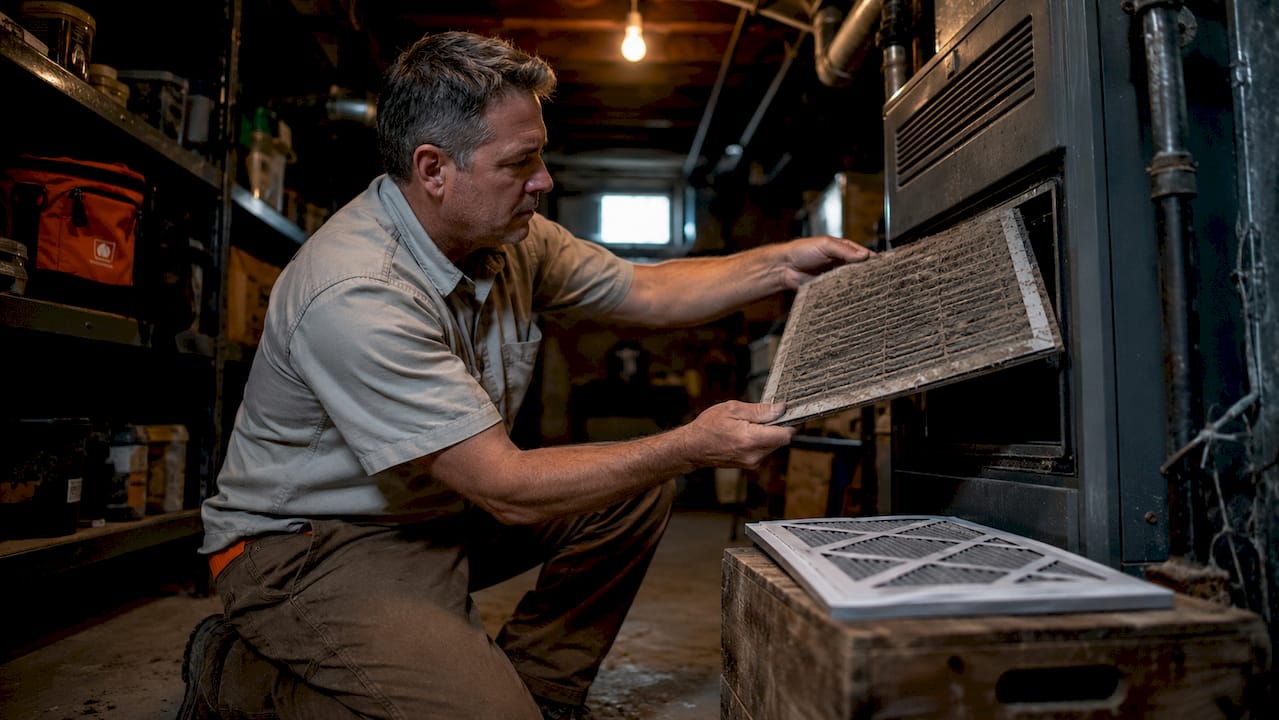
Replacing your furnace filter is the single most cost-effective maintenance task in your home. A clogged filter forces your HVAC system to work harder, drives up energy bills, and allows dust, allergens, and mold spores to circulate through every room. The U.S. Department of Energy and the EPA both identify filter maintenance as a front-line defense for indoor air quality and system efficiency. Most homeowners change filters too infrequently, and that one habit quietly costs them hundreds of dollars a year.
Why replace your furnace filter: the efficiency and cost case
A clean furnace filter is the difference between an HVAC system that runs efficiently and one that burns extra energy every single hour. Replacing a dirty filter can cut heating and cooling energy use by 5% to 15%. On an average American utility bill, that adds up to real money across a heating season.
The mechanics are straightforward. When a filter clogs with dust and debris, the blower motor must pull harder to move air through the system. That extra strain raises electricity consumption and generates more heat inside the motor itself. Over time, the motor wears out faster than it should.
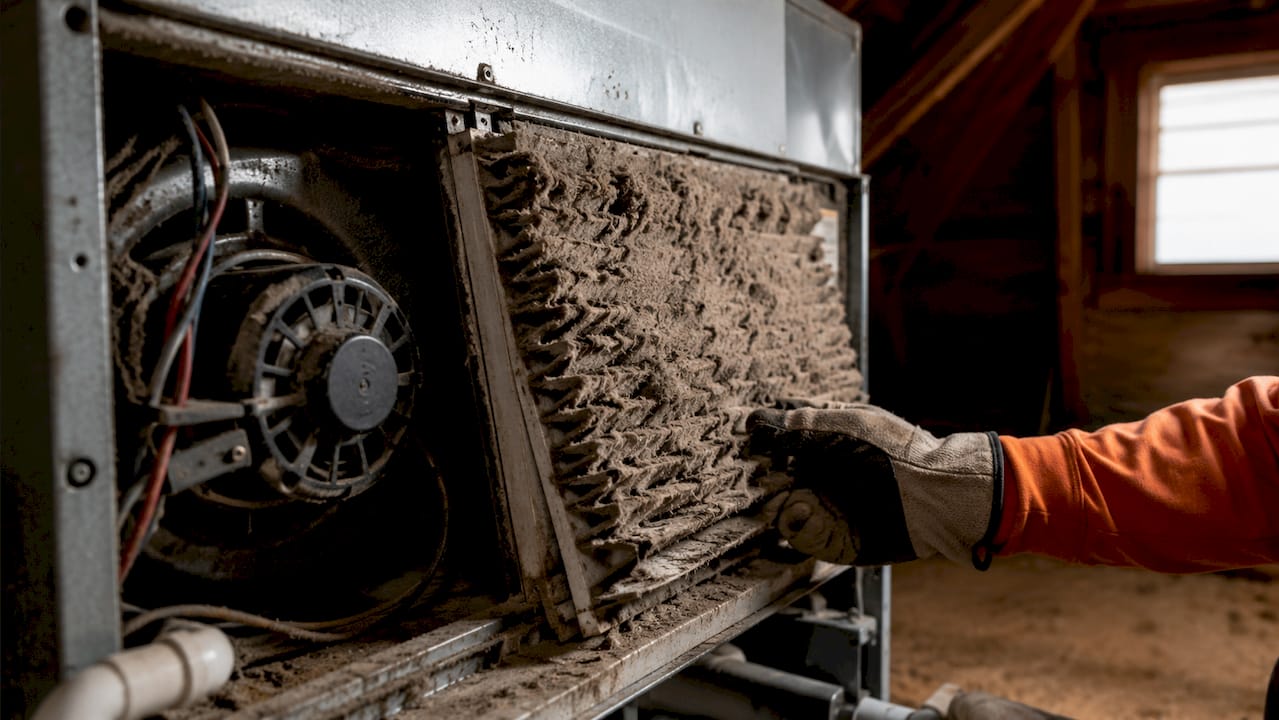
The financial risk goes beyond monthly bills. Blower motor failures increase by 25% in homes that skip regular filter changes. A blower motor replacement typically costs $400 to $600 in parts and labor. That is a steep price for ignoring a $10 filter.
Here is what a neglected filter costs you across three categories:
- Energy waste: The system runs longer cycles to reach the thermostat setpoint, burning more fuel or electricity each time.
- Component wear: The blower motor, capacitor, and heat exchanger all experience accelerated stress under restricted airflow.
- Repair bills: Emergency HVAC service calls average $150 to $500, not counting parts. Most are preventable.
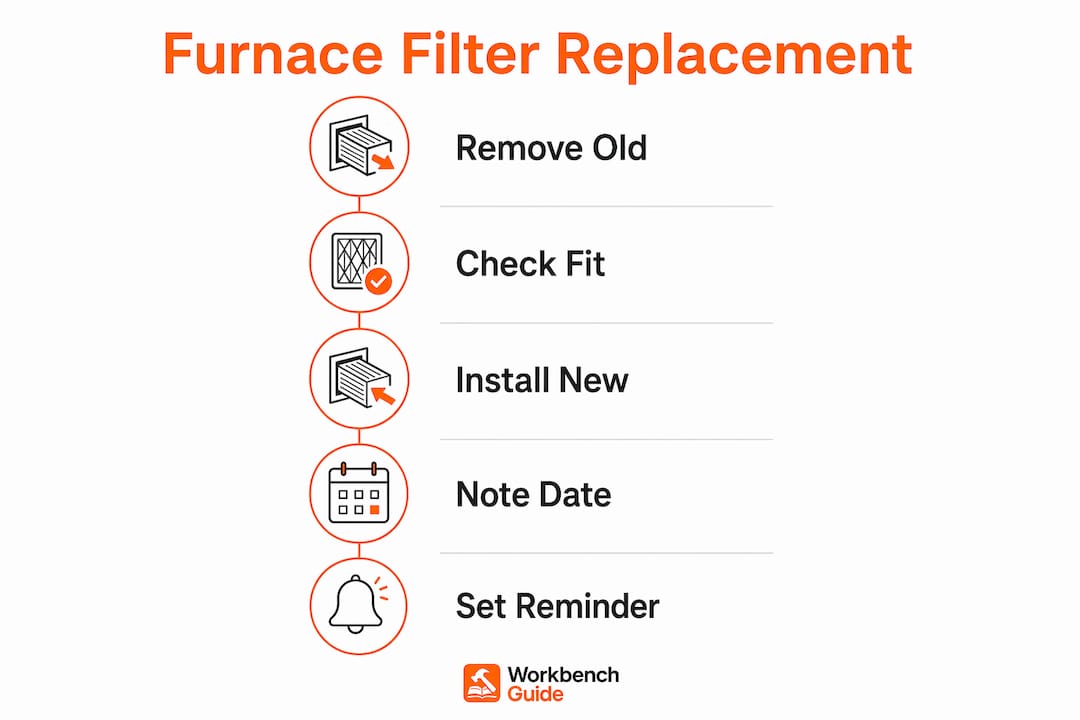
Pro Tip: Set a phone reminder the day you install a new filter. Write the installation date on the filter frame with a marker so you always know exactly how long it has been in service.
What happens inside your furnace when the filter is neglected?
A clogged filter does not just reduce airflow. It starts a chain of mechanical failures that can end with a cracked heat exchanger and a carbon monoxide hazard in your home. Understanding this sequence is the strongest argument for staying on schedule.
Restricted airflow causes heat to build up inside the furnace cabinet. The system’s high-limit switch detects the excess temperature and shuts the furnace down before it overheats. This is called short cycling. Short cycling stresses the heat exchanger, the metal component that separates combustion gases from the air you breathe. Thermal stress causes heat exchanger cracks, and a cracked heat exchanger can leak carbon monoxide directly into your living space.
“A dirty filter creates a destructive chain reaction, stressing furnace parts and creating system failure risks that compound over time.” — The Spruce
The damage does not stop at the furnace itself. Dust that bypasses or accumulates around a saturated filter coats the evaporator coils and lines the inside of your ductwork. Coated coils lose their ability to transfer heat efficiently. Dust-lined ducts become breeding grounds for mold, especially in humid climates.
Your HVAC system acts as the lungs of your home. When the filter saturates, it stops trapping particles and begins releasing them back into circulation. The EPA reports that indoor air can be 2 to 5 times more polluted than outdoor air. A failed filter makes that problem significantly worse, particularly for anyone in the household with asthma or seasonal allergies.
The furnace filter health effects extend to the whole family. Indoor air pollutants include dust mite debris, pet dander, mold spores, and volatile organic compounds. A functioning filter reduces all of these. A saturated one traps none of them.
How often should you replace your furnace filter?
The old rule of changing your filter every 90 days no longer applies to most American homes. HVAC professionals now recommend a 45-day replacement cycle for modern homes. Two factors drove that shift: airtight construction and higher-MERV filters.
Modern homes are built tighter than homes from the 1980s or 1990s. Less outside air infiltrates the building envelope, so the same air recirculates through the filter more frequently. Higher-MERV filters, which are more common now, also load up with particles faster than the basic fiberglass filters of previous decades.
Your specific situation may require even more frequent changes. Use this schedule as a starting point:
- Basic 1-inch fiberglass filter, no pets, no allergies: Every 30–45 days.
- Pleated filter, MERV 8–10, one pet: Every 30 days.
- High-efficiency filter, MERV 11–13, multiple pets or allergy sufferers: Every 20–30 days.
- Vacation home or low-occupancy property: Every 60–90 days is acceptable.
- After home renovation or construction work: Replace immediately, regardless of age.
The flashlight test is a reliable field check. Pull the filter out and hold it up to a light source. If you cannot see light passing through the media, the filter is overdue for replacement. Do not wait for the scheduled date if the filter is visibly gray or brown.
Pro Tip: Buy filters in multipacks from brands like Filtrete or Nordic Pure. Storing three or four filters near the furnace removes the friction of a hardware store trip and makes you far more likely to stay on schedule.
How to choose and replace your furnace filter correctly
Choosing the wrong filter or installing it incorrectly wastes money and can damage your system. The process takes less than five minutes when you know what to look for.
Reading filter dimensions
Every filter has three dimensions printed on its frame: length, width, and depth. The depth is typically 1 inch, 2 inches, or 4 inches. Buy the exact size your system requires. A loose-fitting filter allows unfiltered air to bypass the media entirely, which defeats the purpose of having a filter at all.
Understanding MERV ratings
MERV stands for Minimum Efficiency Reporting Value. The scale runs from 1 to 16 for residential use. A MERV 8 filter captures most dust, pollen, and mold spores. A MERV 11 or 13 filter also captures fine particles, pet dander, and some bacteria. However, high-efficiency filters rated MERV 11 and above can increase static pressure and strain older HVAC blowers not designed for that resistance. Check your furnace manual or ask your HVAC technician before upgrading to a high-MERV filter.
| MERV Rating | Best For | Caution |
|---|---|---|
| MERV 1–4 | Basic dust control | Minimal allergen protection |
| MERV 8–10 | Most homes, good balance | Replace more often with pets |
| MERV 11–13 | Allergy and asthma households | May strain older systems |
| MERV 14–16 | Hospital-grade, not typical residential | Requires compatible blower |
Step-by-step replacement process
- Turn off the furnace at the thermostat before opening the filter compartment.
- Note the size printed on the old filter frame before discarding it.
- Slide the old filter out carefully to avoid shaking loose debris into the cabinet.
- Check the directional arrow on the new filter frame. It must point toward the furnace, in the direction of airflow.
- Slide the new filter in firmly so no gaps exist around the edges.
- Close the access panel and restore power.
Never run your system without a filter in place, even for a few minutes. Dust buildup on coils from even brief unfiltered operation reduces efficiency and promotes mold growth that is difficult to remediate. You can learn more about keeping your whole system in shape with Workbenchguide’s HVAC maintenance guide for homeowners.
Key takeaways
Replacing your furnace filter on a consistent schedule is the highest-return maintenance habit a homeowner can build, protecting both system longevity and indoor air quality.
| Point | Details |
|---|---|
| Energy savings are real | A clean filter cuts HVAC energy use by 5%–15%, reducing monthly utility bills. |
| Mechanical damage compounds | Skipping changes raises blower motor failure risk by 25% and risks heat exchanger cracks. |
| 45-day cycle is the new standard | Modern airtight homes and high-MERV filters load up faster than older 90-day schedules assumed. |
| MERV rating must match your system | Filters rated MERV 11 and above can strain older blowers; check your furnace specs first. |
| Installation direction matters | The arrow on the filter frame must point toward the furnace or airflow is compromised. |
The mistake most homeowners make with furnace filters
I have talked with hundreds of homeowners about HVAC maintenance, and the pattern is almost always the same. They know they should change the filter. They just do not do it on time. The reason is not laziness. It is that the consequences are invisible until they are expensive.
Most people change their filter when they remember, which turns out to be every four to six months. By that point, the blower has been working against restricted airflow for weeks. The heat exchanger has been cycling through thermal stress repeatedly. The coils have a thin layer of dust on them. None of this is visible from the living room.
The second mistake I see constantly is buying the cheapest fiberglass filter available and assuming it does the job. A MERV 4 filter stops large dust particles. It does nothing for pet dander, mold spores, or the fine particles that trigger asthma. If anyone in your home has respiratory issues, a MERV 10 or 11 filter from a brand like Filtrete 3M or Honeywell Home is worth the extra $5 per filter.
The third mistake is treating filter changes as isolated tasks rather than part of a broader annual HVAC service routine. A filter change takes five minutes. A professional tune-up once a year catches the problems a filter change cannot fix. Together, they keep a furnace running for 20 years instead of 12. That math is hard to argue with.
View filter replacement not as a chore but as a $10 insurance policy against a $500 repair call. The role of HVAC in indoor air quality is significant, and the filter is the first line of that defense.
— Sean
Stay ahead of furnace filter maintenance with Workbenchguide
Workbenchguide makes it easy to track every home maintenance task, including furnace filter changes, so nothing slips through the cracks. The platform provides smart reminders, step-by-step DIY guides, and project checklists built specifically for homeowners who want to stay ahead of repairs rather than react to them. Start with the home maintenance checklist to build a complete schedule for your property, including seasonal HVAC tasks. For a deeper look at filter essentials and efficiency, Workbenchguide connects you with trusted resources to keep your system running at its best year-round.
FAQ
Why should I replace my furnace filter regularly?
A dirty furnace filter restricts airflow, forces the blower motor to work harder, and allows dust and allergens to recirculate through your home. Regular replacement cuts energy use by 5%–15% and prevents costly mechanical failures.
How often should I change my furnace filter?
HVAC professionals now recommend changing filters every 45 days in modern airtight homes, down from the traditional 90-day cycle. Homes with pets or allergy sufferers may need changes every 20–30 days.
What MERV rating is best for a home furnace filter?
MERV 8–10 is the right balance for most households, capturing dust, pollen, and mold spores without straining the blower. Homes with allergy or asthma concerns can use MERV 11–13, provided the furnace is rated to handle the added resistance.
Can a dirty furnace filter cause carbon monoxide exposure?
Yes. A clogged filter causes the furnace to overheat and short cycle, which stresses the heat exchanger. A cracked heat exchanger can leak carbon monoxide into living spaces, making filter replacement a direct safety issue.
What happens if I install my furnace filter backward?
Installing the filter with the arrow pointing away from the furnace compromises airflow and shortens filter life significantly. Always confirm the directional arrow points toward the furnace before closing the access panel.