
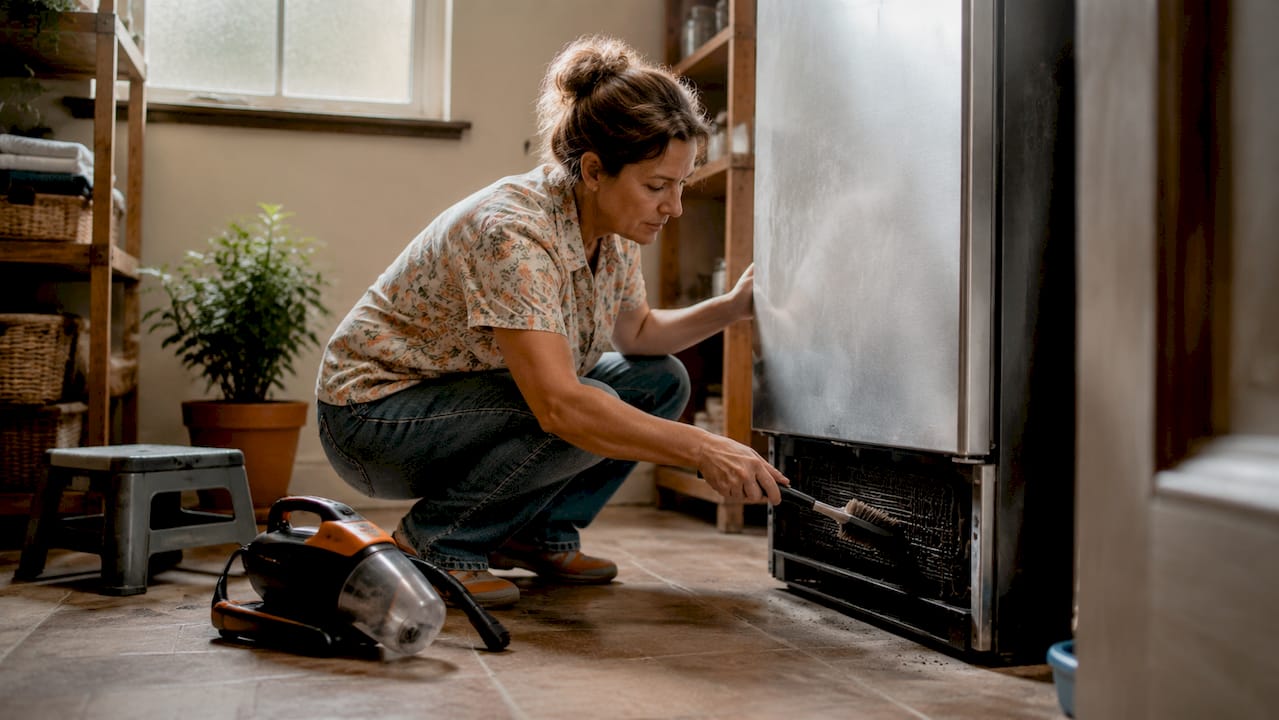
An appliance maintenance workflow is a systematic sequence of preventive and routine tasks designed to keep home appliances efficient, safe, and long-lasting. Most homeowners treat appliance care as reactive fixes instead of planned upkeep, which leads to costly emergency calls and shortened appliance life. A structured approach covers everything from refrigerators and dryers to dishwashers and washing machines. The right workflow combines a maintenance schedule for appliances, the correct tools, and clear step-by-step tasks. Follow it consistently and you can extend appliance life by 3–5 years, saving thousands in replacement costs.
What tools and components does an appliance maintenance workflow require?
The right tools make the difference between a 15-minute task and a frustrating afternoon. Before you start any home appliance upkeep, gather the basics so nothing stops you mid-task.
Core maintenance tools
Every homeowner should keep these tools on hand:
- Refrigerator coil brush: A long, flexible brush designed to reach condenser coils behind or beneath the fridge.
- Vacuum with brush attachment: Pulls dust and debris from coils, dryer vents, and tight spaces.
- Lint trap brush: A narrow, flexible brush that clears lint buildup deep inside the dryer trap slot.
- Flathead and Phillips screwdrivers: Used to remove access panels on dryers, dishwashers, and washing machines.
- Gasket cleaner or mild bleach solution: Cleans door seals on refrigerators and washing machines to prevent mold.
- Adjustable wrench: Tightens or loosens water supply hose connections on washers and dishwashers.
| Tool | Appliance | Task |
|---|---|---|
| Coil brush | Refrigerator | Clean condenser coils |
| Lint trap brush | Dryer | Clear deep lint buildup |
| Vacuum with brush | Dryer, refrigerator | Remove dust from vents and coils |
| Gasket cleaner | Washer, refrigerator | Wipe door seals and prevent mold |
| Adjustable wrench | Washer, dishwasher | Check and tighten water hose connections |
| Screwdriver | Dryer, dishwasher | Remove access panels for filter cleaning |
Safety and documentation
Always unplug an appliance before cleaning internal components. Keep your appliance manuals in one folder or a digital file. Manuals contain manufacturer-specific maintenance intervals that override generic advice. Wear rubber gloves when handling gasket cleaners or bleach solutions.
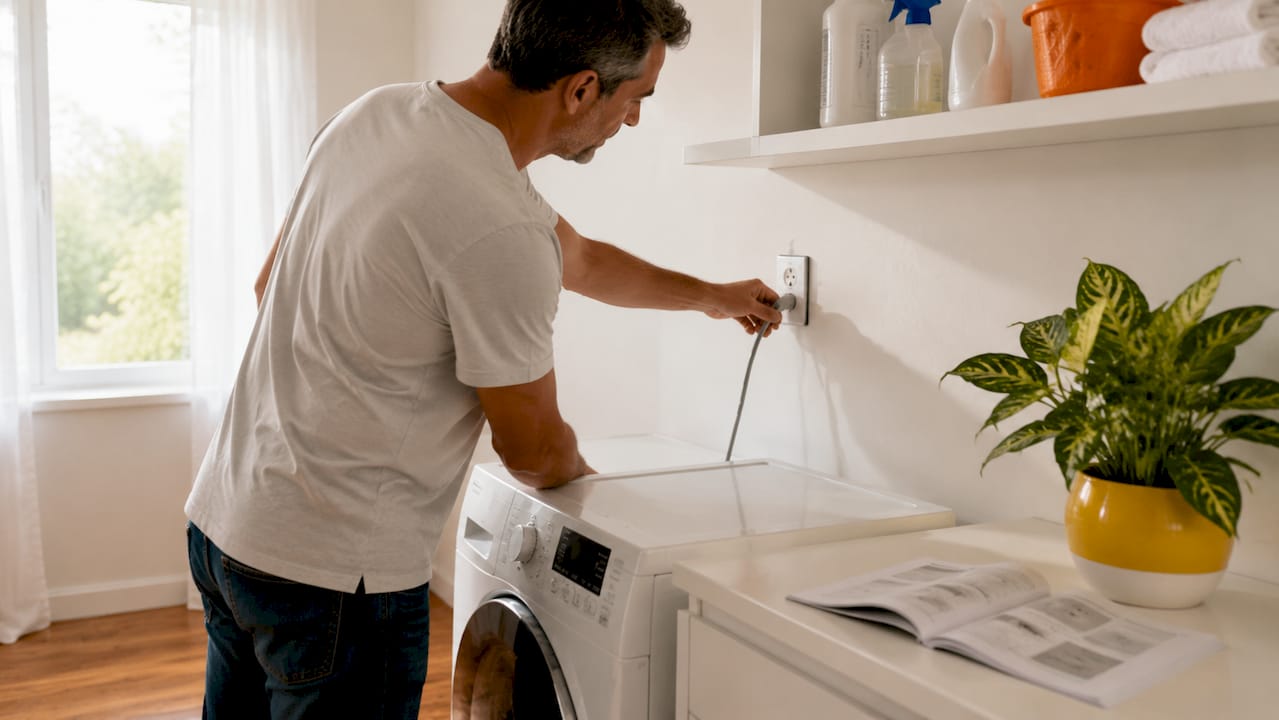
Pro Tip: Photograph the back of each appliance with your phone. You will always have the model number and serial number ready when ordering parts or scheduling a service call.
Scheduling tools matter just as much as physical tools. A shared Google Calendar, Apple Reminders, or a dedicated app like Workbenchguide keeps tasks from slipping through the cracks. Digital reminders beat handwritten notes because they repeat automatically on the interval you set.
How do you build a maintenance schedule for home appliances?
A maintenance schedule for appliances works best when it matches your household’s actual usage, not a generic calendar. A family with two large dogs and a dryer running daily needs a different schedule than a single homeowner with light laundry loads.
Frequency recommendations by task
Use these intervals as your baseline:
- Monthly: Clean the dishwasher filter, wipe washing machine door gaskets, check refrigerator door seals for cracks, and run a tub-clean cycle on the washer.
- Every 3 months: Vacuum refrigerator condenser coils, inspect dryer lint trap and vent opening, and check dishwasher spray arms for clogs.
- Every 6 months: Clean the dryer vent duct fully, inspect water supply hoses for cracks or bulging, and run a dishwasher cleaning cycle with a commercial cleaner like Affresh.
- Annually: Replace water supply hoses if they are 3–5 years old, have an HVAC technician inspect any appliance with a gas connection, and review all appliance manuals for updated manufacturer guidance.
- As needed: Address unusual noises, error codes, or odors immediately rather than waiting for the next scheduled interval.
Tailoring your schedule
Households with pets should clean dryer vents every 6 months rather than annually, since pet hair accelerates lint buildup significantly. Homes in humid climates need more frequent gasket cleaning because mold grows faster in moisture-rich air. If your dryer vent duct runs longer than 15 feet, treat it as a high-risk duct and clean it twice a year.
Pro Tip: Build your maintenance calendar around seasons. Spring and fall are natural checkpoints. Spring covers post-winter appliance stress; fall prepares appliances for heavier holiday use.
Track every completed task in a simple log, whether a notebook, a spreadsheet, or Workbenchguide’s built-in history tracker. A maintenance history helps you spot patterns, such as a filter that clogs faster than expected, and gives a technician useful context if a repair is ever needed. Seasonal checklists also help you spot early warning signs like unusual sounds or odors before they become failures.
Step-by-step workflow for routine appliance maintenance
Five key maintenance tasks prevent most emergency service calls. Each takes under 20 minutes and requires no specialized skills. Here is how to execute each one correctly.
Refrigerator condenser coils
Pull the fridge away from the wall or remove the front grille at the base. Use a coil brush to loosen dust, then vacuum the debris. Cleaning condenser coils can improve energy efficiency by 25–35%, which shows up directly on your utility bill. Do this every 3 months if you have pets, or every 6 months otherwise.
Dryer vent and lint trap
Dryer vent blockage is the leading cause of dryer fires and thermal fuse failures. A $25 vent brush kit clears the duct in about 20 minutes. Pull the dryer from the wall, disconnect the duct, and push the brush through from both ends. Clean the lint trap slot with a narrow lint brush after every few loads.
Dishwasher filter and spray arms
Remove the bottom rack and twist out the filter assembly. Rinse it under warm water and scrub with a soft brush. Check the spray arm holes for food debris and clear them with a toothpick. Run a cleaning cycle monthly with a tablet cleaner like Affresh or a cup of white vinegar placed in the bottom rack.
Washing machine door gasket and drum
Wipe the rubber door gasket on front-load washers with a diluted bleach solution after every few washes. Mold in the gasket fold is the most common source of musty odors. Run a tub-clean cycle monthly on both front-load and top-load machines using a washer cleaner tablet.
Water supply hoses
Inspect hoses behind the washer and dishwasher every 6 months. Look for cracks, bulging, or corrosion at the fittings. Replace water supply hoses every 3–5 years to prevent bursts that cause serious water damage. Braided stainless steel hoses last longer than standard rubber hoses and cost only a few dollars more.
| Appliance | Task | Frequency | Time Required |
|---|---|---|---|
| Refrigerator | Clean condenser coils | Every 3–6 months | 15 minutes |
| Dryer | Clean vent duct and lint trap | Every 6–12 months | 20 minutes |
| Dishwasher | Clean filter and run cycle | Monthly | 10 minutes |
| Washing machine | Wipe gasket, run tub-clean | Monthly | 15 minutes |
| Washer/dishwasher | Inspect water supply hoses | Every 6 months | 5 minutes |
Common mistakes, warning signs, and when to call a professional
Most homeowners skip the five tasks above entirely. That single habit accounts for the majority of avoidable appliance failures. Knowing what to watch for keeps small problems from becoming expensive ones.
Mistakes to avoid
- Skipping dryer vent cleaning because the lint trap looks clean. The trap catches only a fraction of lint; the duct accumulates the rest.
- Using the wrong cleaner on door gaskets. Harsh abrasives damage rubber seals and cause leaks.
- Ignoring water hose age. A hose that looks fine can burst without warning after five years.
- Running a dishwasher with a clogged filter. It forces the pump to work harder and shortens motor life.
- Forgetting to unplug appliances before cleaning internal components.
Warning signs that need professional attention
Call a technician when you hear grinding, banging, or screeching noises that persist after cleaning. Persistent error codes, appliances that trip circuit breakers, and burning smells all require professional diagnosis before you use the appliance again.
Technicians perform diagnostics through conversation, error code retrieval, and voltage testing before recommending any repair. This process confirms the root cause and prevents unnecessary part replacements. A typical repair call takes 1–3 hours; if parts must be ordered, add 1–5 business days. Prepare for the visit by noting when the problem started, what sounds or smells you noticed, and which error codes appeared.
Pro Tip: Before calling a technician, write down the appliance model number, the error code if displayed, and a brief description of the symptom. This cuts diagnostic time and may reduce your service bill.
The appliance repair process works best when you give the technician accurate information upfront. Guessing or omitting details leads to repeat visits. Your maintenance log is the single most useful document you can hand a technician.
Key takeaways
A structured appliance maintenance workflow prevents most emergency repairs, extends appliance life by 3–5 years, and costs far less in time and money than reactive fixes.
| Point | Details |
|---|---|
| Start with the right tools | A coil brush, lint trap brush, and vacuum cover most routine maintenance tasks. |
| Schedule by usage, not just time | Households with pets or heavy dryer use need twice-yearly vent cleaning, not annual. |
| Five tasks prevent most failures | Coils, dryer vents, filters, gaskets, and hoses account for the majority of emergency calls. |
| Replace hoses on a fixed interval | Swap water supply hoses every 3–5 years to prevent costly water damage. |
| Track everything | A maintenance log gives technicians context and helps you spot recurring problems early. |
What I’ve learned from years of treating appliances like investments
Most homeowners wait until something breaks. I used to do the same thing. A dryer that took two cycles to dry a load, a fridge that ran constantly, a washer that smelled like a gym bag. Every one of those problems had a simple fix that I had been putting off for months.
The shift that changed everything was treating appliances the same way I treat my car. You would not skip oil changes and wait for the engine to seize. The same logic applies to a refrigerator running with clogged condenser coils or a dryer pushing air through a blocked vent. The benefits of preventive maintenance are not theoretical. They show up on your utility bill and in the years you get out of a machine before replacing it.
The hardest part is not the tasks themselves. Each one takes under 20 minutes. The hard part is remembering to do them on schedule. A digital reminder system, whether a phone calendar or a platform like Workbenchguide, removes that friction entirely. Once the reminders are set, the workflow runs itself.
One thing most articles will not tell you: your maintenance log is more valuable than any single task. When a technician arrives and you can say “I cleaned the coils 4 months ago, replaced the hoses last year, and the error code appeared 3 days ago,” you cut the diagnostic conversation in half. That detail saves time and money.
— Sean
How Workbenchguide keeps your appliance care on track
Workbenchguide is built for homeowners who want to stay ahead of repairs without spending hours managing spreadsheets or sticky notes. The platform gives you step-by-step DIY guides, maintenance checklists for every room, and automatic reminders so tasks never slip past their due date. You can log completed maintenance, track appliance history, and pull up the right guide the moment you need it. When a job goes beyond DIY, Workbenchguide connects you with contractor help. It is the practical tool that turns a good intention into a consistent habit, keeping your appliances running longer and your repair bills lower.
FAQ
What is an appliance maintenance workflow?
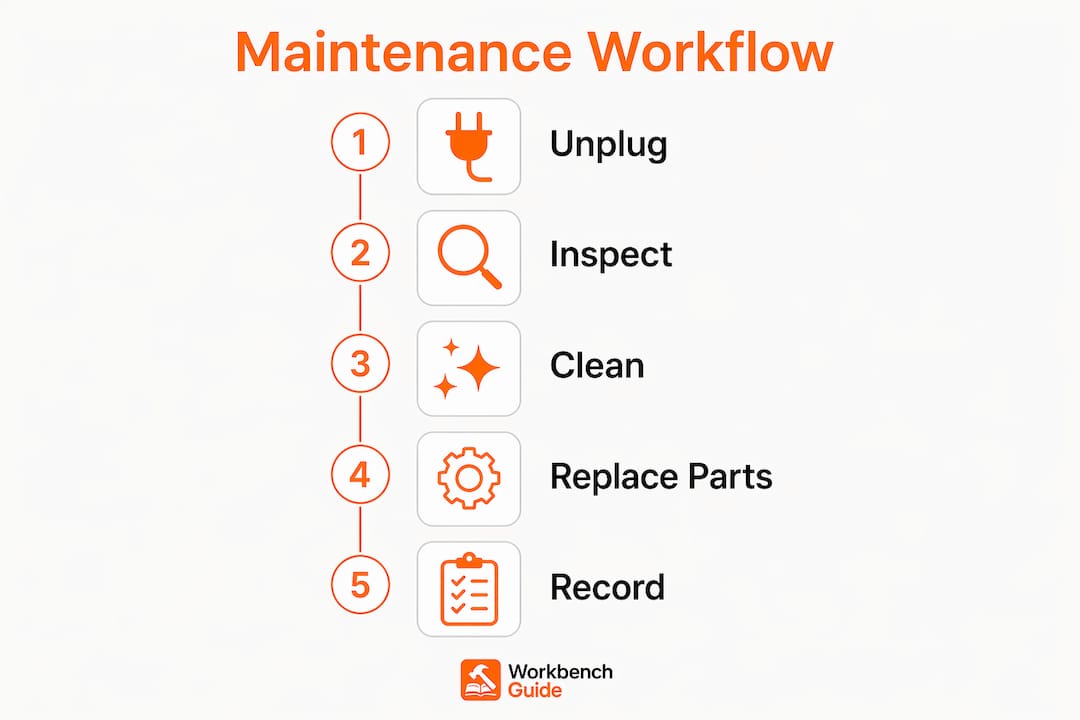
An appliance maintenance workflow is a planned sequence of routine tasks, including cleaning, inspecting, and replacing parts, that keeps home appliances running efficiently and safely. It replaces reactive repairs with a proactive schedule tied to each appliance’s needs.
How often should I clean dryer vents?
Clean dryer vents at least once a year. If you have pets, run the dryer heavily, or have a duct longer than 15 feet, clean it every 6 months to prevent fire hazards and thermal fuse failures.
When should I replace water supply hoses?
Replace water supply hoses every 3–5 years, even if they look undamaged. Aging rubber hoses can burst without warning and cause serious water damage to floors and walls.
What are the signs I need a professional appliance repair?
Persistent error codes, grinding or burning smells, appliances that trip breakers, and problems that return after cleaning all require a technician. A professional uses error code retrieval and voltage testing to confirm the root cause before making repairs.
How do I maintain home appliances without special skills?
The five most impactful tasks, cleaning refrigerator coils, clearing dryer vents, washing machine gaskets, dishwasher filters, and inspecting water hoses, require no technical skills and take under 20 minutes each. A printed or digital checklist from a resource like Workbenchguide keeps you on schedule.