
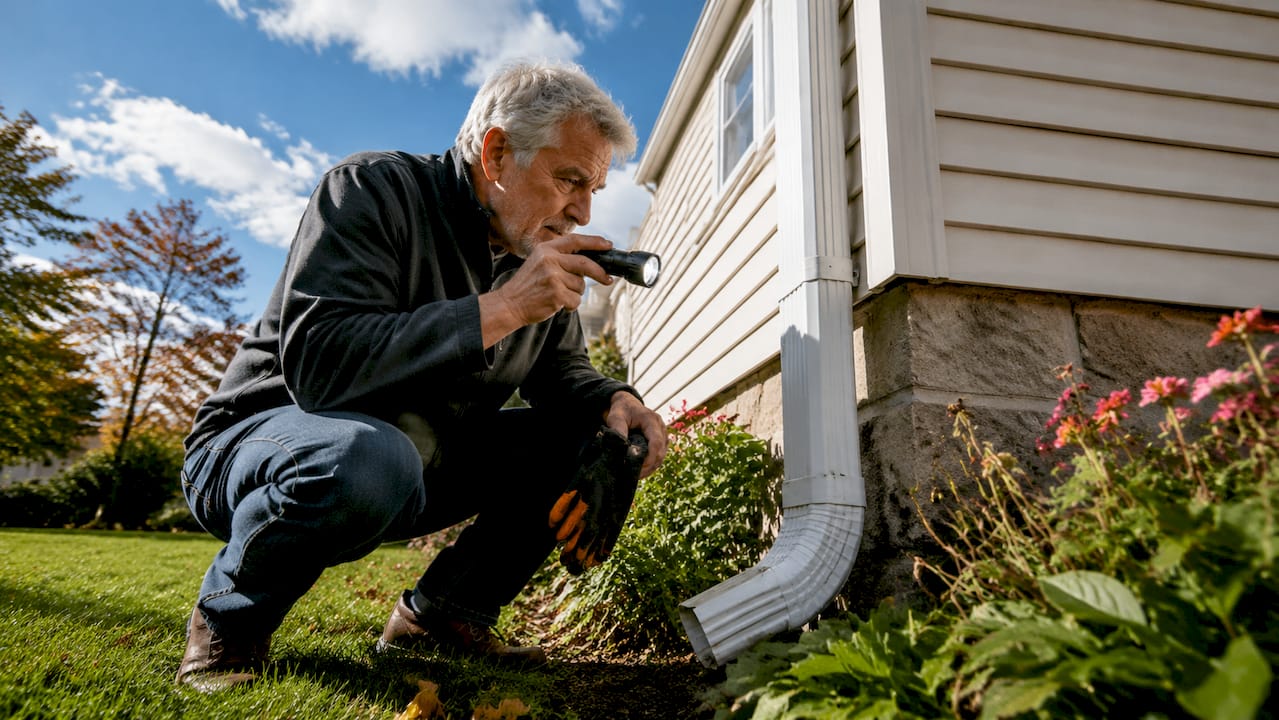
Downspouts are vertical pipes that channel rainwater from your gutters safely away from your home’s foundation, and skipping regular inspections is one of the most expensive mistakes a homeowner can make. Neglected downspouts cause foundation repairs that average $2,300 to $6,800, not counting water damage to siding, landscaping, and basements. Understanding why check downspouts matters comes down to one fact: your gutters collect water, but your downspouts decide where that water goes. If they fail, the water goes straight into your home’s structure.
Why check downspouts before water damage starts
Downspouts are the final critical component in your home’s water runoff system. When they work correctly, they move thousands of gallons of rainwater away from your foundation every year. When they fail, that water has nowhere to go except into the soil directly beside your home.
The protective role downspouts play goes beyond simple drainage. They prevent hydrostatic pressure from building up against your foundation walls, stop basement leaks before they start, and keep your siding dry during heavy rain. Overflow from clogged downspouts can degrade fascia boards and siding within hours during a heavy storm. That kind of rot is invisible until it becomes a major structural repair.
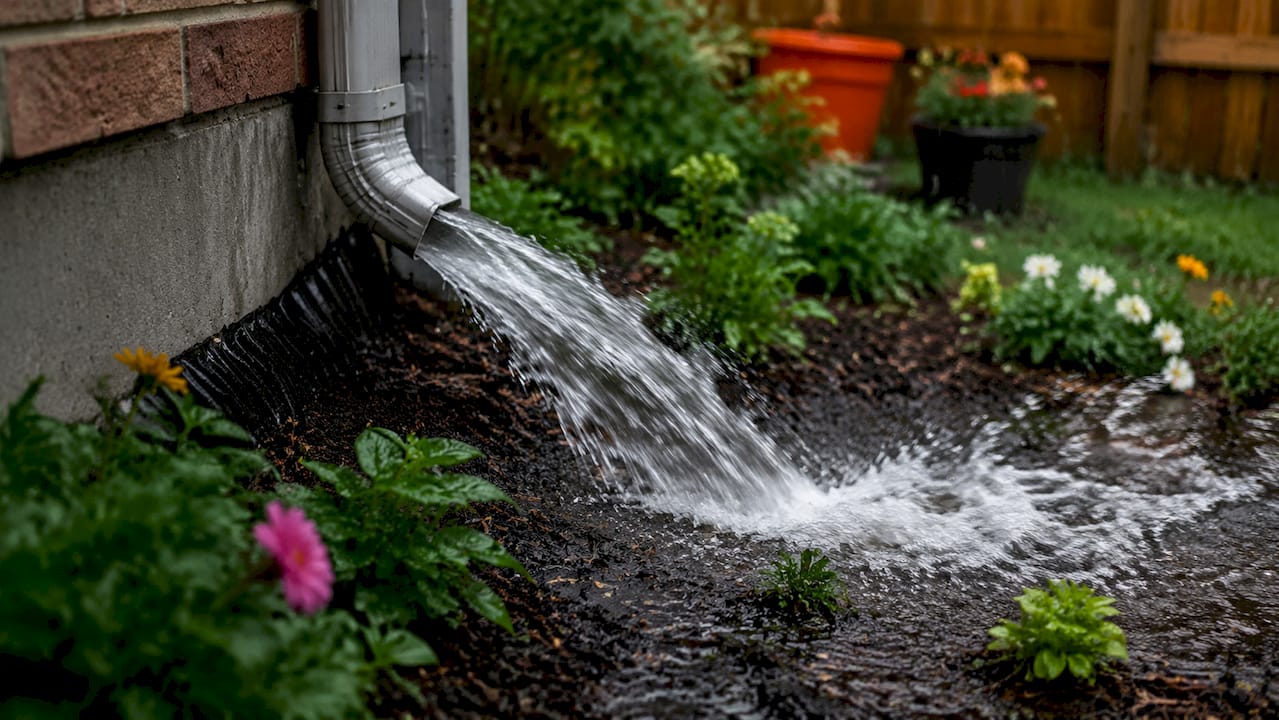
The downspout maintenance importance also extends to your landscaping. Poorly directed water erodes topsoil, kills grass and plants near your foundation, and creates low spots that pool water even further. Over time, that pooling accelerates soil saturation and puts direct pressure on basement walls.
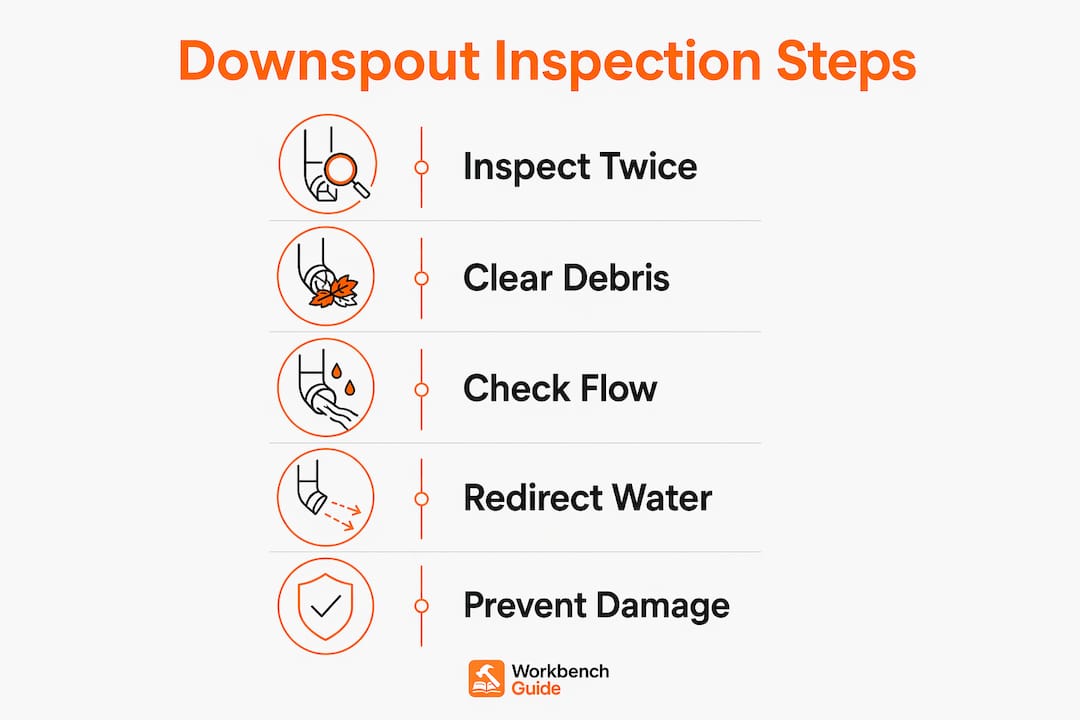
Industry guidance calls for cleaning and inspecting downspouts twice a year, with homes near heavy tree cover requiring quarterly checks. With consistent care, downspouts can last up to 50 years. Without it, you are looking at premature replacement and the collateral damage that comes with failure.
Pro Tip: Set your twice-yearly inspections to align with spring and fall. Spring catches freeze-thaw damage from winter, and fall clears debris before the wet season hits.
The check downspouts benefits are straightforward: you spend 30 minutes twice a year, or you risk spending thousands on repairs that were entirely preventable.
What are the warning signs of downspout problems?
Catching downspout problems early requires knowing what to look for. Most homeowners only notice a problem after water has already entered the home or rotted out a fascia board. The signs appear much earlier than that.
Visible warning signs to watch for:
- Water overflowing the sides of gutters during rain, even light rain
- Green streaks or algae stains on siding directly below gutters
- Splash marks or soil erosion at the base of the downspout
- Sagging gutters that have pulled away from the fascia
- Standing water pooling near the foundation after rain
- Loose or separated joints where downspout sections connect
Common causes of downspout blockage issues include leaf and debris buildup, pine needle accumulation, pollen clogs in spring, and ice damage in winter. Blocked elbows at the bottom of the downspout are a particularly common problem because debris collects at the bend and is hard to spot without a close look.
Silent failures like water backing up at elbows are more dangerous than obvious overflow because the damage happens out of sight. Water pools inside the downspout, seeps into joints, and causes hidden structural rot in the wall behind it. By the time you see the damage, the repair bill is already large.
Pro Tip: Inspect downspouts during rainfall to catch flow restrictions and leaks that are completely invisible on dry days. A garden hose can simulate rain if you cannot wait for a storm.
The impact of surrounding trees on your maintenance schedule is real. A home with mature oaks or maples overhead may need quarterly checks rather than twice-yearly ones. Pine trees are especially problematic because needles clump together and form dense plugs inside downspout elbows.
How to properly inspect and clean your downspouts
Knowing how to inspect downspouts correctly saves you from guesswork and missed problems. The process is straightforward and requires only basic tools.
Tools you need:
- Garden hose with a spray nozzle
- Plumber’s snake or drain auger
- Work gloves
- A stable ladder
- Flashlight for checking inside the downspout opening
Step-by-step inspection process:
- Start at the top. Check the gutter outlet where it connects to the downspout opening. Remove any visible debris by hand.
- Run water from a garden hose into the gutter and watch how quickly it drains through the downspout. Slow drainage signals a partial blockage.
- Check every joint and elbow along the downspout for separation, rust, or visible leaks while the water runs.
- At the bottom, confirm water exits at least 5 feet away from your foundation. Downspouts should discharge water at least 5 feet from the foundation to minimize hydrostatic pressure and soil saturation.
- If water backs up or drains slowly, feed a plumber’s snake down from the top to break up the clog, then flush again with the hose.
- After clearing, check the discharge area for erosion or pooling that suggests the water is not moving far enough from the house.
| Task | DIY or Professional |
|---|---|
| Flushing and clearing debris | DIY with garden hose and snake |
| Reattaching loose brackets | DIY with screws and sealant |
| Replacing a cracked section | DIY if comfortable on a ladder |
| Regrading soil near foundation | Professional recommended |
| Replacing full downspout system | Professional recommended |
The best times for this work are spring and fall. Freeze-thaw cycles in winter cause cracks and loosen brackets, so a spring inspection after the thaw is the most important one of the year. Fall inspection clears debris before winter freezes it in place.
Pro Tip: Splash blocks alone are insufficient if the ground near your foundation does not slope away from the house. A downspout extension that routes water 5 or more feet out is a far more reliable fix and costs under $20 at most hardware stores.
Call a professional when you see significant rust, large cracks, or sections that have fully separated. Also call one if your basement shows water intrusion despite clean downspouts, since the issue may be grading or a drainage problem that requires more than a simple flush.
What are the long-term benefits of regular downspout inspections?
The financial case for routine downspout care is clear. Foundation repairs average $2,300 to $6,800, and water damage restoration adds thousands more on top of that. A twice-yearly inspection that takes under an hour is the most cost-effective home maintenance task most homeowners consistently skip.
Beyond the foundation, regular inspections preserve your fascia boards, siding, and landscaping. Fascia rot from water backing up at joints can spread to roof decking and require full board replacement. Siding that stays wet from overflow develops mold, warps, and loses its protective coating faster than it should. You can read more about the connection between water management and exterior damage in this guide to inspecting siding.
Long-term benefits of consistent downspout care:
- Avoidance of foundation repair costs averaging thousands of dollars
- Extended lifespan of gutters and downspouts, up to 50 years with proper maintenance
- Protection of fascia boards, siding, and exterior paint from moisture damage
- Preserved landscaping and topsoil near the foundation
- Reduced risk of basement flooding and mold growth
- Maintained curb appeal and home resale value
The environmental benefits are worth noting too. Properly directed runoff reduces soil erosion and limits the amount of polluted stormwater that reaches storm drains and local waterways. When downspouts discharge correctly, water soaks into the ground gradually rather than rushing across paved surfaces and carrying oil, fertilizer, and sediment into drainage systems.
Foundation problems usually stem from poor water management rather than weak foundations. That reframes the entire task. You are not just cleaning pipes. You are actively managing where water moves around your home, and that decision has consequences that last decades.
Key takeaways
Regular downspout inspections are the single most cost-effective maintenance task a homeowner can do to prevent foundation damage, siding rot, and basement flooding.
| Point | Details |
|---|---|
| Inspect twice a year minimum | Spring and fall checks catch freeze damage and pre-winter debris before problems worsen. |
| Discharge water 5 feet from foundation | Extensions prevent soil saturation and hydrostatic pressure that crack foundation walls. |
| Silent blockages cause hidden rot | Water backing up at elbows damages structure invisibly before any visible overflow appears. |
| Foundation repairs cost thousands | Neglected downspouts lead to repairs averaging $2,300 to $6,800, far more than prevention costs. |
| Downspouts last up to 50 years | Consistent maintenance extends lifespan dramatically and protects every connected system. |
The maintenance task most homeowners underestimate
I have walked through hundreds of homes where the gutters looked fine from the street but the downspouts were completely blocked at the elbow. The homeowner had no idea. The fascia behind the downspout was soft and rotting, and water had been pooling against the foundation for at least two seasons. The repair bill was over $4,000 for work that a $15 plumber’s snake and two hours would have prevented.
The pattern I see most often is that homeowners treat downspouts as part of the gutter system and assume that cleaning the gutters covers everything. It does not. The downspout is a separate component with its own failure points, and the elbows and joints are where problems hide. A clean gutter trough means nothing if water cannot actually exit the system.
What I tell every homeowner is this: add downspout checks to your regular home inspection routine and treat them as seriously as you treat smoke detector batteries. The consequences of skipping them are just as real, they just take longer to show up. The good news is that once you know what to look for, the whole inspection takes less time than mowing the lawn.
— Sean
Keep your home protected with Workbenchguide
Downspout checks are one piece of a larger maintenance picture, and staying on top of all of it is easier when you have a system. Workbenchguide gives homeowners a year-round maintenance checklist that tells you exactly what to inspect and when, so nothing falls through the cracks. From gutter and downspout reminders to seasonal exterior checks, the platform keeps your schedule organized and your home protected. Skipping one inspection can cost thousands. Having a reliable system costs almost nothing. Workbenchguide is built for homeowners who want to stay ahead of repairs rather than react to them.
FAQ
How often should you check your downspouts?
Inspect downspouts at least twice a year, in spring and fall. Homes surrounded by heavy tree cover need quarterly checks to prevent debris buildup from causing blockages.
What happens if you never clean your downspouts?
Clogged downspouts cause water to overflow against your foundation, leading to soil saturation, basement leaks, fascia rot, and foundation damage that costs $2,300 to $6,800 to repair.
How far should downspouts discharge from the house?
Downspouts should direct water at least 5 feet away from the foundation. Splash blocks alone are not enough if the ground does not slope away from the house.
Can you inspect downspouts without a ladder?
You can check for overflow, splash marks, and soil erosion from the ground. For a full inspection including joint and elbow checks, a stable ladder gives you the access you need to catch hidden problems.
What is the best time of year to inspect downspouts?
Spring is the most critical time because freeze-thaw cycles crack downspout sections and loosen brackets over winter. Fall inspection clears debris before it freezes in place and blocks flow during the wet season.