
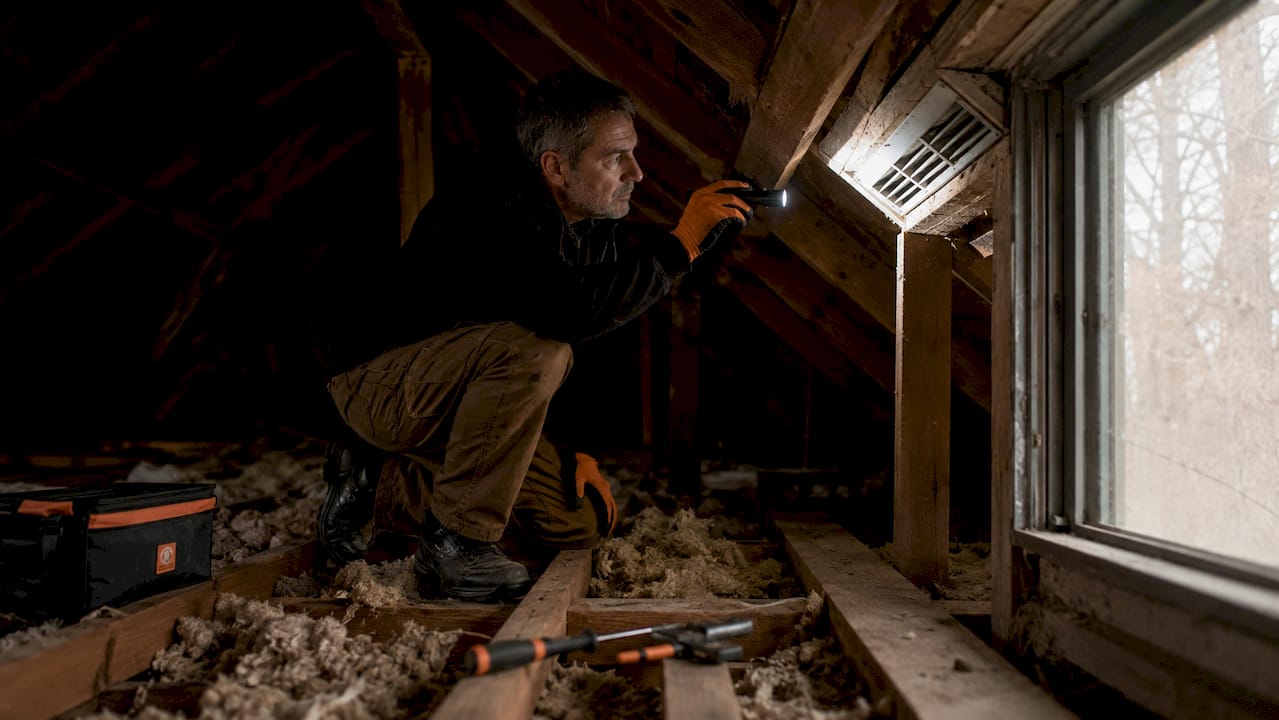
Attic ventilation is the controlled movement of air through your attic space to regulate heat and moisture. Without it, your attic becomes a trap. Summer temperatures in a poorly ventilated attic can reach 140–170°F, while a well-ventilated attic stays within 10–20°F of outdoor air. That difference shows up directly in your energy bills, your roof’s lifespan, and the air quality inside your home. Understanding why ventilate your attic is the first step to protecting one of your biggest investments.
How does attic ventilation work to control heat and moisture?
Attic ventilation relies on two physical forces: the stack effect and wind pressure. Warm air rises naturally and exits through exhaust vents near the roof peak. Cooler outside air enters through intake vents at the eaves, replacing the hot air and creating continuous circulation. This process requires no electricity and works around the clock when the system is properly balanced.
The two main components are soffit vents and ridge vents. Soffit vents sit along the underside of your roof overhang and act as intake points. Ridge vents run along the roof peak and serve as exhaust. A ridge vent and soffit vent working together create the most effective continuous airflow pattern available in residential construction.
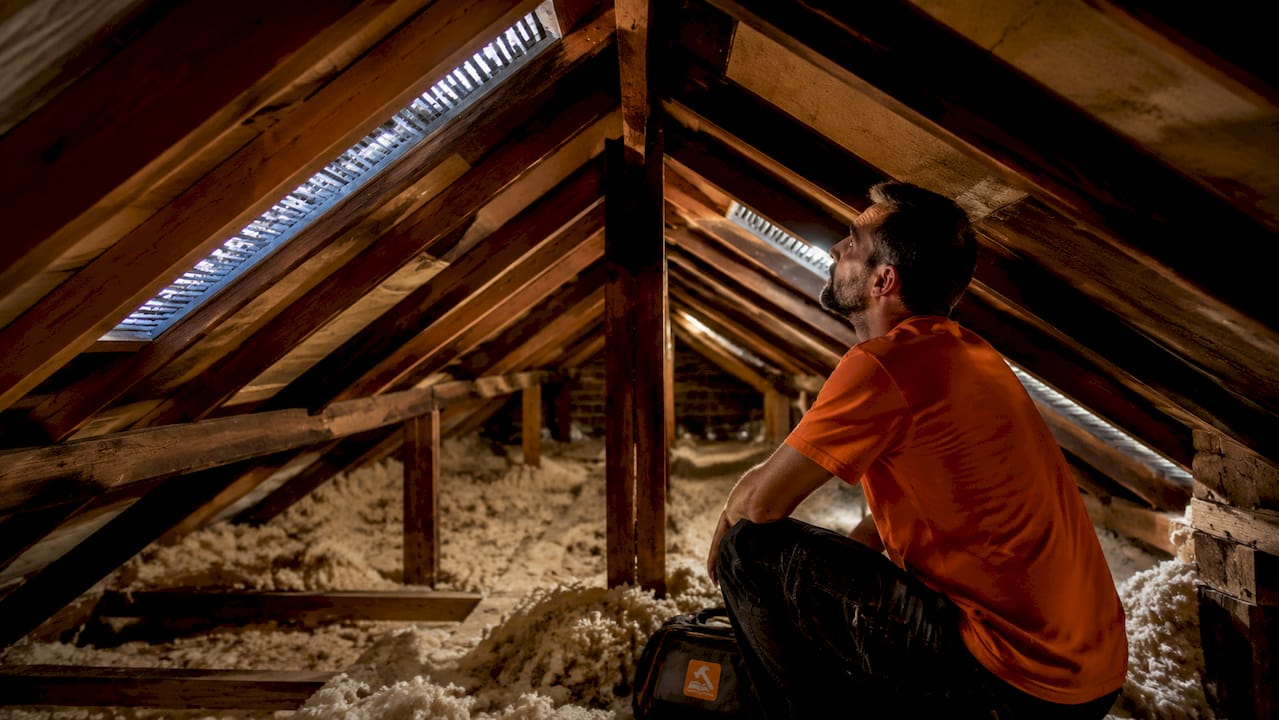
Moisture control is just as critical as heat control, especially in winter. When warm, humid air from your living space leaks into a cold attic, it condenses on roof sheathing and framing. That condensation leads to mold, rot, and ice dams. Balanced intake and exhaust ventilation prevents this moisture buildup more effectively than any unbalanced system.
Key signs that your attic ventilation is working correctly:
- Attic temperature stays close to outdoor temperature in summer
- No frost or condensation on roof sheathing in winter
- No visible mold or dark staining on wood framing
- Ice dams do not form along your roof edge after snowfall
Pro Tip: Check your soffit vents for insulation blockage. Blown-in insulation frequently covers soffit vent openings, cutting off intake airflow entirely and making the rest of your ventilation system useless.
What are the benefits of ventilating your attic properly?
Proper attic ventilation extends asphalt shingle lifespan by 20–30% compared to poorly ventilated attics. Heat trapped beneath shingles accelerates the breakdown of the asphalt binder, causing shingles to curl, crack, and lose granules years ahead of schedule. Replacing a roof costs tens of thousands of dollars. Keeping your attic cool costs almost nothing by comparison.
Lower attic temperatures also reduce the workload on your air conditioning system. When your attic runs at 140°F, that heat radiates through your ceiling insulation and into your living space. Your HVAC system then works harder to compensate. A well-ventilated attic keeps that radiant heat load down, which translates directly to lower cooling costs each summer.
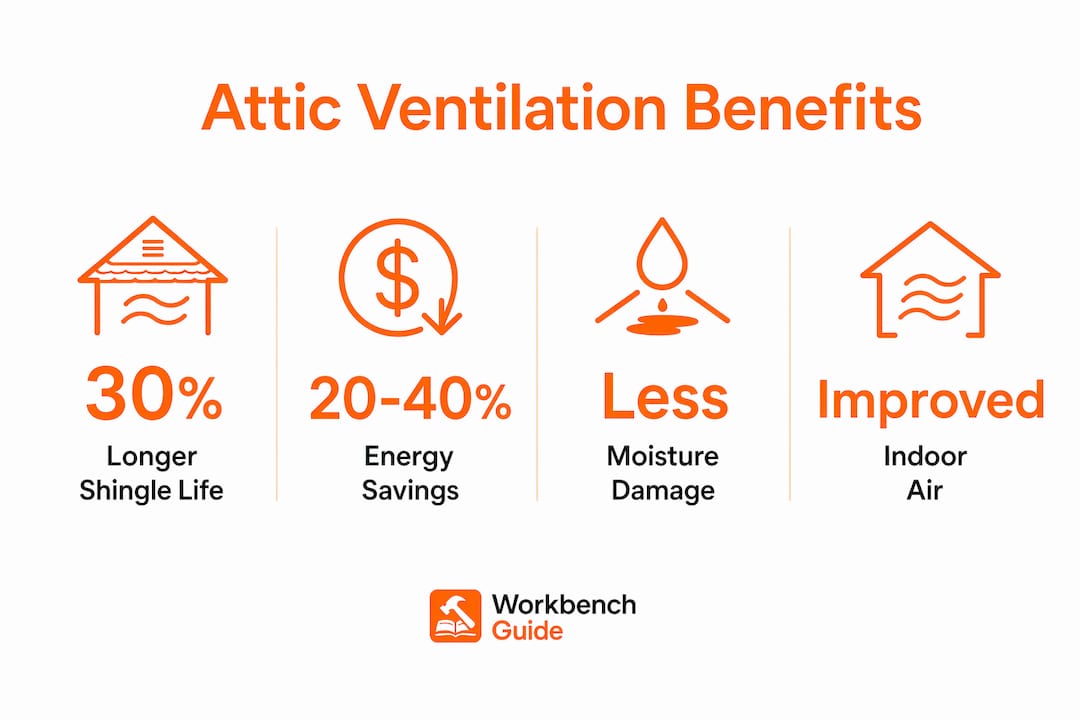
The attic ventilation health benefits extend beyond energy savings. Moisture that accumulates in an unventilated attic creates ideal conditions for mold growth. Mold spores can migrate through ceiling penetrations, such as recessed lights and bathroom fans, into your living areas. Controlling attic moisture through proper ventilation is one of the most direct ways to protect your indoor air quality.
The full list of benefits includes:
- Roof longevity: Shingles last significantly longer when not subjected to extreme heat cycles
- Lower energy bills: Reduced cooling load means your air conditioner runs less
- Mold prevention: Dry attic conditions stop mold before it starts
- Ice dam prevention: Consistent attic temperatures prevent the freeze-thaw cycle that creates ice dams
- HVAC efficiency: A cooler attic reduces the strain on your entire HVAC system, extending its service life
What common attic ventilation methods exist, and how do they compare?
Not all ventilation systems perform equally. The right choice depends on your roof design, climate, and existing setup.
| Ventilation Type | How It Works | Best For | Key Drawback |
|---|---|---|---|
| Soffit and ridge vents (passive) | Natural convection and wind pressure | Most homes with gable or hip roofs | Requires balanced installation |
| Gable vents | Cross-ventilation through end walls | Simple gable roofs | Less effective on complex roof lines |
| Powered attic fans | Electric motor exhausts hot air | Homes with inadequate passive flow | Can increase energy costs if poorly sealed |
| Solar attic fans | Solar-powered exhaust fan | Sunny climates with high heat loads | Limited output on cloudy days |
| Turbine vents | Wind-driven spinning exhaust | Areas with consistent wind | Ineffective in calm conditions |
Passive attic ventilation uses the stack effect and wind pressure to push warm air out, requiring no electricity and no ongoing maintenance. This makes it the most reliable long-term solution for most homeowners. The system works 24 hours a day without any intervention.
Powered attic fans are a common upgrade, but they carry a real risk. Attic fans can backfire by pulling conditioned air from your living space when intake vents are inadequate. That means your air conditioner cools air that immediately gets exhausted out of the attic, driving up your energy bill instead of reducing it. Powered attic fans can reduce attic temps by 10–20°F, but only when attic air sealing is solid.
Pro Tip: Before installing a powered attic fan, calculate your total intake vent area. If your soffit vents cannot supply enough replacement air, the fan will depressurize the attic and pull conditioned air from your home instead.
How to assess and improve your attic ventilation effectively?
Start by going into your attic on a hot summer afternoon. If the temperature feels dramatically hotter than outside, your ventilation is inadequate. You should also look for these warning signs:
- Wet or stained insulation, which indicates condensation or a leak
- Dark streaks or fuzzy growth on roof sheathing, which signals mold
- Ice dams forming along your eaves each winter
- Shingles curling or losing granules prematurely
- A musty smell in your attic or upper floor rooms
Once you identify a problem, follow these steps to improve your system:
- Clear soffit vents. Remove any insulation blocking the intake openings. Use foam baffles to create a clear channel from soffit to ridge.
- Check vent balance. Measure your total intake vent area and total exhaust vent area. They should be roughly equal.
- Verify vent ratios. The 2024 IRC requires 1 square foot of vent area per 150 square feet of attic floor. A balanced system with a vapor retarder can use a 1:300 ratio.
- Seal air leaks first. Caulk and foam around all ceiling penetrations, including recessed lights, plumbing stacks, and bathroom exhaust fans. Attic ventilation must be combined with rigorous air sealing to prevent moisture-laden air from entering the attic space.
- Add vents where needed. If your ratio falls short, add soffit vents before adding exhaust vents. Intake is almost always the limiting factor.
- Inspect annually. Add an attic inspection to your spring and fall maintenance routine.
Poor attic ventilation causes at least 30% of diagnosed roof problems, and most homeowners never connect the roof damage to the ventilation failure. A contractor who specializes in roofing or building science can assess your system and identify gaps that a visual inspection might miss. If you see active mold growth or significant moisture damage, call a professional before attempting repairs yourself.
Key Takeaways
Proper attic ventilation protects your roof, lowers your energy bills, and prevents moisture damage that leads to mold and structural rot.
| Point | Details |
|---|---|
| Heat and moisture control | A well-ventilated attic stays within 10–20°F of outdoor temperature, preventing structural damage. |
| Roof lifespan | Proper ventilation extends asphalt shingle life by 20–30% by reducing heat and moisture stress. |
| Passive beats powered | Soffit and ridge vent systems work 24/7 without electricity and avoid the energy risks of powered fans. |
| Seal before you vent | Air sealing ceiling penetrations prevents moisture migration and makes ventilation far more effective. |
| Know your code | The 2024 IRC requires 1 sq ft of vent area per 150 sq ft of attic floor as a baseline standard. |
What I’ve learned from watching homeowners ignore their attics
Most homeowners think about their attic twice: when they move in and when something goes wrong. That gap is exactly where expensive problems grow. I’ve seen roofs fail at 12 years old on houses where the shingles carried a 30-year warranty. Every time, the attic told the story first. Sheathing stained dark, insulation matted with moisture, soffit vents packed solid with blown-in fiberglass.
The biggest misconception I encounter is that adding a powered attic fan solves a ventilation problem. It often makes things worse. A fan without adequate intake just depressurizes the attic and pulls your air-conditioned air straight out of the house. You pay to cool air that immediately gets exhausted. The fix is almost always cheaper and simpler: clear the soffit vents, add baffles, and let physics do the work.
The other thing homeowners consistently underestimate is air sealing. Ventilation gets all the attention, but the moisture causing your attic problems usually comes from inside your house. It travels through gaps around recessed lights, bathroom fans, and plumbing penetrations. Seal those gaps and your ventilation system suddenly works the way it was designed to. Check your roof maintenance tips annually, not just after a storm.
— Sean
Attic ventilation fits into a bigger home maintenance picture
Attic ventilation is one task on a longer list of seasonal maintenance that protects your home year-round. Workbenchguide makes it easier to stay on top of that list with a home maintenance checklist that covers attic inspections, roof checks, HVAC service, and dozens of other tasks timed to each season. Skipping one item rarely causes immediate damage, but skipping several in a row is how small problems become costly repairs. Workbenchguide gives you the schedule, the step-by-step guides, and the reminders so nothing falls through the cracks.
FAQ
Why ventilate your attic in summer?
Attic temperatures can reach 140–170°F without ventilation, which accelerates shingle breakdown and forces your air conditioner to work harder. Proper ventilation keeps attic temperatures close to outdoor levels and reduces cooling costs.
What is the role of attic fans in ventilation?
Powered attic fans exhaust hot air from the attic but can increase energy costs if intake vents are insufficient. They work best in well-sealed attics where they reduce cooling runtime without pulling conditioned air from the living space.
How do I know if my attic ventilation is inadequate?
Signs include attic temperatures far above outdoor levels, moisture or mold on roof sheathing, ice dams forming along the eaves, and shingles that curl or lose granules ahead of schedule.
What is the minimum ventilation required by code?
The 2024 International Residential Code requires 1 square foot of net free vent area per 150 square feet of attic floor. A balanced system with a vapor retarder can meet code at a 1:300 ratio.
Does attic ventilation affect indoor air quality?
Yes. Poor attic ventilation allows moisture to accumulate and mold to grow. Mold spores can enter your living space through ceiling penetrations, directly affecting the air quality in your home.