

Flushing a water heater is the process of draining accumulated sediment and mineral deposits from the tank to maintain performance and extend its life. Most homeowners never think about this task until they hear strange noises, run out of hot water faster than usual, or face a repair bill that could have been avoided. The U.S. Department of Energy and major manufacturers list annual flushing as a standard maintenance requirement, and some even tie it to warranty coverage. Skipping it costs you money every month in wasted energy, and it shortens the life of one of the most expensive appliances in your home.
Why flush your water heater? The sediment problem explained
Sediment buildup is the core reason every water heater needs periodic flushing. As water heats inside the tank, dissolved minerals like calcium carbonate and magnesium separate from the water and sink to the bottom. Over time, this layer grows thicker and harder, and it sits directly between the heating element and the water it is supposed to heat.
The result is a serious efficiency problem. Sediment reduces efficiency by 20–40% by acting as an insulating barrier between the burner and the water. That means your water heater burns more gas or electricity to deliver the same amount of hot water, and your energy bill climbs every month as a result.
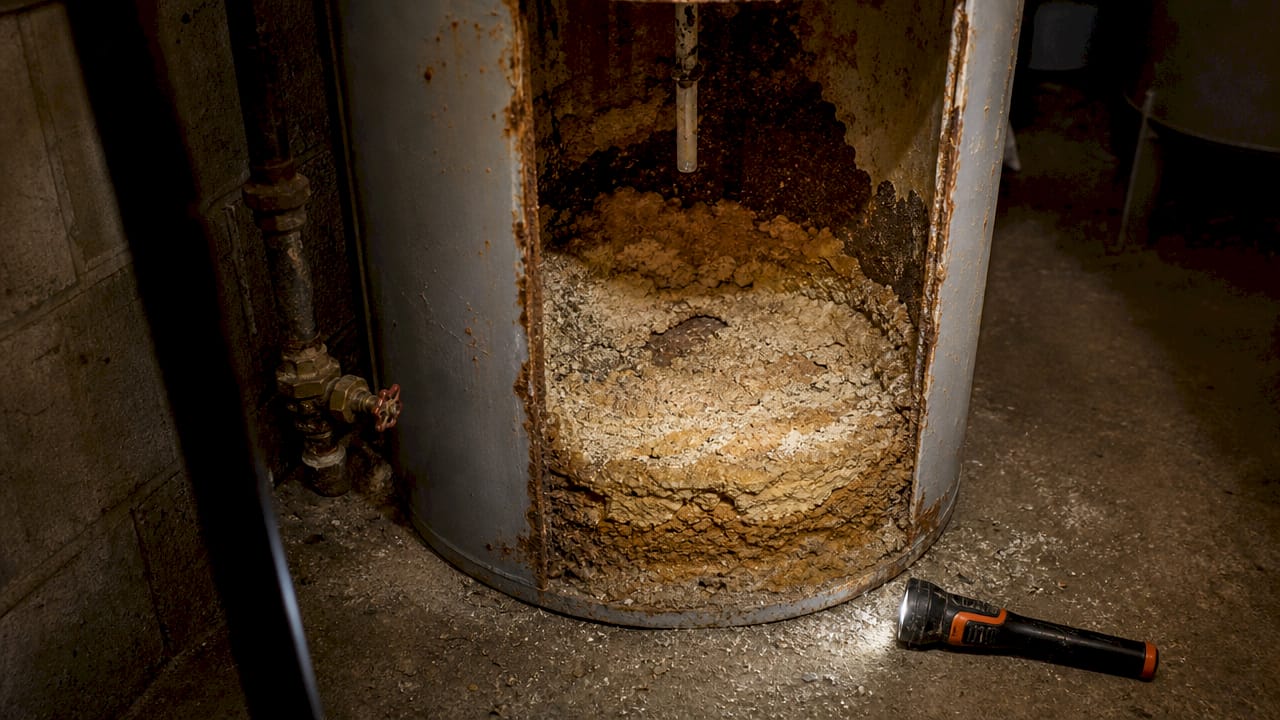
The damage does not stop at efficiency. Sediment also traps moisture against the tank wall, which accelerates corrosion from the inside out. That trapped moisture creates popping and rumbling sounds as steam bubbles form and burst under the sediment layer. Those sounds are not just annoying. They signal that the tank lining is being eroded, which puts you on a fast track toward leaks or total tank failure.
Hard water regions face the worst buildup rates. In areas with water hardness between 150–300 ppm, sediment can accumulate over an inch per year inside the tank. That is a significant volume of material displacing water and forcing your system to work harder every single day.
How often should you flush your water heater?
The general rule is once a year for most homes. Annual flushing keeps mineral deposits from hardening into a thick, difficult-to-remove layer and keeps the system running at full efficiency. Rheem and other major manufacturers back this schedule as a baseline for all tank-style water heaters.
Homeowners in hard water areas need to flush more frequently. If your municipal water supply tests above 150 ppm in hardness, a six-month flushing schedule is the right call. You can check your water hardness through your local utility’s annual water quality report, which is publicly available in most states.
A few other factors should influence your schedule:
- Tank age. A newer tank that has been flushed regularly is straightforward to service. An older tank that has never been flushed is a different situation entirely.
- Water source. Well water often carries higher mineral loads than treated municipal water, which speeds up sediment accumulation.
- Household size. More people means more hot water demand, which means more heating cycles and faster sediment formation.
- Visible signs. Discolored water, reduced hot water output, or unusual noises all signal that flushing is overdue regardless of your last service date.
Pro Tip: Set a recurring calendar reminder every september to schedule your annual water heater flush before the heavy winter demand season begins. Pairing it with your furnace checkup makes it easy to remember.
What are the full benefits of flushing your water heater?
The benefits of flushing your water heater go well beyond a lower energy bill. Regular maintenance protects the tank itself, the water quality in your home, and your budget over the long term.
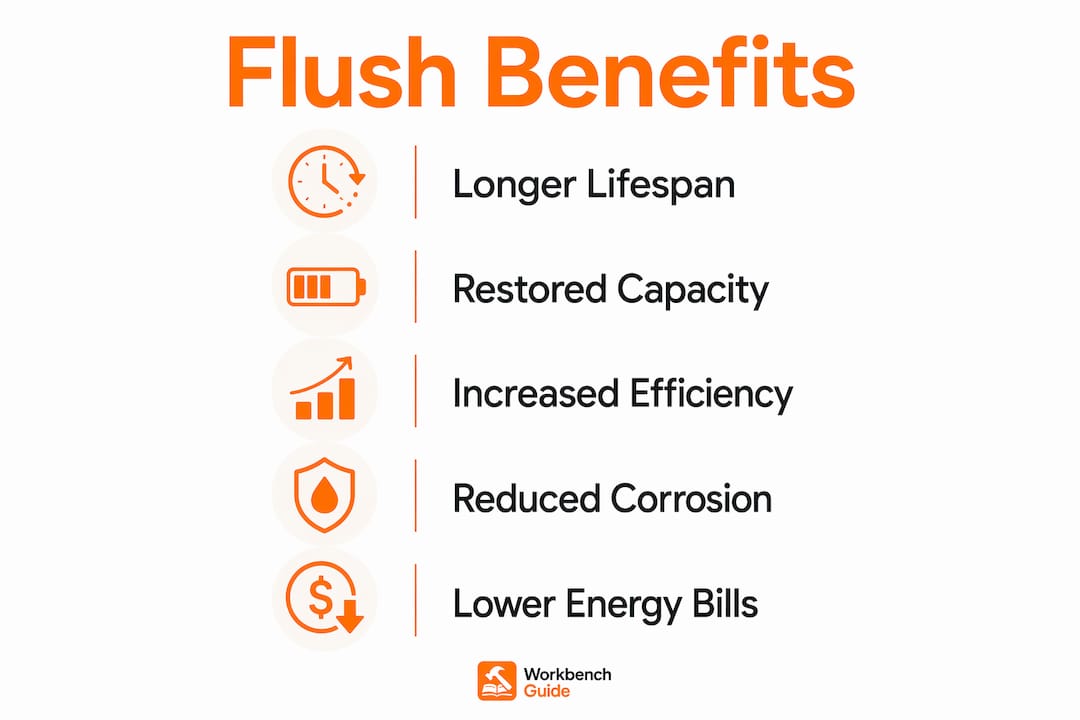
Longer lifespan. Preventive maintenance extends a tank-style water heater’s life by 3–5 years beyond the average 12-year lifespan. That is a meaningful return on a task that takes less than an hour once a year. Replacing a water heater costs several hundred to over a thousand dollars depending on the unit and labor, so adding years to its life has real financial value.
Restored tank capacity. Sediment physically displaces water inside the tank. A 50-gallon tank with five inches of sediment buildup may effectively hold only 40 gallons of usable water. That explains why households notice shorter hot showers and faster hot water depletion as the tank ages without maintenance.
Fewer leaks and less corrosion. Trapped moisture under sediment creates the conditions for rust to form on the tank wall. Flushing removes that moisture-trapping layer before it causes permanent damage. A corroded tank will eventually leak, and water damage to floors, walls, and subfloor is far more expensive than a routine flush.
Quieter operation. The popping and rumbling sounds many homeowners hear from their water heater are caused by steam bubbles forming under hardened sediment. Flushing eliminates the sediment layer and stops those sounds entirely.
Safer water. Neglected sediment can create breeding conditions for bacteria like Legionella inside the tank. Routine flushing removes the sediment layer that supports bacterial growth, making it a health maintenance task as much as a mechanical one.
“Sediment acts as an insulation barrier forcing the system to work harder, increasing utility costs and the risk of leaks from trapped moisture. Flushing is one of the highest-return maintenance tasks a homeowner can perform.” — Bob Vila
How to safely flush your water heater
Most homeowners can flush their own water heater safely with basic tools and a clear process. The key is following the steps in order and not skipping the safety precautions at the start.
- Turn off the power or gas. For electric heaters, switch off the breaker. For gas heaters, set the thermostat to the “pilot” setting. Never flush a tank with the heating element still active.
- Let the water cool. Hot water straight from the tank can cause burns. Wait at least one to two hours after shutting off the heat source before draining.
- Connect a garden hose to the drain valve. Route the hose to a floor drain, a bucket, or outside. The water will carry sediment and may be discolored.
- Open a hot water faucet inside the house. This prevents a vacuum from forming in the line and allows the tank to drain freely.
- Open the drain valve and let the tank empty. Watch the water running out. When it runs clear, the sediment has been flushed out.
- Close the drain valve, refill the tank, and restore power or gas. Wait for the tank to fully refill before turning the heating element back on to avoid damaging it.
Pro Tip: While the tank is drained, check the anode rod. This sacrificial metal rod protects the tank from corrosion and should be replaced every 3–4 years. Replacing it during a flush visit saves a separate service call. You can find guidance on plumbing repairs for homeowners to help with both tasks.
When to call a professional instead
Flushing an older tank that has never been serviced carries real risk. Hardened sediment can clog the drain valve, and forcing it open can cause the valve to fail entirely. If your tank is more than three years old and has never been flushed, a licensed plumber should assess it first. The cost to professionally flush a water heater runs roughly $110–$200 depending on tank size and local labor rates. That fee is worth paying if it prevents a failed valve or a cracked tank. Homeowners who are unsure about shutting off gas lines or who have older tanks should always defer to a professional. For a broader look at what residential plumbing upgrades can do for your home’s efficiency and safety, it is worth reviewing your full plumbing system at the same time.
Key takeaways
Flushing your water heater once a year removes sediment, restores efficiency, extends the tank’s life, and protects your household water quality.
| Point | Details |
|---|---|
| Flush annually at minimum | Most homes need yearly flushing; hard water areas need every six months. |
| Sediment cuts efficiency sharply | Buildup reduces water heater efficiency by 20–40%, raising energy bills monthly. |
| Lifespan extends by years | Regular maintenance adds 3–5 years beyond the average 12-year tank lifespan. |
| Old tanks need professional help | Tanks never flushed after three or more years risk valve failure during DIY draining. |
| Health matters too | Sediment supports bacterial growth; flushing removes the conditions that allow it. |
The maintenance task most homeowners regret skipping
I have talked with a lot of homeowners who discovered their water heater was failing only after the floor was already wet. The pattern is almost always the same. The tank was never flushed, the sediment built up over years, corrosion set in quietly, and by the time anything was noticeable, the damage was done.
The frustrating part is that flushing is genuinely simple. It takes under an hour, costs nothing if you do it yourself, and the payoff is years of reliable hot water and lower energy bills. Yet it stays off most people’s radar because the water heater sits in a utility closet and works silently until it does not.
My honest advice: treat your water heater the same way you treat your car’s oil change. You do not wait for the engine to seize before you act. You put it on a schedule and stick to it. Pair the flush with your annual water heater service and check the anode rod at the same time. That combination, done consistently, is what separates a water heater that lasts 15 years from one that fails at 9.
The one mistake I see most often is homeowners flushing a neglected old tank themselves without checking the drain valve condition first. A stuck or corroded valve that gets forced open can fail completely, turning a simple maintenance task into an emergency. When in doubt, call a plumber for the first flush on an old tank and watch the process. After that, you can take it over yourself with confidence.
— Sean
Keep your water heater on a maintenance schedule
Water heater flushing is one piece of a larger home maintenance picture. When you treat it as a scheduled task rather than a reactive fix, you stay ahead of the repairs that cost the most. Workbenchguide makes that easier with step-by-step home maintenance checklists that cover your water heater, HVAC system, plumbing, and more, organized by season so nothing slips through the cracks. Whether you handle maintenance yourself or bring in a contractor, having a clear schedule and a checklist keeps your home running well and your repair costs low. Workbenchguide also offers preventive maintenance guides that show you exactly where to focus your time and money each year.
FAQ
Why flush a water heater at all?
Flushing removes sediment that reduces efficiency by 20–40% and causes corrosion, noise, and bacterial growth inside the tank. It is the single most effective maintenance task for extending water heater life.
How often should I flush my water heater?
Most homes need an annual flush. Homes in hard water areas with water hardness above 150 ppm should flush every six months to prevent rapid sediment accumulation.
What happens if you never flush your water heater?
Sediment builds up, efficiency drops, energy bills rise, and the tank corrodes from the inside. Eventually the tank leaks or fails entirely, requiring full replacement.
Can I flush my water heater myself?
Yes, if the tank has been serviced regularly and you know how to shut off the power or gas supply. Tanks that have never been flushed after three or more years should be assessed by a licensed plumber first.
How much does a professional water heater flush cost?
Professional flushing costs roughly $110–$200 depending on tank size, type, and local labor rates. DIY flushing costs nothing beyond your time if you have the right tools and knowledge.
Leave a Reply