

Garage decluttering is the process of removing unneeded items from your garage before organizing what remains, and it is the single most effective way to reclaim usable space at home. The average American spends 55 minutes daily searching for lost items, with garage disorganization as a major cause. That adds up to over six hours a week lost to a cluttered space. Professional organizers, including members of the National Association of Professional Organizers, consistently rank the garage as the hardest room to reclaim because it collects overflow from every other area of the house. The good news is that a clear system fixes it permanently.
What are the main benefits of decluttering a garage?
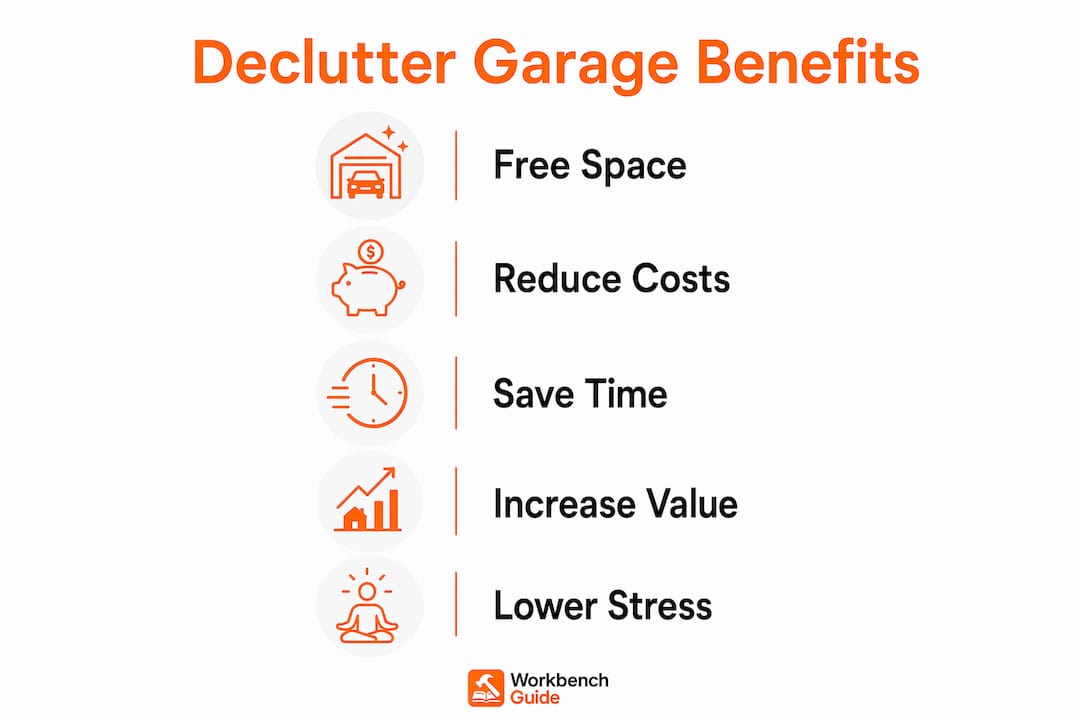
Decluttering your garage delivers practical, financial, and mental health benefits that most homeowners underestimate until they experience them firsthand.
More usable space and safer conditions. A cleared garage gives you room to park your car, set up a workbench, or create dedicated storage zones. Cluttered garages present serious safety hazards including tripping risks, unstable stacked piles, and fire danger from improperly stored flammables like gasoline and paint thinner. Removing those hazards is not cosmetic. It is a direct reduction in injury and property risk.

Lower costs over time. Disorganized garages cause damage and premature wear to tools and equipment, leading to unnecessary replacement costs. When a cordless drill sits buried under boxes for two years, the battery degrades and the tool may be written off as lost. Clearing the space means you stop buying duplicates of items you already own.
Time savings every single day. Finding your leaf blower, extension cord, or holiday decorations should take under a minute. When your garage is organized by zone, retrieval time drops to seconds rather than the 55-minute daily average tied to general household disorganization.
Higher home value and curb appeal. Real estate agents consistently note that a clean, organized garage signals overall home care to buyers. A garage that fits two cars and has visible wall storage reads as a feature, not a liability.
Reduced stress and mental clarity. Decluttering the garage reduces mental fog by eliminating visual reminders of unfinished tasks. Every pile you see triggers a low-level stress response. Clearing it removes that trigger entirely.
Pro Tip: Schedule a 15-minute garage walkthrough every month. Catching small accumulations early prevents the full-day purge from ever becoming necessary.
Why do garages accumulate clutter more than other home areas?
The garage collects clutter faster than any other room because it functions as the default overflow zone for the entire house.
Garages are often “holding spaces” for emotionally charged items and household overflow. Old sports equipment, a deceased relative’s tools, your child’s first bicycle. These items carry memory and meaning, which makes the decision to remove them genuinely difficult. This is not a willpower problem. It is a psychological one.
The “just in case” mindset compounds the problem. Homeowners keep broken appliances, duplicate garden hoses, and outdated car parts on the theory that they might be useful someday. People struggle most with garage decluttering because these items represent past versions of their lives rather than current needs. A useful test: if the item costs less than $20 to replace and you have not used it in a year, it does not belong in your garage.
Physical conditions make the garage worse than other rooms. Poor lighting, awkward layouts, and bulky items that are hard to move all create friction that discourages regular tidying. Unlike a kitchen drawer, a garage pile requires real physical effort to address.
“Garage drift is the quiet killer of organization. Items meant for the basement, attic, or donation box end up in the garage and stay there permanently because no one makes a deliberate decision to move them.” — GarageDaily.com
Garage drift describes exactly this pattern: items from other rooms migrate to the garage and never leave. The fix is simple but requires intention. Every decluttering session needs a dedicated “Relocate” pile that goes back inside the house the same day.
How to declutter your garage: effective steps and tips
The single most important rule in garage decluttering is this: never organize before you declutter. Organizing clutter only masks the problem and prevents you from realizing the true potential of the space.
Step-by-step garage decluttering process
-
Empty everything onto the driveway or yard. Pull every item out of the garage completely. Seeing everything at once forces honest decisions and prevents the “I’ll deal with that later” trap.
-
Sort into five piles: Keep, Donate, Sell, Trash, and Relocate. The Relocate pile is critical. Items that belong inside the house go back inside today, not eventually.
-
Evaluate emotional attachments with a direct question. Ask yourself: “Would I buy this again today?” If the answer is no, it leaves. For borderline items, apply the $20 replacement test. If it costs less than $20 to replace and you have not used it in 12 months, let it go.
-
Clean the garage thoroughly before anything goes back. Sweep, degrease the floor, and check for moisture or pest issues. A clean surface makes the next step far more effective.
-
Use vertical space after the purge. Install pegboards for hand tools, wall-mounted bike hooks, and ceiling storage racks for seasonal items. Clear labeled bins and vertical storage maximize space and keep frequently used items accessible. Buy shelving units only after the purge is complete.
-
Establish a maintenance habit. A 5-Minute Rule tidying habit can prevent up to 90% of clutter re-accumulation. Before you leave the garage each time, spend five minutes returning items to their designated spots.
Pro Tip: Label every bin with both a category and a short list of contents. “Seasonal: Halloween, Thanksgiving” is more useful than a label that just says “Holiday.”
Purge first vs. organize first: why the order matters
| Approach | Result |
|---|---|
| Purge first, then organize | You discover true available space and buy only the storage you actually need |
| Organize first, then purge | You fill containers with items you do not need and run out of space again within months |
| Buy storage before purging | You keep more items to justify the purchase, which defeats the project entirely |
Installing storage before decluttering leads to keeping excess items just to fill the space. This is one of the most common and costly mistakes homeowners make.
A full 2-car garage declutter takes 1–2 days when done continuously. If that feels like too much, break it into three sessions: one for emptying and sorting, one for cleaning and planning storage, and one for putting everything back in its new place.
How often should you declutter your garage?
Professional organizers recommend a full garage declutter and reorganization at least once every 12 months to maintain function and prevent buildup from getting out of hand.
The best time for an annual purge depends on your climate and how you use the space:
- Spring is ideal for most homeowners. Winter gear comes out, summer tools go in, and the weather makes working in the garage comfortable.
- Fall works well if you store holiday decorations and seasonal equipment. Clearing space before winter prevents the garage from becoming a dumping ground during the cold months.
- After a major life event such as a move, a child leaving for college, or a home renovation is a natural trigger for a full purge.
Small habits between annual purges make the biggest difference. A weekly 5-minute tidy prevents garage drift from taking hold. Pair your garage check with an existing routine, such as taking out the trash or mowing the lawn, so it becomes automatic rather than a separate task.
Integrate garage decluttering into your broader home maintenance schedule so it never gets skipped. A calendar reminder set for the same week each year removes the decision fatigue of figuring out when to start.
| Frequency | Task |
|---|---|
| Daily or after each use | Return tools and equipment to their designated spots |
| Weekly (5 minutes) | Scan for misplaced items and relocate them immediately |
| Seasonally | Swap out seasonal gear and check for new accumulation |
| Annually | Full purge, deep clean, and storage reorganization |
The spring cleaning checklist from Workbenchguide includes garage tasks alongside the rest of the house, which makes it easier to treat the garage as part of your regular home care routine rather than a separate project.
Key Takeaways
Decluttering your garage before organizing is the only approach that creates lasting space, reduces safety hazards, and saves you real time and money.
| Point | Details |
|---|---|
| Purge before organizing | Organizing clutter only hides the problem; always remove items first. |
| Safety is a real risk | Cluttered garages create tripping hazards, unstable piles, and fire risk from stored flammables. |
| Time loss is measurable | Americans lose 55 minutes daily to disorganization; a clear garage cuts retrieval time to seconds. |
| Annual declutter is the standard | Professional organizers recommend a full purge and reorganization at least once every 12 months. |
| Maintenance prevents re-accumulation | A 5-Minute Rule tidying habit after each garage visit prevents up to 90% of clutter from returning. |
The part most homeowners skip entirely
Most garage decluttering advice focuses on the physical steps. Empty it out, sort into piles, buy some bins. That advice is correct, but it skips the part that actually determines whether the project succeeds long-term.
The real challenge is the emotional weight of the stuff. I have seen homeowners spend three hours sorting a single shelf because every item connects to a memory or a version of themselves they are not ready to let go of. A box of old car parts from a vehicle they no longer own. A set of golf clubs from a hobby they stopped in 2015. These items are not junk to the person holding them. They are identity.
The mindset shift that actually works is reframing the garage as a functional extension of your living space, not a storage unit you happen to own. You would not keep broken furniture in your living room. The same standard applies here.
Breaking the project into smaller sessions also changes the emotional math. One hour on a Saturday feels manageable. A full weekend feels like a confrontation. Start with one shelf, one corner, one category. Visible progress builds momentum faster than any organizational system.
The goal is not a perfect garage. The goal is a garage that works for how you actually live today, not how you lived five years ago.
— Sean
Workbenchguide tools to keep your garage organized year-round
Workbenchguide is built for homeowners who want to stay ahead of maintenance instead of reacting to it. The home maintenance checklist covers garage care alongside every other area of your home, with task timing and seasonal reminders built in. You can also find step-by-step DIY project guides for garage storage builds, wall organization installs, and seasonal prep. Treating your garage as part of a whole-home maintenance routine is the most reliable way to keep it functional all year. Workbenchguide gives you the structure to make that happen without having to figure it out from scratch.
FAQ
Why should I declutter my garage first before organizing?
Organizing before decluttering only hides clutter inside containers and prevents you from seeing how much space you actually have. Always remove unneeded items first, then buy storage solutions sized to what remains.
What should I throw away in my garage?
Throw away broken tools, expired chemicals, duplicate items, and anything you have not used in over a year. Apply the $20 test: if it costs less than $20 to replace and you have not touched it in 12 months, it goes.
How long does it take to declutter a garage?
A full 2-car garage declutter takes 1–2 days when done in one continuous effort. Breaking it into three focused sessions over a weekend makes the process more manageable without losing momentum.
How often should I clean out my garage?
Professional organizers recommend a full declutter and reorganization at least once per year, with brief weekly tidying sessions to prevent drift between annual purges.
Does a clean garage actually increase home value?
A clean, organized garage signals overall home care to buyers and real estate agents. It adds functional square footage to the home’s appeal, which supports a stronger asking price and faster sale.