
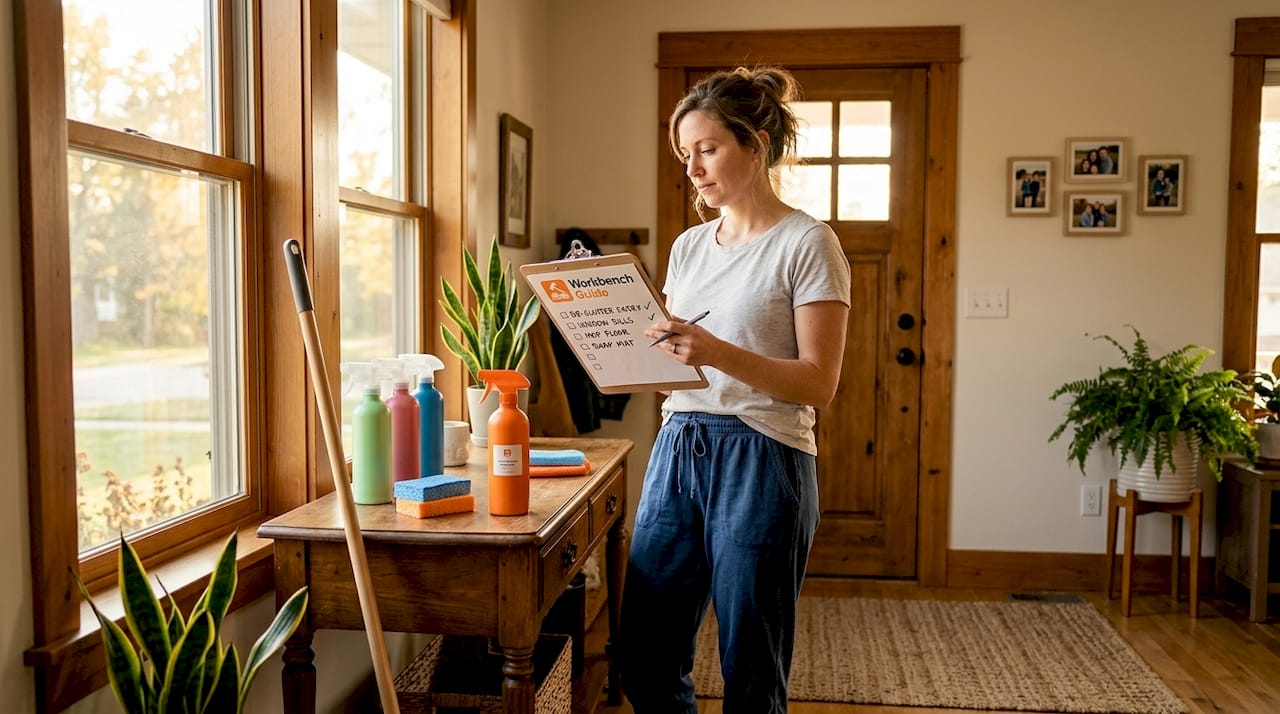
A spring cleaning checklist is a prioritized sequence of tasks designed to deep clean and organize your entire home efficiently, starting with decluttering and ending with floors. Most homeowners treat spring cleaning as a single overwhelming event, but the right structure turns it into a manageable, room-by-room reset that actually sticks. Tools like microfiber cloths, a well-stocked cleaning caddy, and products like Simple Green All-Purpose Cleaner make the process faster and more effective. This guide gives you the exact sequence, timing, and room-specific tasks to get your home clean without burning out.
1. What’s the best sequence for your spring cleaning checklist?
The single biggest mistake in spring cleaning is starting in the wrong place. Cleaning in the wrong order means you end up re-cleaning surfaces you already finished, which wastes both time and effort. The expert-recommended sequence is: declutter first, then dry cleaning, then wet cleaning, then floors last.
Why this order works:
- Declutter first. Decluttering before cleaning avoids cleaning surfaces twice. Moving items after you’ve already wiped a shelf means starting over.
- Dry dusting before wet cleaning. Airborne dust rebound traps you in a cycle of re-suspension. Dry dusting with microfiber cloths captures particles before any liquid is applied.
- Wet cleaning with dwell time. Spray your cleaner and wait. A 2-minute dwell time after applying product lets the chemistry do the work, so you’re wiping away grime rather than smearing it.
- Floors absolutely last. Dust and debris fall during every earlier step. Vacuuming or mopping at the end catches everything in one pass.
Following this sequence can cut total cleaning time by up to 25 to 30 percent. That’s not a minor efficiency gain. On a full-home clean, that difference can mean finishing in two weekends instead of three.
Pro Tip: Set a timer for each room before you start. The 20-minute rule focuses your effort on one task or zone per session, which prevents the scattered, unfinished feeling that derails most spring cleaning attempts.
2. Room-by-room spring cleaning guide with time estimates
A thorough spring clean typically takes 2 to 3 weekends when broken into rooms. Planning your sessions around realistic time blocks keeps the project moving without exhaustion.
Kitchen (3 to 4 hours)
Starting in the kitchen gives you the biggest morale boost and visual payoff, which sets positive momentum for the rest of the home. Focus on the refrigerator interior, oven, range hood filter, cabinet fronts, and the area behind appliances. Pull the refrigerator out at least once a year to vacuum the coils. Wipe down every cabinet door with a degreaser before moving to counters and the sink.

Bathrooms (2 to 2.5 hours)
Bathrooms concentrate grime in predictable spots: grout lines, the base of the toilet, the shower door track, and the exhaust fan cover. Spray tile and grout with a cleaner and let it sit while you tackle the mirror and vanity. Finish with the floor and replace the shower curtain liner if it shows mold.
Bedrooms (2 to 3 hours)
Swap winter bedding for lighter options and wash all pillows, duvet covers, and mattress protectors. Flip or rotate the mattress. Edit the closet by pulling out anything you haven’t worn in 12 months. Dust ceiling fan blades, wipe baseboards, and vacuum under the bed.
Living room (1.5 to 2 hours)
Vacuum upholstered furniture and flip cushions. Wipe down electronics, remote controls, and lamp bases. Clean window sills and tracks. Dust blinds with a microfiber cloth or the brush attachment on your vacuum.
Entry, laundry room, and garage
These spaces are easy to skip but matter for overall home function. Clean the entry mat, wipe down the front door, and organize shoes. In the laundry room, run a cleaning cycle on the washer and wipe the dryer drum. In the garage, sweep the floor, check stored chemicals for expiration, and test the garage door safety reverse.
| Room | Estimated time | Priority tasks |
|---|---|---|
| Kitchen | 3 to 4 hours | Appliance interiors, cabinet fronts, range hood |
| Bathrooms | 2 to 2.5 hours | Grout, exhaust fan, toilet base, liner |
| Bedrooms | 2 to 3 hours | Bedding swap, closet edit, mattress rotation |
| Living room | 1.5 to 2 hours | Upholstery, electronics, window tracks |
| Entry and laundry | 1 to 1.5 hours | Door, washer cycle, dryer drum |
| Garage | 1 to 2 hours | Floor sweep, chemical check, door test |
3. Seasonal and allergen-aware tasks for your deep cleaning checklist
Indoor air quality is one of the most overlooked parts of any seasonal cleaning list. The EPA identifies source control, ventilation, and air filtration as the three key strategies for healthy indoor air. Spring cleaning is the right time to address all three at once.
Allergen-aware tasks to add to your checklist:
- Replace HVAC filters and clean return air vents. A clogged filter recirculates dust, pet dander, and pollen through every room.
- Keep windows closed during high pollen days and use an air purifier with a HEPA filter instead. Opening windows during peak pollen hours (typically 5 a.m. to 10 a.m.) pulls allergens directly into the space you just cleaned.
- Use damp dusting or microfiber cloths rather than dry feather dusters. Dry dusters launch particles back into the air. Microfiber traps them.
- Wash all throw blankets, decorative pillow covers, and curtains. Fabric surfaces hold allergens year-round.
- Test smoke alarms and carbon monoxide detectors. Replace batteries in both.
- Check the dehumidifier if you have one. Mold growth accelerates above 50 percent relative humidity, and spring brings moisture.
Note: If you or a family member has seasonal allergies, wear an N95 mask while dusting and vacuuming. This is especially true when cleaning areas that have been closed off all winter, like basements, attics, and storage rooms.
The American Cleaning Institute recommends treating spring cleaning as a temporarily expanded version of your normal routine rather than a separate, intimidating project. That framing makes allergen tasks feel like natural additions rather than extra work.
4. How renters can adapt a spring cleaning checklist
Renters face a different set of priorities than homeowners. The core cleaning tasks are the same, but the stakes around deposits and landlord relationships add a layer of documentation that most spring cleaning guides ignore.
Renter-specific adjustments:
- Document everything with photos. Dated photos of repairs and cleaning progress protect your deposit when you move out. Take photos before and after cleaning each room, and store them in a dated folder on your phone or cloud storage.
- Scale the checklist to your space. A studio apartment does not need the same 3-weekend commitment as a four-bedroom house. Focus on high-impact tasks: kitchen appliances, bathroom grout, window tracks, and closet organization.
- Check what you’re responsible for. Many leases exclude tasks like carpet shampooing or exterior window cleaning. Review your lease before adding those to your list.
- Use a printable or digital checklist. A customizable spring cleaning checklist that generates renter-specific recommendations helps you prioritize without guessing. Apps like Tody or Habitica let you track tasks and set reminders.
- Report maintenance issues in writing. Spring cleaning is the best time to notice problems like a dripping faucet, a loose outlet cover, or a slow drain. Reporting them in writing during your cleaning creates a timestamped record.
For apartment-specific cleaning techniques, apartment cleaning guidance covers modifications that apply when you’re working with smaller spaces and shared building systems. The core principle is the same: work top to bottom, declutter first, and document as you go.
Key takeaways
A spring cleaning checklist works best when you follow the declutter-to-floors sequence, clean room by room with realistic time blocks, and layer in allergen control and seasonal safety checks.
| Point | Details |
|---|---|
| Sequence drives efficiency | Declutter first, then dry dust, then wet clean, then floors to avoid re-cleaning. |
| Room-by-room timing | Kitchen takes 3 to 4 hours; plan 2 to 3 weekends for a full home reset. |
| Allergen control matters | Replace HVAC filters, use microfiber cloths, and keep windows closed on high pollen days. |
| Renters need documentation | Dated photos of cleaning and repairs protect deposits and create a maintenance record. |
| Pacing prevents burnout | The 20-minute rule and 31-day declutter plans make large projects sustainable. |
Why I stopped treating spring cleaning as one big event
Most people approach spring cleaning the way they approach a tax deadline: one frantic push, then relief until next year. I did the same thing for years, and the result was always the same. I’d clean hard for a weekend, feel good for a week, and watch the house slide back to its previous state by May.
What changed things for me was treating the deep clean as a 31-day declutter plan spread across manageable daily chunks rather than a single event. One drawer on Monday. One closet shelf on Tuesday. The cleaning itself became faster because the clutter was already gone before I picked up a cloth.
The other shift was taking allergen tasks seriously. I used to skip filter replacements and assume open windows meant fresh air. Once I started replacing HVAC filters at the start of every season and using a HEPA air purifier in the bedroom, the difference in how the house felt was immediate. That’s the part most home cleaning guides bury in a footnote.
My honest advice: build your spring cleaning checklist around the sequence first, then the rooms, then the seasonal tasks. Don’t start with the garage just because it bothers you most. Start with the kitchen, follow the order, and let the momentum carry you through. The system works when you trust it.
— Sean
Keep your home in shape all year with Workbenchguide
Spring cleaning resets your home, but the houses that stay in the best shape are the ones with a plan that runs year-round. Workbenchguide’s home maintenance checklist connects your spring deep clean to the seasonal tasks that prevent costly repairs before they start. From HVAC servicing schedules to gutter checks and weatherproofing reminders, the platform keeps you on track with structured task lists and timely reminders. You can also explore the seasonal home prep guide for a full breakdown of what to check each season, including the spring tasks that go beyond cleaning and into real maintenance.
FAQ
What is a spring cleaning checklist?
A spring cleaning checklist is a structured list of deep cleaning and organizing tasks, sequenced by room and priority, to reset your home at the start of the season. It goes beyond weekly maintenance to cover areas like appliance interiors, bedding swaps, and allergen control.
How long does a full spring clean take?
A thorough spring clean typically takes 2 to 3 weekends when broken into rooms. The kitchen alone takes 3 to 4 hours, and bathrooms take 2 to 2.5 hours, so planning by room prevents the project from feeling unmanageable.
What order should I clean my house in spring?
Clean in this sequence: declutter first, then dry dust from top to bottom, then apply wet cleaners with a 2-minute dwell time, then finish with floors. This order prevents re-cleaning and cuts total time by up to 25 to 30 percent.
What spring cleaning tasks reduce allergens?
Replace HVAC filters, use microfiber cloths for dusting, wash all fabric surfaces including curtains and throw blankets, and keep windows closed during high pollen periods. The EPA recommends source control, ventilation, and air filtration as the three core strategies for healthy indoor air.
How should renters approach spring cleaning differently?
Renters should document cleaning progress and any repairs with dated photos to protect their deposit. They should also scale the checklist to their space, check the lease for excluded tasks, and report maintenance issues in writing during the cleaning process.