
Insulation is defined as any material that resists heat flow between the inside and outside of a home. The role of insulation in homes goes far beyond keeping you warm in winter. It reduces heat gain in summer, cuts heating and cooling costs by 15% to 45%, and creates a more stable, comfortable living environment year-round. Two concepts drive real-world performance: R-value, which measures thermal resistance, and air sealing, which stops drafts that insulation alone cannot fix. The U.S. Department of Energy and the EPA both treat insulation upgrades as the highest-return energy improvement available to homeowners.
How does insulation work to improve energy efficiency and comfort?
Insulation works by slowing three types of heat transfer: conduction, convection, and radiation. Understanding each one helps you make better upgrade decisions.
Conduction is heat moving through solid materials. Touch a cold metal door in winter and you feel conduction at work. Insulation materials like fiberglass and cellulose trap air in tiny pockets, which slows that transfer dramatically. The R-value rating measures exactly this resistance to conductive heat flow.
Convection is heat carried by moving air. This is where air leaks become the bigger problem. Air leaks account for 25% to 40% of all heating and cooling energy loss in a typical home. That is roughly equivalent to leaving a window open every single day of the year.
Radiation is heat traveling as infrared energy, most relevant in hot climates. Radiant barriers, typically foil-faced materials installed in attics, reflect solar heat before it enters the living space. They work best in southern states where summer sun loads are extreme.
Insulation delivers benefits in both directions. In winter, it keeps heat inside. In summer, it blocks heat from entering. That two-way function is why insulation paired with air sealing reduces drafts, temperature swings, and moisture problems simultaneously.
- Attic insulation prevents the largest single source of heat loss in most homes
- Wall insulation reduces temperature variation between rooms
- Basement and crawl space insulation protects pipes and floors from cold
- Radiant barriers cut summer cooling loads in hot climates
Pro Tip: Seal air leaks before adding insulation. A well-sealed home with moderate R-value insulation outperforms a leaky home with premium insulation every time.
What types of home insulation materials are used most often?
The four most common types of home insulation each suit different locations, budgets, and performance goals.
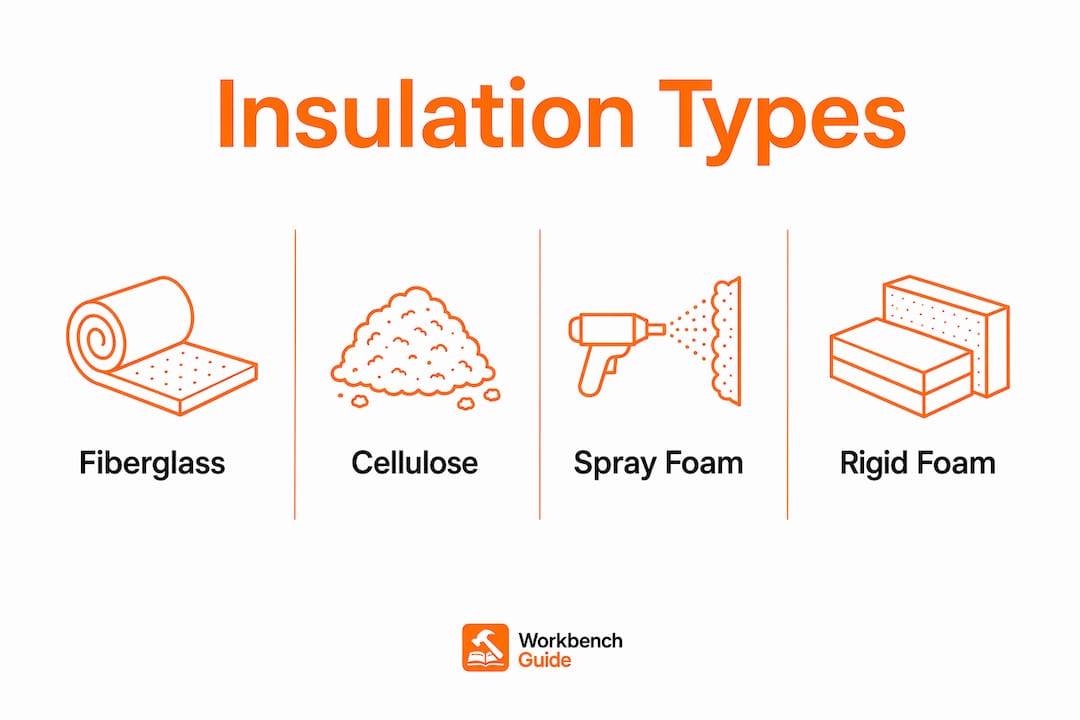
Fiberglass batts are the most widely installed material in American homes. They come in pre-cut panels sized for standard wall and attic framing. They are affordable and easy to handle, but gaps and compression reduce their effective R-value significantly.
Blown-in cellulose is made from recycled paper treated with fire retardant. It fills irregular spaces and existing wall cavities without major demolition, making it the top choice for retrofitting older homes. Its R-value per inch is slightly higher than fiberglass batts.
Spray foam acts as both insulator and air barrier in one application. Properly installed spray foam delivers high R-values and moisture resistance, making it ideal for airtight building envelopes. The upfront cost is higher, but the combined insulation and air sealing performance often justifies it.
Rigid foam board is used on exterior walls, basement walls, and under slabs. It provides continuous insulation that reduces thermal bridging through framing members.
| Material | R-value per inch | Relative cost | Best location |
|---|---|---|---|
| Fiberglass batts | R-2.9 to R-3.8 | Low | Attics, walls, floors |
| Blown-in cellulose | R-3.2 to R-3.8 | Low to medium | Attics, existing walls |
| Spray foam (closed cell) | R-6.0 to R-7.0 | High | Rim joists, crawl spaces |
| Rigid foam board | R-3.8 to R-6.5 | Medium | Exterior walls, basements |
Each material has a place. The right choice depends on where you are insulating, your climate zone, and whether you are building new or retrofitting an existing home.
Why is proper installation and air sealing critical?
Installation quality determines whether your insulation performs as advertised. Poor installation reduces effective R-value by more than 30%. That means a wall rated R-15 can perform closer to R-10 if the installer compresses the batts, leaves gaps, or skips air sealing.
The two most common installation mistakes are compression and thermal bridging. Compressing fiberglass batts to fit a thinner cavity reduces their R-value proportionally. Thermal bridging occurs when heat travels through wood framing studs, which conduct heat faster than insulation. Thermal bridging through framing can reduce whole-wall R-value by 15% to 19%. Continuous exterior insulation, such as rigid foam board applied over the entire wall surface, is the most effective fix.
Air sealing deserves equal attention. The expert guidance is clear: seal first, then insulate. Caulk and weatherstrip around windows, doors, and electrical outlets. Use spray foam to close gaps around pipes, wires, and ducts where they pass through walls and floors. Homes with ducts running through unconditioned spaces like attics or crawl spaces lose 20% to 30% of conditioned air through duct leakage alone.
- Inspect the attic floor for gaps around light fixtures, plumbing stacks, and top plates
- Seal all penetrations with fire-rated caulk or spray foam before adding insulation
- Check that batts fill the full cavity depth without compression
- Verify that insulation covers the top plate and rim joists completely
- Confirm duct connections are sealed with mastic or foil tape, not standard duct tape
Pro Tip: Ask your contractor for a blower door test before and after the project. This test measures air leakage in ACH50 (air changes per hour at 50 pascals) and gives you a measurable before-and-after comparison.
How does insulation affect energy bills and what savings can you expect?
The financial case for insulation upgrades is strong and well-documented. Proper air sealing combined with insulation reduces heating and cooling costs by 15% on average, with savings reaching 45% in older homes or extreme climates. For a household spending $2,400 per year on energy, that translates to $360 to $1,080 in annual savings.
The savings hold up over time. A recent study found that effective insulation reduces annual gas heating consumption by about 19%, with efficiency gains sustained for up to ten years after installation. That longevity makes insulation one of the few home improvements that keeps paying you back without ongoing maintenance costs.
Climate zone matters. Homeowners in cold northern states save more on heating. Homeowners in hot southern states save more on cooling. The DOE recommends attic insulation levels of R-38 to R-60 for most American climates, and adding insulation to any attic below R-30 is considered cost-effective regardless of location.
| Upgrade | Typical cost | Estimated payback | Annual savings range |
|---|---|---|---|
| Attic air sealing + insulation | $1,500–$3,500 | 3–7 years | $200–$600 |
| Wall insulation (retrofit) | $2,000–$5,000 | 5–10 years | $150–$400 |
| Crawl space insulation | $1,200–$3,000 | 4–8 years | $100–$300 |
| Spray foam rim joists | $500–$1,500 | 2–4 years | $100–$250 |
One important caveat: diminishing returns set in beyond certain R-values. Going from R-30 to R-60 in an attic delivers meaningful savings. Going from R-60 to R-70 rarely justifies the cost. Spend the extra budget on air sealing or duct work instead.
What practical steps should homeowners take to assess their insulation?
Start with a visual inspection of your attic. If you can see the tops of the floor joists, your insulation is below R-30 and almost certainly under-performing. Cold floors above a crawl space, drafts near outlets on exterior walls, and rooms that never reach the right temperature are all signs of inadequate insulation or air leaks.
A professional home energy audit gives you a complete picture. Auditors use blower door tests and infrared cameras to find hidden air leaks and thermal weak spots that a visual inspection misses. Most utilities offer subsidized audits, and many states offer rebates for insulation upgrades identified through an audit.
For homeowners who want to act before scheduling an audit, here is a practical checklist:
- Check attic insulation depth with a ruler. Less than 10 inches of fiberglass or cellulose signals an upgrade is needed
- Feel exterior walls on a cold day. A wall that feels cold to the touch has little or no insulation
- Look for daylight around window and door frames, which indicates air leaks
- Inspect the basement rim joist, the area where the floor framing meets the foundation wall, for gaps and missing insulation
- Check that attic hatch covers are insulated and weatherstripped
For retrofitting existing homes, blown-in cellulose in walls and attics offers the best combination of coverage and cost. New construction gives you the chance to use continuous exterior insulation and spray foam at critical junctions from the start. Knowing how home weatherization works helps you prioritize which upgrades deliver the fastest payback.
Key Takeaways
Insulation combined with thorough air sealing is the single highest-return energy upgrade available to homeowners, reducing heating and cooling costs by 15% to 45% while improving year-round comfort.
| Point | Details |
|---|---|
| Seal before you insulate | Air leaks cause 25%–40% of energy loss; sealing them first maximizes insulation performance. |
| R-value is a starting point | Poor installation reduces effective R-value by over 30%; quality of work matters as much as material choice. |
| Attic upgrades pay fastest | Adding insulation to attics below R-30 is cost-effective in every U.S. climate zone. |
| Savings are long-lasting | Insulation reduces gas heating use by about 19% and sustains those gains for up to ten years. |
| Avoid diminishing returns | Upgrading beyond R-60 in attics rarely pays off; redirect that budget to air sealing or duct work. |
Insulation is the upgrade most homeowners underestimate
I have looked at a lot of home energy projects over the years, and insulation consistently delivers more than homeowners expect. The problem is that it is invisible. You do not see it working, so it is easy to skip in favor of a new HVAC system or smart thermostat. That is almost always the wrong order of operations.
Here is what I have found: fixing air leaks first, then insulating, then upgrading mechanical systems produces the best results. Putting a high-efficiency furnace in a leaky, under-insulated house is like buying a fuel-efficient car and leaving the windows open on the highway. The equipment works harder than it should, wears out faster, and never delivers its rated efficiency.
The other thing I push back on is the idea that insulation is a one-time fix. Insulation can settle, get wet, or get disturbed during renovations. A periodic check every five to seven years, especially in the attic and crawl space, catches problems before they cost you. Pairing insulation upgrades with HVAC maintenance and ventilation improvements gives you a home that performs well as a system, not just in one area.
My honest recommendation: if your home was built before 1990 and you have not had an energy audit, schedule one this year. The audit will almost certainly point to insulation and air sealing as your biggest opportunity. Act on those findings before spending money anywhere else.
— Sean
Workbenchguide helps you stay on top of home energy upgrades
Knowing what needs to be done is one thing. Staying organized enough to actually do it is another. Workbenchguide gives homeowners a practical system to track insulation inspections, schedule air sealing projects, and follow step-by-step DIY guides for common upgrades. When a project calls for a professional, the platform connects you with qualified contractors. Start with the home maintenance checklist to build a clear picture of where your home stands and what to prioritize next. For homeowners ready to go further, Workbenchguide’s energy savings guides walk you through every step from audit to upgrade.
FAQ
What is the main role of insulation in a home?
Insulation slows heat transfer between the inside and outside of a home, reducing the energy needed to maintain a comfortable temperature. It works in both directions, keeping heat in during winter and blocking heat gain during summer.
How much can insulation lower my energy bills?
Proper insulation combined with air sealing reduces heating and cooling costs by 15% on average, with savings up to 45% in older or extreme-climate homes. A household spending $2,400 annually on energy can save $360 to $1,080 per year.
What is R-value and why does it matter?
R-value measures a material’s resistance to conductive heat flow. Higher R-values mean better insulation, but real-world performance depends heavily on installation quality, since poor installation can reduce effective R-value by more than 30%.
Should I insulate or air seal first?
Air seal first. Air leaks account for 25% to 40% of heating and cooling energy loss, and insulation does not stop air movement. Sealing gaps and cracks before adding insulation produces significantly better results than insulation alone.
Which part of the home should I insulate first?
The attic is the highest priority for most homeowners. Heat rises, so attic insulation prevents the largest single source of heat loss, and the DOE recommends attic levels of R-38 to R-60 for most U.S. climates.
Leave a Reply