
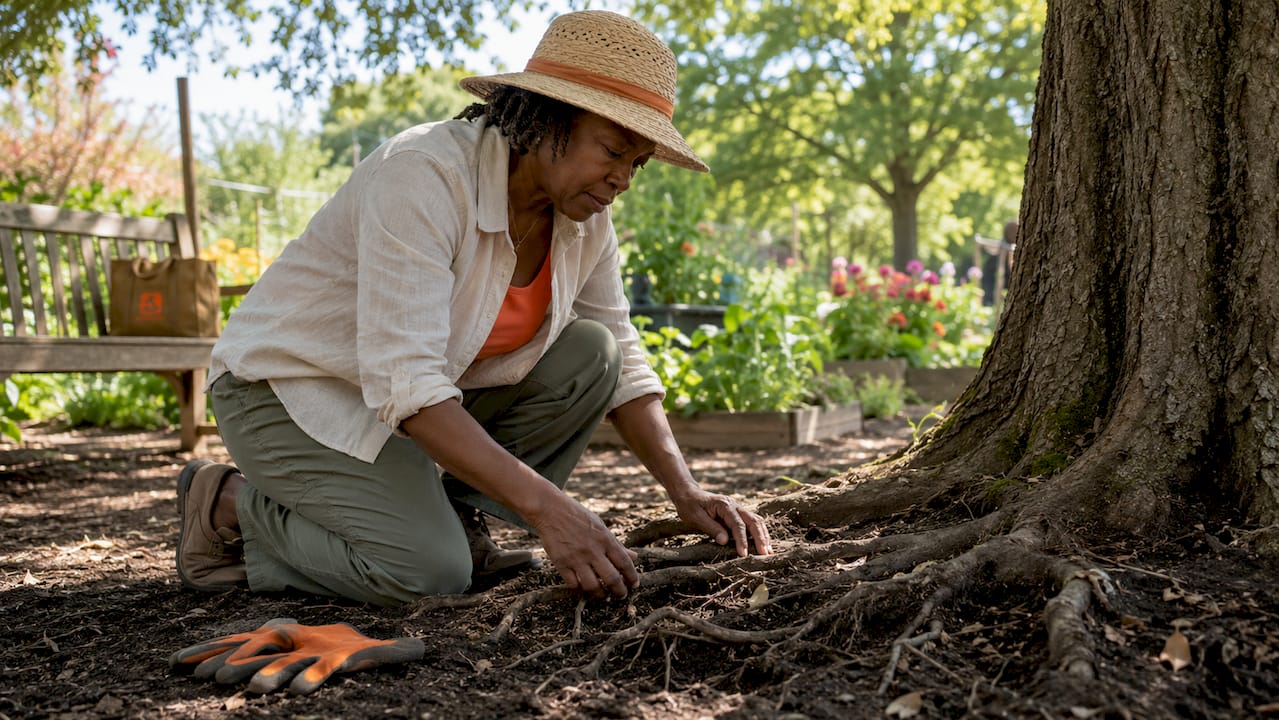
Checking tree roots is the process of examining a tree’s root system to assess its health, stability, and potential to damage nearby structures. Every homeowner and property manager should understand why check tree roots matters: roots can silently crack sidewalks, invade sewer lines, and destabilize trees long before any visible damage appears above ground. The formal term for this practice is a tree root health assessment, and ISA Certified Arborists recommend it as a core part of property maintenance. Michigan State University Extension and Purdue Extension both link root health directly to overall tree vitality and structural safety. Catching problems early costs far less than repairing a collapsed sewer line or a cracked foundation.
Why check tree roots before problems become expensive
Root inspection protects both your trees and your property. Roots grow silently underground, and by the time you see surface damage, the underlying problem has often been developing for years. A tree root health assessment gives you a clear picture of what is happening below the surface before repair bills arrive.
Routine inspection can identify warning signs such as root flare issues, soil heaving, deadwood, and fungal growth. Each of these signals a different type of stress that, left unaddressed, can escalate into a safety hazard or a costly structural repair.
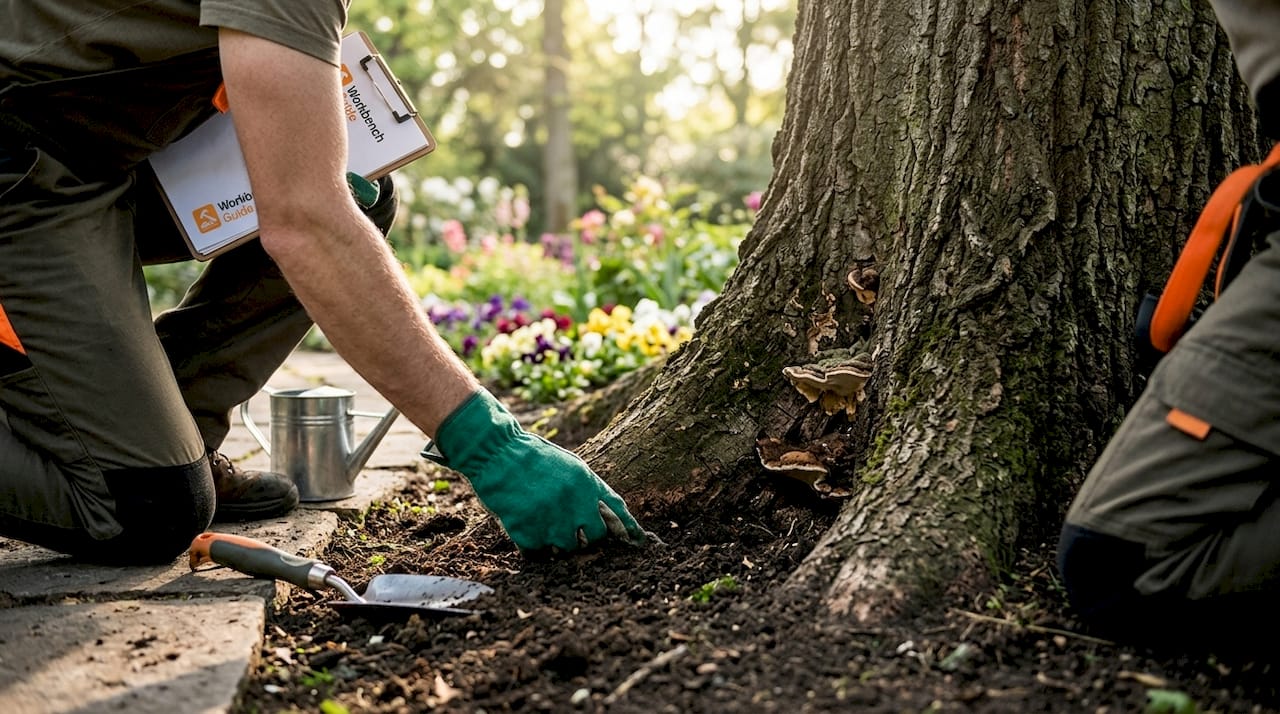
One fact surprises most homeowners: roots rarely break solid concrete directly. The real mechanism is subtler. Roots remove moisture from clay soils, which causes the soil to shrink and settle, pulling the foundation with it over years. That slow, invisible process is exactly why regular inspection matters more than waiting for a crack to appear.
Large trees also reach farther than most people expect. Trees can affect structures within a distance of 1 to 1.5 times their mature height. A 60-foot oak, for example, can influence soil and structures up to 90 feet away. That range puts many suburban homes well within the zone of potential root impact.
What are the common signs of tree root problems?
Knowing what to look for makes inspection far more effective. Root problems show up in several distinct ways, both above and below ground.
Structural and surface signs:
- Cracks in sidewalks, driveways, or patios that follow a curved or irregular path near a tree base
- Lifted or buckled pavement sections, especially where surface roots are visible
- Uneven ground or soil heaving around the base of a tree
- Gaps forming between a structure and the soil line, such as along a porch or retaining wall
- New cracks appearing in a foundation or basement wall near a large tree
Tree health signs:
- Yellowing or wilting foliage outside of normal seasonal changes
- Premature leaf drop or sparse canopy growth
- Fungal growth such as mushrooms or conks at the base of the trunk or on exposed roots
- Soft or spongy wood at the root flare, which is the point where the trunk meets the soil
- Deadwood appearing in the upper canopy, which can indicate root stress below
Plumbing signs:
- Slow drains or recurring blockages without an obvious cause
- Gurgling sounds in toilets or drains
- Unexplained wet patches in the yard, particularly in a line between the house and the street
Tree roots exploit gaps in older pipe joints, leading to blockages, collapses, and recurring plumbing issues. If you notice any combination of slow drains and a large tree near your sewer line, a camera inspection of the pipe is worth scheduling. Pairing that with a yearly plumbing check catches problems before they become emergencies.
Pro Tip: Not every crack near a tree is caused by roots. Accurate diagnosis requires both an arborist and a foundation contractor. Getting both opinions before any repair work prevents costly mistakes.
How and when should you inspect tree roots?
Timing and method both matter for an effective inspection. The good news is that most of the process requires no special tools and no digging.
-
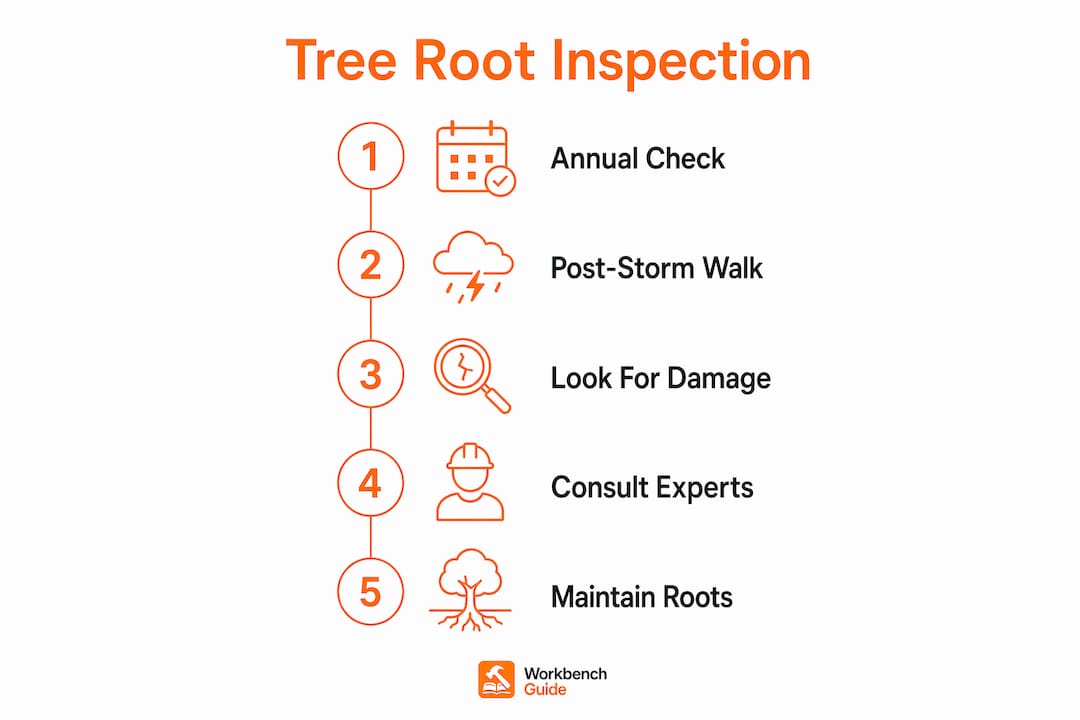
Schedule annual inspections. Homeowners should inspect tree roots at least once a year and after major storms or droughts. Storms can shift soil and expose or damage roots. Droughts stress root systems and accelerate soil shrinkage around foundations.
-
Walk the perimeter of each large tree. Start at the trunk and work outward to the drip line, which is the outer edge of the canopy. Look for the surface signs listed above. Pay close attention to the root flare where the trunk meets the ground.
-
Check the soil. Press the soil near the base of the tree. Soft, spongy, or waterlogged soil can indicate root rot. Cracked or pulling-away soil near a foundation suggests moisture loss from root activity.
-
Look at the tree from a distance. Step back and assess the canopy. Uneven growth, a leaning trunk, or a thin canopy on one side can all point to root problems on the opposite side.
-
Avoid invasive digging. Do not dig around roots to investigate unless a certified arborist directs you to. Cutting or exposing roots unnecessarily causes more harm than the problem you are trying to diagnose.
-
Call a professional for anything uncertain. An ISA Certified Arborist can perform a formal root zone assessment, use air spade technology to expose roots without cutting them, and give you a written risk evaluation. The benefits of a professional arborist consultation go well beyond what a visual inspection alone can reveal.
Adding tree root checks to your fall maintenance checklist is one of the most practical ways to stay consistent. Fall is ideal because leaves have dropped, making it easier to spot canopy thinning, and the soil is often dry enough to reveal shrinkage patterns.
Pro Tip: After any storm with winds above 40 mph, walk your property and check every large tree for newly exposed roots, soil lifting, or a slight lean that was not there before. These are early signs of root failure.
What are the risks of ignoring tree root issues?
The financial and safety consequences of ignoring root problems are significant. Repairs that cost a few hundred dollars when caught early can reach thousands once structural damage sets in.
“The most expensive tree root repairs are the ones that were preventable. Sidewalk damage, sewer line failures, and foundation settling all share one thing in common: they give warning signs months or years before they require emergency repair. Homeowners who inspect regularly almost always pay less.”
Sidewalk damage from tree roots averages $3 per linear foot to repair. Sewer line repairs cost around $1.66 per linear foot. Those numbers add up quickly on a long run of damaged pipe or a full sidewalk panel replacement.
| Risk type | Cause | Consequence |
|---|---|---|
| Foundation settling | Soil shrinkage from root moisture removal | Structural cracks, uneven floors, costly repairs |
| Sidewalk and driveway damage | Surface root growth exploiting existing weaknesses | Trip hazards, liability, replacement costs |
| Sewer line blockage | Root intrusion through pipe joint gaps | Recurring clogs, pipe collapse, excavation costs |
| Tree instability | Root damage from pruning or disease | Hazard tree requiring emergency removal |
| Soil depression after removal | Root decay following tree removal | Grading issues, landscape adjustments over years |
Safety is the other side of the equation. A tree with compromised roots can fall without warning, especially during a storm. Root decay after tree removal can also cause soil depressions and grading issues over several years, creating new hazards even after the tree is gone. Protecting your home’s foundation requires thinking about drainage and root activity together, not separately.
What solutions actually work for managing tree root problems?
Root management works best when it starts before damage is severe. Several proven approaches protect both the tree and the property.
Root barriers are physical guides, typically made of rigid plastic or metal sheeting, installed in the soil to redirect root growth away from structures. They work best when installed at the time of planting or early in a tree’s life. Retrofitting a barrier around a mature tree requires professional assessment to avoid cutting structural roots during installation.
Professional root pruning is effective but carries real limits. Removing more than 20–25% of a tree’s root system at once raises the risk of instability. An arborist will assess the tree’s overall structure before recommending any pruning. Cutting structural roots over 4 inches in diameter can destabilize a tree entirely, making professional consultation non-negotiable before any significant root work.
Regular monitoring by a certified arborist is the most reliable long-term strategy. An arborist can track changes in root zone health over time, recommend targeted interventions, and document the tree’s condition for insurance or legal purposes if a dispute arises. Learning about preventive tree care helps you understand what a professional monitoring program actually includes.
Tree removal is a last resort, not a first response. It eliminates the root problem but introduces new ones. Soil settling from root decay after removal can cause depressions and grading issues that require landscaping adjustments over several years.
- Consult both an arborist and a structural engineer or foundation contractor before deciding on removal near a foundation
- Request a written risk assessment before any root pruning or removal work begins
- Ask about air spade root zone excavation as a non-destructive diagnostic option
- Document the tree’s condition with photos at each annual inspection
Pro Tip: Root management options almost always include barriers, pruning, and structural support before removal becomes necessary. Preserving a healthy tree while protecting your property is the goal, not choosing one over the other.
Key Takeaways
Regular tree root inspection is the most cost-effective way to prevent structural damage, protect tree health, and avoid emergency repairs on your property.
| Point | Details |
|---|---|
| Inspect at least once a year | Schedule inspections annually and after every major storm or drought. |
| Roots damage indirectly | Roots shrink clay soils and cause foundation settling, not direct concrete breakage. |
| Know the warning signs | Look for soil heaving, fungal growth, slow drains, and canopy thinning. |
| Limit root pruning carefully | Never remove more than 20–25% of a root system without professional guidance. |
| Early detection saves money | Sidewalk and sewer repairs caught early cost a fraction of emergency structural fixes. |
What I’ve learned from watching homeowners skip root inspections
Most homeowners I talk to think about tree roots only after something goes wrong. A cracked sidewalk, a backed-up sewer, a tree that leans a little more than it used to. By that point, the options are narrower and the costs are higher.
The misconception I hear most often is that roots are the direct cause of concrete cracking. They rarely are. The real culprit is soil moisture change, and that process is slow and invisible. That is exactly why waiting for visible damage is the wrong strategy. A tree can be quietly drying out clay soil around a foundation for a decade before a crack appears.
The other mistake I see regularly is aggressive root cutting without expert input. A homeowner sees a root lifting a patio stone, cuts it out, and feels like the problem is solved. What they have actually done is potentially destabilized a tree that now poses a fall risk. The fix created a hazard worse than the original problem.
The approach that consistently works is simple: annual visual checks, a professional arborist assessment every few years, and a clear record of what you observed and when. That record becomes valuable if you ever need to make an insurance claim or sell the property. Treat tree root inspection the same way you treat a roof check or a furnace service. It is routine maintenance, not emergency response.
— Sean
Workbenchguide can help you stay ahead of tree root issues
Tree root inspection is one of dozens of property tasks that are easy to forget without a system. Workbenchguide gives homeowners and property managers a structured way to track every maintenance task, including seasonal tree checks, so nothing slips through. The home maintenance checklist covers the full year of property care, with timing guidance built in. You can schedule your annual root inspection alongside gutter cleaning, roof checks, and plumbing reviews so they all happen on time. When a task goes beyond DIY, Workbenchguide connects you with qualified contractors and certified professionals. Staying organized is how you avoid the expensive surprises that come from deferred maintenance.
FAQ
How often should I check tree roots?
Inspect tree roots at least once a year and after any major storm or extended drought. Post-storm checks are especially important because soil shifts can expose or damage roots quickly.
Can tree roots actually break a foundation?
Roots rarely break solid concrete directly. They cause foundation damage by removing moisture from clay soils, which causes the soil to shrink and the foundation to settle over time.
What is the safest way to remove problem roots?
Never remove more than 20–25% of a root system at once, and avoid cutting any structural root over 4 inches in diameter without consulting an ISA Certified Arborist first.
How do I know if roots are in my sewer line?
Recurring drain blockages, gurgling sounds, and slow drains without an obvious cause are the main signs. A plumber can run a camera inspection to confirm root intrusion in the pipe.
Is tree removal the best solution for root damage?
Tree removal is a last resort. Root barriers, targeted pruning, and structural support address most root problems without removing the tree, and removal itself can cause soil settling issues for years afterward.
Leave a Reply