
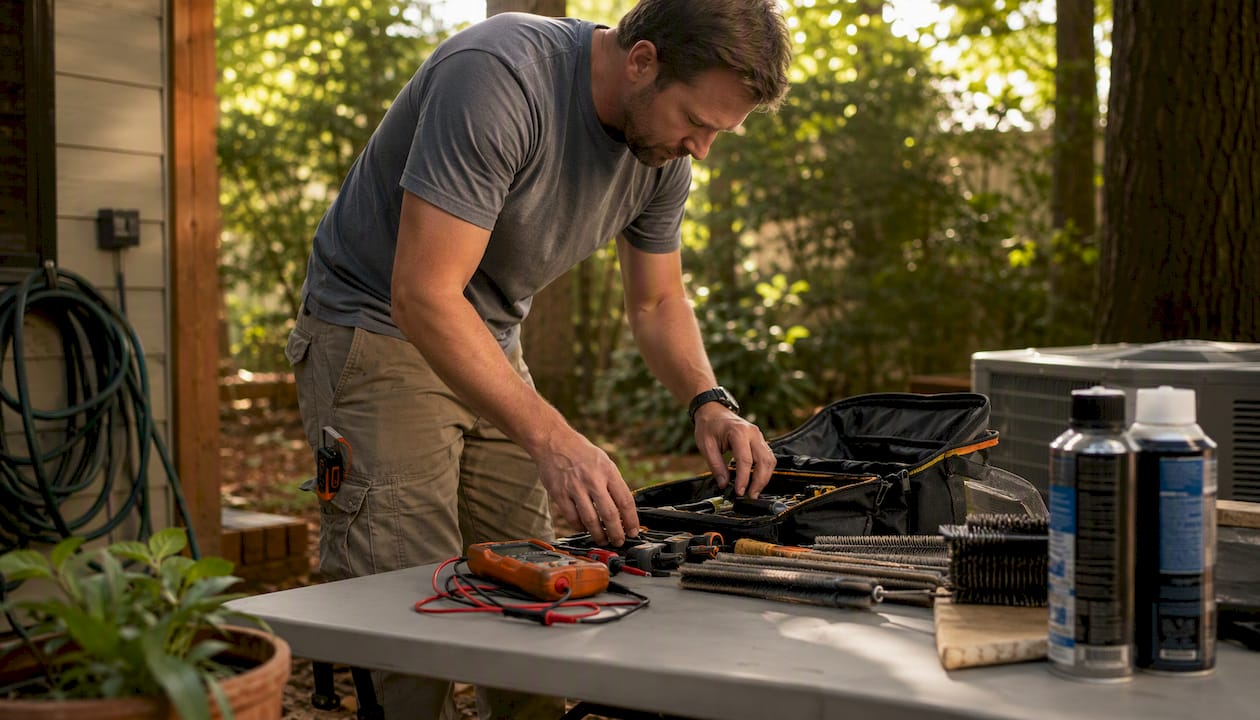
Every homeowner’s HVAC maintenance kit comes down to roughly ten items you can buy at Home Depot or Amazon for under $200 total. These are the top HVAC maintenance tools that handle monthly and seasonal upkeep safely, without crossing into refrigerant, gas, or high-voltage territory that legally requires a certified technician.
Here’s the core kit and what each item does:
- Pleated air filters (MERV 8–13): Replace regularly every few months. MERV 14+ can choke airflow in most residential systems. Cost: $5–$25 each.
- Infrared thermometer: Measure supply and return air temps to check for a temperature split that signals a healthy system. Cost: $20–$50.
- Wet/dry vacuum with drain brush kit: Clear condensate drain pans and access points without chemicals. Cost: $40–$80.
- Foaming HVAC coil cleaner (non-acidic): Only use cleaners designed for HVAC coils; household cleaners corrode aluminum and copper. Cost: $10–$20 per can.
- Soft nylon coil brush: Loosen debris before rinsing. Pair with a low-pressure garden hose — never a pressure washer, which flattens aluminum fins. Cost: $8–$15.
- Fin comb: Straightens bent condenser fins to restore airflow. Cost: $10–$20.
- Distilled white vinegar (a small amount quarterly): Pour into the condensate access port every three months to inhibit algae and mold. Cost: under $5.
- Basic multimeter with capacitance testing: Safe for checking thermostat wiring with power off. Photograph connections before disassembly to avoid miswiring. Cost: $30–$60.
- Screwdriver set (flathead and Phillips): Access panels, thermostat covers, and filter housings. Cost: $15–$30.
- Safety glasses and work gloves: Non-negotiable for coil cleaning and any cabinet work.
Hard boundary: Refrigerant handling, gas-line work, and high-voltage electrical repairs require EPA 608 certification and licensed technicians. None of these tools get you there, and attempting them creates real legal and safety risk.
Table of Contents
- How to store and care for your HVAC tools
- Key Takeaways
- The tool kit is only half the answer
- Workbenchguide keeps your HVAC schedule on track
- Useful sources and further reading
How to store and care for your HVAC tools
Tools that sit in a damp garage or get tossed loose in a bucket don’t last. A few simple habits keep the kit ready when you need it.
Store your coil brush and fin comb in a sealed plastic bag or small zip pouch. Coil cleaner cans should stand upright in a cool, dry spot away from heat sources. After each use, rinse the nylon brush thoroughly and let it air-dry before storing. Wet bristles left compressed against a surface curl permanently.
The wet/dry vacuum filter deserves attention too. Shake or replace it after every HVAC job — a clogged filter strains the motor and reduces suction right when you need it most for condensate work.
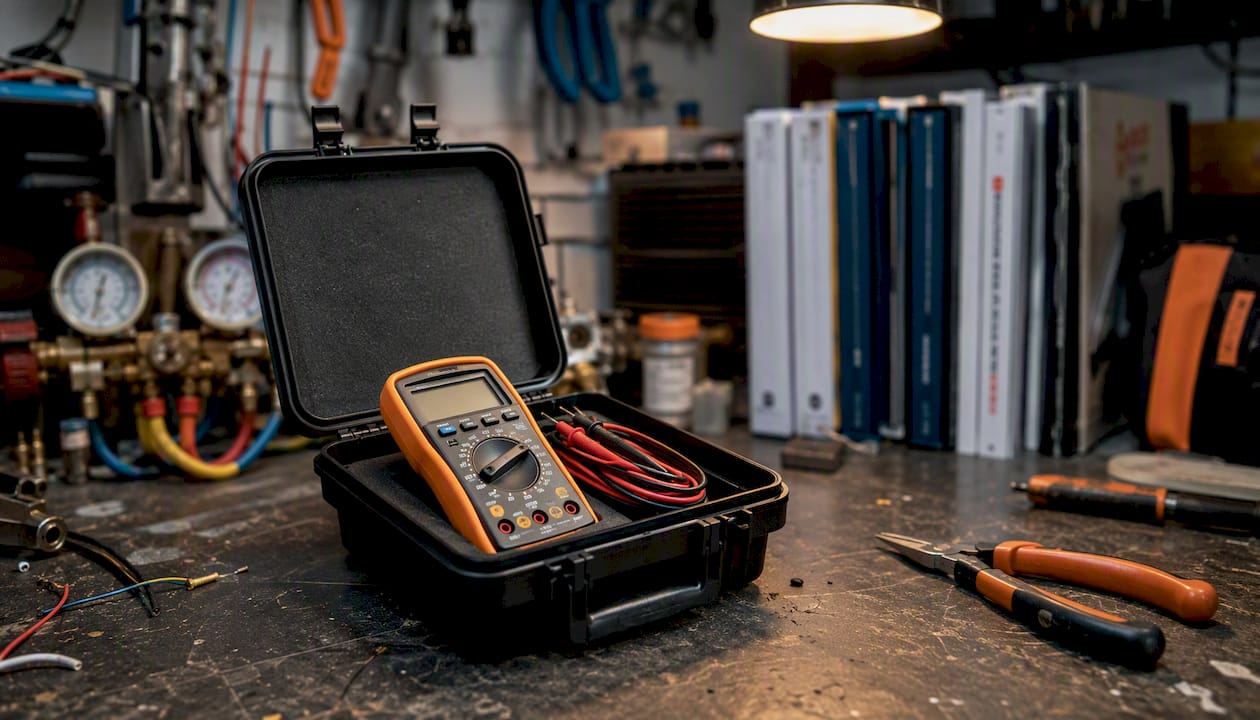
For the multimeter, keep it in its case with the probes coiled, not kinked. Check the battery every spring before cooling season. A dead multimeter at the start of a diagnostic is a minor frustration; discovering it mid-job is worse.
Label your filter sizes on a piece of tape inside the utility closet door. It sounds trivial, but buying the wrong size at the hardware store and making a second trip is how filter changes get skipped.
Key Takeaways
A compact homeowner kit plus a consistent schedule prevents most HVAC failures before they become expensive emergencies.
| Point | Details |
|---|---|
| Filter cadence | Replace MERV 8–13 filters every few months; always check arrow direction for correct airflow. |
| Temperature split check | A 14°F–20°F difference between supply and return air confirms the system is cooling correctly. |
| Condensate flush | Pour 1/4 cup distilled white vinegar into the access port every three months to prevent clogs. |
| Know the hard limits | Never attempt refrigerant, gas, or high-voltage work; annual pro tune-ups typically cost a moderate amount. |
| Workbenchguide | Use Workbenchguide’s seasonal checklists and reminders to stay on schedule without tracking it manually. |
The tool kit is only half the answer
Most HVAC failures I see homeowners describe weren’t caused by missing a tool. They were caused by missing a month. The filter that went four months instead of two. The condensate line nobody flushed since last summer. The outdoor unit nobody cleared after the leaves fell.
Industry practitioners are consistent on this point: the schedule matters more than the equipment. A $15 filter and a calendar reminder outperform a $300 diagnostic kit used once a year.
One detail that gets overlooked constantly: filter arrow direction. The arrow on the filter frame must point toward the blower, not away from it. Installing it backward restricts airflow and accelerates blower motor wear. It takes two seconds to check and costs nothing.
Pro Tip: Set a recurring phone reminder on the first of every other month for filter checks, and a separate one each April and October for the full seasonal walkthrough: outdoor coil rinse, condensate flush, and thermostat battery swap.
The homeowner HVAC maintenance guide on Workbenchguide lays out this exact monthly and seasonal rhythm with printable task lists, so you’re not rebuilding the schedule from scratch each year.
Workbenchguide keeps your HVAC schedule on track
Assembling the kit is a one-time task. Sticking to the schedule is where most homeowners lose ground. Workbenchguide handles that part: smart reminders for monthly filter checks, quarterly condensate flushes, and biannual coil cleaning show up automatically so nothing slips.
The platform also stores your service records, contractor visit notes, and filter size details in one place. Landlords managing multiple properties can track each unit’s maintenance history separately. When a technician visits, you log it and have proof of service if a warranty question comes up later.
Start with the free printable home maintenance checklist to map out your HVAC tasks by month, then set up recurring reminders in the app so the schedule runs itself.
Useful sources and further reading
The sources below back the guidance in this article and are worth bookmarking for safety questions and deeper how-to detail.
Safety and certification standards:
- HVAC tasks you can safely DIY — clear breakdown of homeowner-safe tasks vs. EPA 608-required work
- ENERGY STAR Maintenance Checklist — official seasonal checklist from the U.S. Department of Energy program
Coil cleaning and equipment care:
Workbenchguide resources for next steps:
- Understand HVAC systems — background on components and why maintenance matters
- Tools Every DIYer Needs: The Essential Home Kit — pairs HVAC-specific items with general home tools for cost-efficient shopping
Pro Tip: For safety and legal questions about refrigerant or gas work, go directly to the EPA or your state licensing board — not general DIY forums, which frequently understate the certification requirements.