

Controlling indoor humidity is the single most effective step you can take to protect both your health and your home’s structure. The EPA, ASHRAE, and CDC all agree that indoor relative humidity should stay between 30–60%, with 40–50% being the sweet spot for most households. Too much moisture breeds mold, dust mites, and bacteria. Too little dries out your airways, cracks wood floors, and causes static buildup. Understanding why control indoor humidity matters gives you the foundation to act before problems become expensive repairs.
Why control indoor humidity: the health case
Humidity levels directly shape how your body feels and how well it fights off illness. The connection is more direct than most homeowners realize.
When indoor relative humidity drops below 40%, your mucous membranes dry out. That thin layer of moisture lining your nose and throat is your first defense against airborne viruses. RH below 40% nearly doubles influenza transmission by impairing those defenses. Dry air also irritates skin, worsens eczema, and makes eyes feel scratchy.
High humidity creates the opposite problem. Dust mites thrive above 50% RH, especially in mattresses, pillows, and upholstered furniture. Their waste particles trigger asthma attacks and allergic reactions. Mold spores also become active above 60% RH, releasing compounds that irritate the lungs and sinuses.
The practical health benefits of staying in the 40–60% range include:
- Reduced influenza and cold virus survival on surfaces
- Lower dust mite populations in bedding and carpets
- Less skin dryness, cracking, and irritation
- Better sleep quality due to comfortable airway moisture
- Reduced static electricity, which can affect sensitive electronics and cause minor skin discomfort
Pro Tip: Place a hygrometer in your bedroom. Most people spend 7–8 hours there, so it is the room where humidity has the greatest impact on your health.
What does high or low humidity do to your home?
Your home’s materials react to moisture just as your body does. Wood, paint, insulation, and even concrete all expand, contract, or degrade based on the moisture content of the air around them.
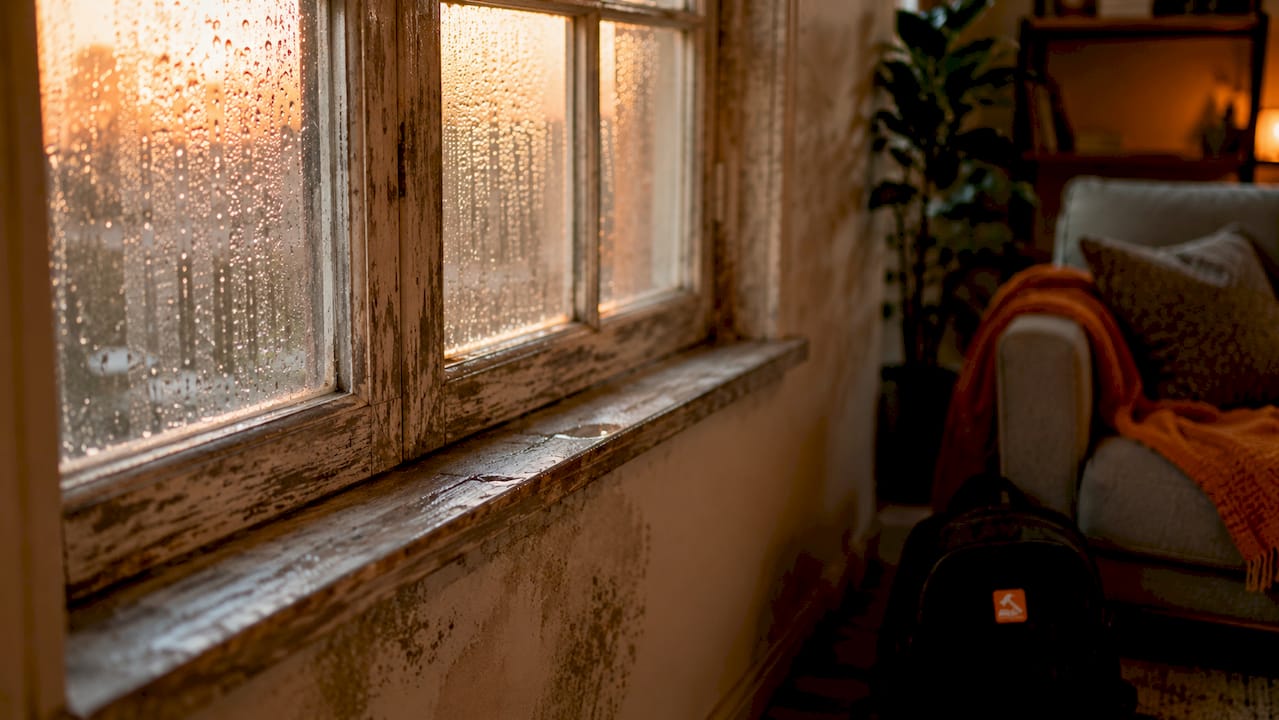
High humidity causes condensation on windows, cold pipes, and exterior walls. That standing moisture feeds mold colonies inside wall cavities, under flooring, and behind drywall. You often cannot see the damage until it is severe. Persistent excess moisture indoors also weakens insulation, corrodes metal fasteners, and softens wood framing over time.
Low humidity brings its own structural risks:
- Hardwood floors and wood furniture crack and split as they lose moisture
- Paint peels away from walls and trim, especially on exterior-facing surfaces
- Drywall joints open up and become visible as the material shrinks
- Door and window frames warp, causing gaps that let in drafts and pests
Pro Tip: Check your window sills in winter. Condensation forming there is a clear sign your indoor RH is too high for the outdoor temperature. Wipe it up and lower your humidifier setting.
Structural damage from humidity is cumulative. A single damp season rarely causes catastrophic failure, but years of uncontrolled moisture weaken a home’s bones quietly. If you suspect moisture is entering through your foundation, basement waterproofing addresses the source rather than just the symptom.
Where does indoor humidity come from?
Identifying the source of excess moisture is the first step toward fixing it. Effective humidity control requires knowing which sources dominate in your specific home before choosing a treatment.
The most common sources of indoor moisture are:
- Outdoor air infiltration. Warm, humid outdoor air enters through gaps around windows, doors, and utility penetrations. In summer, this is often the largest single source.
- Daily indoor activities. Cooking, showering, doing laundry, and even breathing add significant moisture. A family of four generates several gallons of water vapor per day through normal activity.
- Wet building materials. New construction lumber, concrete slabs, and freshly applied drywall compound release moisture for months after installation.
- Foundation and crawl space moisture. Groundwater vapor migrates upward through concrete and soil, entering living spaces from below.
- Oversized or poorly tuned HVAC systems. An oversized HVAC system cools the air quickly but shuts off before running long enough to remove moisture. The result is air that feels cool but clammy.
Modern construction makes this problem worse, not better. Tighter, energy-efficient homes trap moisture because they have less natural ventilation. The same sealing and insulation that cuts your energy bill also reduces the natural moisture escape that older, leakier homes relied on. Understanding home weatherization helps you balance energy savings with adequate ventilation.
How can you measure and control indoor humidity?
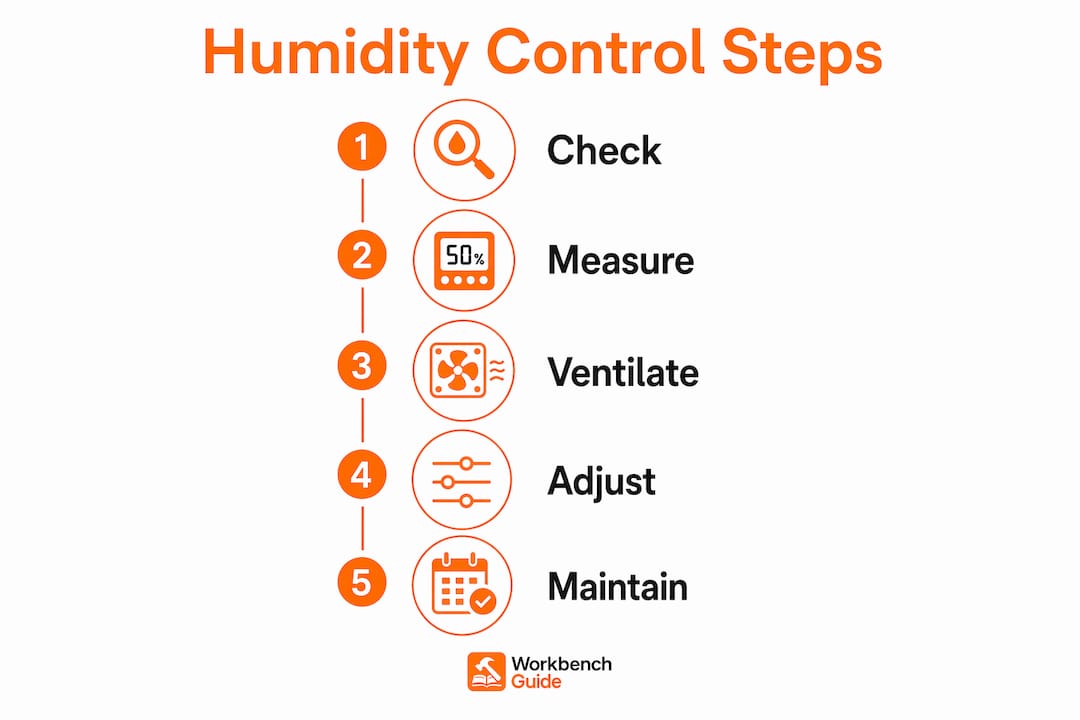
Measuring humidity costs almost nothing. A basic digital hygrometer runs under $15 at most hardware stores and gives you an accurate reading of relative humidity in any room. Place one in the bedroom, one in the basement, and one in the main living area. Those three readings tell you where problems are concentrated.
Ventilation strategies
Ventilation is the lowest-cost humidity control tool available. Run bathroom exhaust fans during and for 20 minutes after every shower. Use your kitchen range hood when cooking. Open windows briefly on dry days to flush out stale, humid air. These habits alone can drop indoor RH by several percentage points in mild climates.
For tighter homes, a whole-house energy recovery ventilator (ERV) or heat recovery ventilator (HRV) brings in fresh outdoor air without losing the energy you have already paid to condition. These systems are worth considering if your home was built or renovated after 2000. Proper HVAC maintenance keeps these systems running at full effectiveness.
Dehumidifiers and humidifiers
| Condition | Tool | Target RH |
|---|---|---|
| Summer, humid climate | Portable or whole-house dehumidifier | 45–55% |
| Winter, cold climate | Humidifier (console or furnace-mounted) | 30–40% |
| Year-round, mixed climate | Both, adjusted seasonally | 40–50% |
Portable dehumidifiers work well for basements and single rooms, but they stop working when their reservoir fills. Setting up a continuous drain hose eliminates the need to empty the tank manually and keeps the unit running around the clock. Whole-house dehumidifiers connect directly to your HVAC system and handle larger spaces more reliably.
Seasonal adjustment matters. ASHRAE recommends dropping indoor RH to 30–35% when outdoor temperatures fall below 20°F. Keeping humidity too high in winter causes condensation inside wall cavities, which leads to mold growth you cannot see or smell until the damage is done.
Pro Tip: If your home has a dehumidifier in the basement, check that the drain hose runs to a floor drain or sump pit. A full reservoir shuts the unit off and lets humidity climb back up within hours.
Learning how dehumidifiers reduce dust mites gives you a clearer picture of why consistent operation matters, not just occasional use during the most humid weeks.
Key Takeaways
Controlling indoor humidity between 40–60% RH protects your health, prevents structural damage, and reduces allergen populations throughout your home.
| Point | Details |
|---|---|
| Optimal RH range | Keep indoor humidity between 40–60%; drop to 30–35% in cold winter months. |
| Health impact | RH below 40% doubles influenza risk; above 60% triggers dust mite and mold growth. |
| Structural risk | Excess moisture weakens insulation and framing; low humidity cracks wood and peels paint. |
| Measure first | Use a hygrometer in the bedroom, basement, and main living area before buying equipment. |
| Seasonal adjustment | Adjust your target RH each season to match outdoor temperatures and prevent condensation. |
The part most homeowners get wrong
Most people treat humidity as a comfort issue. They notice the air feels sticky in July or dry in January, and they buy a dehumidifier or a humidifier to fix the feeling. That is a reasonable start, but it misses the bigger picture.
The homes I see with the worst moisture problems are not the oldest ones. They are the ones built or renovated in the last 20 years with tight envelopes and no mechanical ventilation to compensate. The builder sealed every gap, the insulation is excellent, and the HVAC system is brand new. But the system is oversized, so it short-cycles and never runs long enough to pull moisture out of the air. The homeowner feels cool but clammy, and they cannot figure out why.
The fix is rarely buying more equipment. It is usually adjusting what you already have. Slowing the airflow on an oversized air handler gives it more time to dehumidify. Adding an ERV gives the tight envelope a controlled way to breathe. These are not expensive changes, but they require understanding how your home works as a system.
I also see homeowners ignore seasonal targets entirely. They set their humidifier in November and never touch it again. By February, when outdoor temperatures drop to single digits, that same setting is pushing moisture into wall cavities and growing mold behind the drywall. A five-minute adjustment every month or two prevents that entirely.
Humidity management is not a one-time fix. It is a habit, like checking your smoke detector batteries or changing your furnace filter. Build it into your regular home maintenance routine and it becomes automatic.
— Sean
Workbenchguide makes humidity management part of your routine
Workbenchguide gives homeowners a structured way to stay on top of tasks like seasonal humidity adjustments, HVAC filter changes, and exhaust fan checks. Instead of remembering everything yourself, you get step-by-step guides and timed reminders that match your home’s specific needs. The home maintenance checklist covers humidity-related tasks across every season, so nothing slips through the cracks. When a job calls for a contractor, Workbenchguide connects you with the right help. Protecting your home from moisture damage starts with a plan, and Workbenchguide builds that plan for you.
FAQ
What is the ideal indoor humidity level?
The ideal indoor relative humidity is 40–60%, with 40–50% recommended for most households. Drop to 30–35% during cold winter months to prevent condensation inside walls.
How does low humidity affect your health?
Indoor RH below 40% dries out mucous membranes, impairing your respiratory defenses and nearly doubling influenza transmission risk. Dry air also worsens skin irritation and disrupts sleep.
Can high humidity damage your home’s structure?
Yes. Sustained humidity above 60% causes condensation, mold growth inside wall cavities, and corrosion of metal fasteners. Over time, it weakens insulation and softens wood framing.
How do I know if my home’s humidity is too high or too low?
Use a digital hygrometer, available at hardware stores for under $15, placed in your bedroom, basement, and main living area. Readings outside the 40–60% range signal a problem worth addressing.
Why does my home feel clammy even when the AC is running?
An oversized air conditioning system cools the air quickly but shuts off before removing enough moisture. Adjusting the system’s airflow or adding a dedicated dehumidifier solves the problem more reliably than running the AC longer.
Leave a Reply