
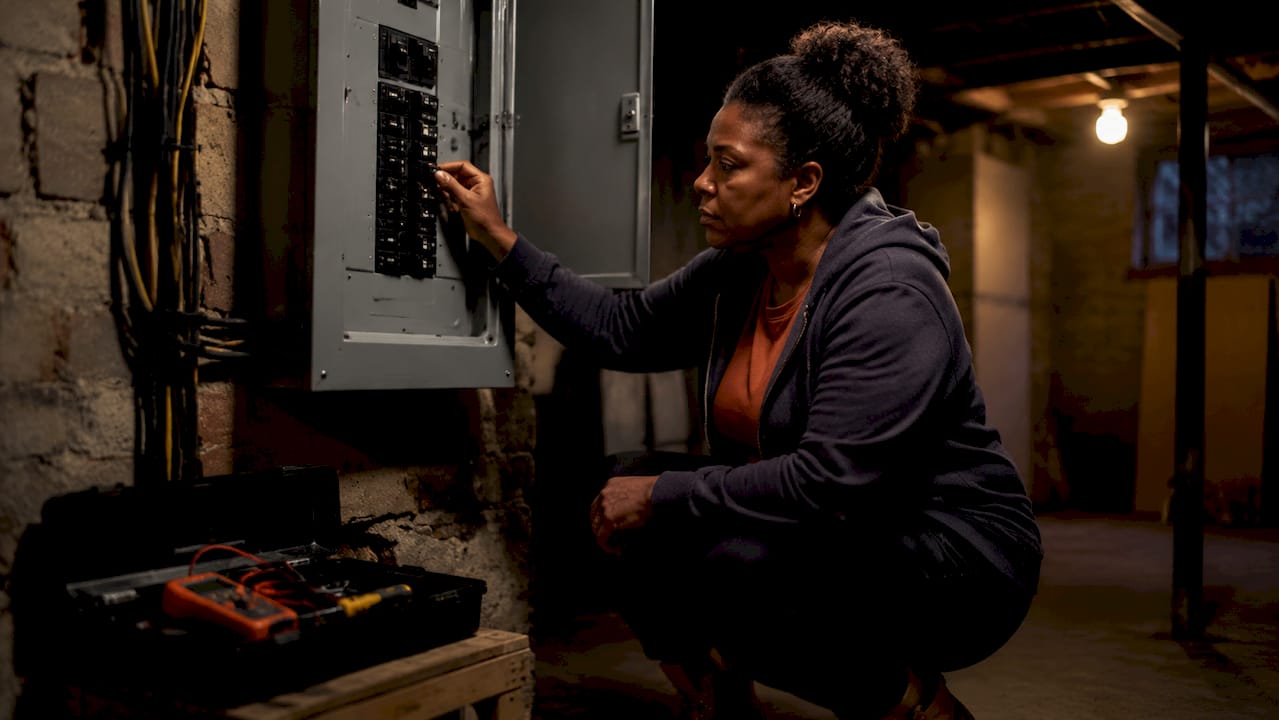
Circuit breakers are the primary defense against electrical fires, overloads, and shock hazards in any home. Electrical malfunctions cause over 30,000 home fires annually in the U.S. That number makes regular breaker inspection one of the most consequential home maintenance tasks you can do. Knowing why check circuit breakers matters goes beyond flipping a switch back on after a trip. It means verifying that your safety system actually works before a fault turns into a fire. This guide covers how breakers fail, what warning signs to watch for, how to test them safely, and when to call a licensed electrician.
Why do circuit breakers need regular checking?
A circuit breaker is a protective switch that automatically cuts power when it detects an overload, short circuit, ground fault, or arc fault. When it works correctly, it stops dangerous current before wiring overheats. When it fails silently, your home has no protection at all.
Breakers can weaken internally without any visible signs, making regular function testing the only way to confirm they will trip when needed. A breaker that looks perfectly normal on the outside may have corroded contacts, worn trip mechanisms, or reduced sensitivity to overloads. You cannot see these problems without testing.
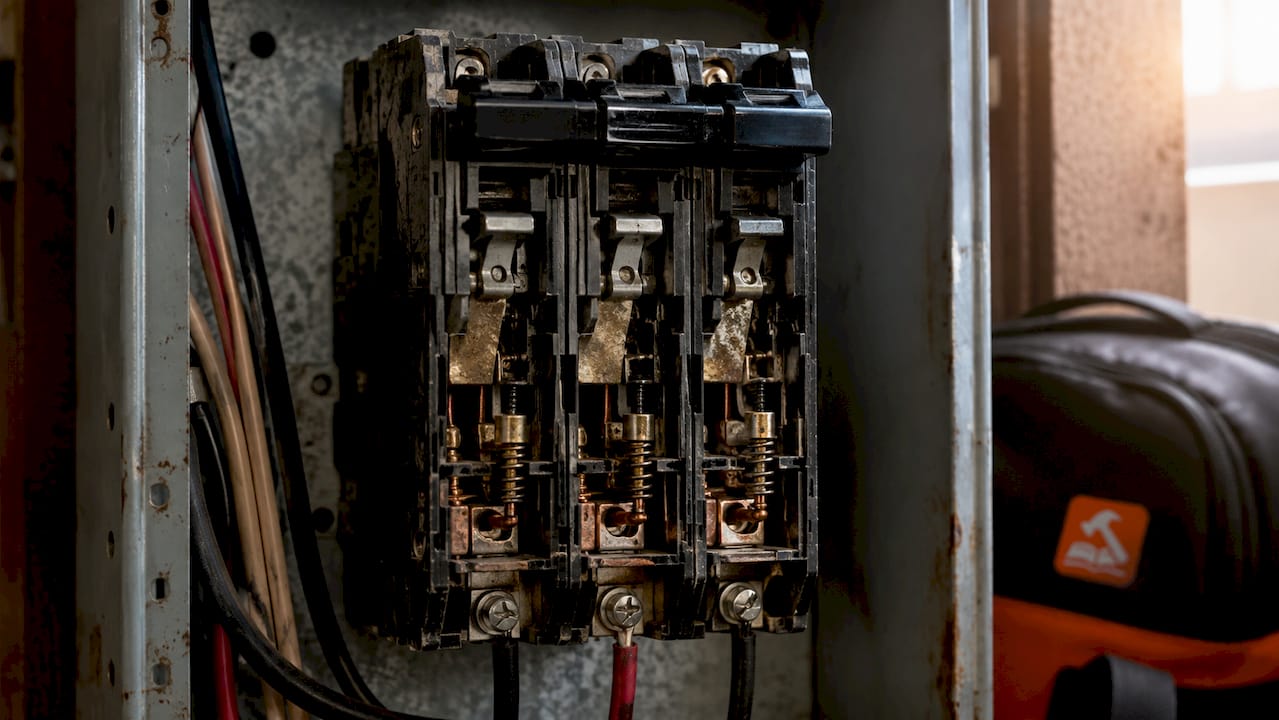
The importance of checking breakers also comes down to age. Panels in homes built before 1990 often contain breakers that no longer meet current safety standards. Older homes with outdated panels may have unreliable or degraded breakers that require professional evaluation and possible upgrades. Checking your breakers annually gives you an early warning before a degraded component causes real damage.
What happens when a breaker fails
Breaker failure falls into two categories: obvious and hidden. Obvious failures include breakers that trip constantly, won’t reset, or show physical damage. Hidden failures are more dangerous because the breaker appears functional but no longer trips under fault conditions.
Breaker contacts can weld shut after repeated resets during a short circuit, leaving the breaker stuck in the ON position with no ability to interrupt current. That is the worst-case scenario. The breaker looks fine, the lights stay on, and your home has zero overcurrent protection on that circuit.
A breaker that never trips is not a sign of a healthy circuit. It may be a sign of a breaker that has lost the ability to protect you.
Common failure modes include:
- Welded contacts: The breaker stays ON permanently and cannot trip.
- Mechanical wear: The trip mechanism degrades and responds too slowly or not at all.
- Loss of trip sensitivity: The breaker requires a much higher current than rated before it trips.
- Corrosion: Moisture causes internal corrosion that weakens the breaker’s response.
What are the signs of faulty circuit breakers?
Recognizing warning signs early is the fastest way to prevent a small electrical problem from becoming a house fire. Some signs are obvious. Others are easy to dismiss as minor annoyances.
Visible signs like scorch marks, burning smells, hot breaker switches, or flickering lights are clear indicators of breaker or circuit problems that need immediate attention. A warm breaker panel is normal under load. A hot breaker switch is not. If you smell burning plastic near your electrical panel, treat it as an emergency.
Watch for these specific warning signs:
- Frequent unexplained trips: A breaker that trips repeatedly on a lightly loaded circuit points to a failing breaker or a wiring fault downstream.
- Breaker won’t stay reset: If it trips immediately after you reset it, the fault is still present. Do not keep resetting it.
- Flickering or dimming lights: This can signal an overloaded circuit, a loose connection, or a breaker that is not maintaining a solid contact.
- Burning smell or discoloration: Scorch marks around a breaker slot indicate arcing, which is a fire risk.
- Breaker feels hot to the touch: Excess heat means the breaker is working harder than it should, often because of an overloaded or undersized circuit.
A tripping breaker is a warning indicator, not a nuisance. Homeowners who reset breakers repeatedly without investigating the cause are masking a problem that will eventually get worse. The circuit breaker safety check starts with taking these signals seriously.
How to safely test your circuit breakers at home
Testing your breakers does not require an electrician for basic checks. With the right approach and a few simple tools, you can confirm whether your breakers are functioning as designed. Safety comes first throughout this process.
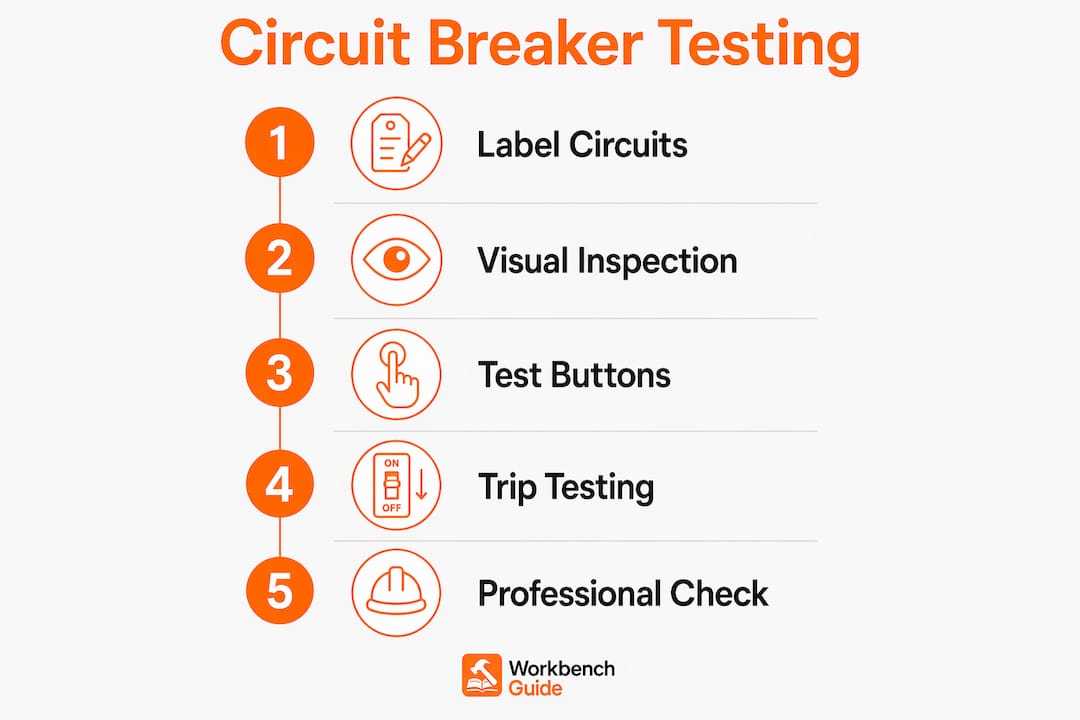
Follow these steps for a safe, practical circuit breaker safety check:
- Check GFCI and AFCI test buttons first. Ground Fault Circuit Interrupter (GFCI) and Arc Fault Circuit Interrupter (AFCI) breakers have built-in TEST buttons. Press the TEST button. The breaker should trip immediately and move the toggle to the OFF or tripped position. If it does not trip, the breaker has failed its function test and needs replacement.
- Inspect the panel visually. With the panel door open, look for scorch marks, corrosion, moisture, or any breaker that sits at an odd angle. Do not touch any wiring inside the panel.
- Test voltage output with a multimeter. Set your multimeter to AC voltage. With the breaker switched ON, touch the red probe to the breaker’s terminal screw and the black probe to the neutral bar. A single-pole breaker should read approximately 120V; a double-pole breaker should read approximately 240V. A significantly lower reading points to a weak or failing breaker.
- Turn the breaker OFF before testing continuity. Testing continuity requires turning the breaker OFF first to protect your meter and prevent electrical hazards.
- Test the manual trip and reset function. Flip the breaker fully OFF, then back ON. It should move smoothly and click firmly into position. A breaker that feels loose, gritty, or does not click into place may have worn internals.
Pro Tip: Label every circuit in your panel before you start testing. Knowing which breaker controls which room saves time and prevents accidental shutdowns of critical equipment like refrigerators or medical devices.
| Test method | What it checks | Tools needed |
|---|---|---|
| TEST button press | GFCI/AFCI trip function | None |
| Visual inspection | Physical damage, scorch marks | Flashlight |
| Multimeter voltage test | Output voltage under load | Multimeter |
| Manual trip/reset | Mechanical function | None |
Safety experts warn homeowners never to attempt complex electrical panel work due to shock and arc flash risks. If you see exposed wiring, signs of arcing, or anything that looks damaged inside the panel, close the door and call a licensed electrician. Basic visual checks and TEST button presses are safe for most homeowners. Opening the panel and probing live terminals is not a task for beginners.
Best practices for circuit breaker maintenance and home electrical safety
A consistent maintenance routine keeps your breakers reliable and extends the life of your electrical system. The goal is to catch problems early, before they escalate into costly repairs or fire hazards.
These circuit breaker maintenance tips apply to most homes and take less than 30 minutes per year:
- Inspect your panel annually. Set a reminder each year to open the panel door and do a visual check. Look for corrosion, moisture, loose breakers, and any signs of heat damage.
- Keep the panel area clear and dry. Panels located in garages, basements, or utility rooms are vulnerable to moisture. A damp panel is a dangerous panel.
- Never ignore repeated tripping. Resetting a breaker without diagnosing the underlying fault can cause fires and permanent damage. Investigate the circuit before resetting more than once.
- Balance your electrical load. Spreading high-draw appliances across multiple circuits prevents any single breaker from running near its rated limit constantly. Correct breaker sizing and load balancing can prevent unnecessary trips and extend breaker lifespan.
- Schedule a professional inspection for older homes. If your home is more than 30 years old or you have never had the panel professionally evaluated, book an electrician for a full diagnostic.
Pro Tip: Ask your electrician about infrared scanning during their visit. Infrared technology detects hidden hot spots inside panels that indicate overloaded circuits or failing breakers invisible to the naked eye. It is one of the most effective diagnostic tools available for residential panels.
Professional inspections are especially valuable for homes with Federal Pacific or Zinsco panels, both of which have documented reliability issues and are widely recommended for replacement. A licensed electrician can also verify that your breakers are correctly sized for the circuits they protect, which is something no visual inspection can confirm on its own. Pairing your own annual checks with a professional inspection every 5–10 years gives you the most complete picture of your panel’s health. You can track all of this as part of a broader annual home safety schedule to stay organized and ahead of problems.
Key Takeaways
Regular circuit breaker inspection is the single most effective step homeowners can take to prevent electrical fires and confirm that their home’s primary safety system actually works.
| Point | Details |
|---|---|
| Breakers can fail silently | Internal failures leave breakers looking normal while losing the ability to trip. |
| Test GFCI and AFCI breakers annually | Press the built-in TEST button; the breaker must trip immediately to pass. |
| Warning signs demand action | Scorch marks, burning smells, and hot switches require immediate professional evaluation. |
| Never reset without diagnosing | Repeated resets without finding the fault mask a problem that can cause a fire. |
| Professional inspections add depth | Infrared scanning and licensed evaluation catch hazards no visual check can find. |
The breaker check most homeowners skip until it’s too late
I have talked to a lot of homeowners about their electrical panels, and the pattern is almost always the same. They know where the panel is. They have reset a tripped breaker once or twice. Beyond that, the panel is a black box they prefer not to think about.
That attitude makes sense until it doesn’t. A breaker that trips is doing its job. The problem is when homeowners treat the trip as an inconvenience rather than a signal. They reset it, move on, and never ask why it tripped in the first place. That is how small wiring faults turn into house fires.
What surprises most people is how easy the basic checks actually are. Pressing the TEST button on a GFCI or AFCI breaker takes five seconds. A visual scan of the panel takes two minutes. These are not technical tasks. They are observation tasks. The barrier is not skill. It is the habit of treating the panel as something that only matters when something goes wrong.
My honest recommendation is to add a breaker check to your annual home maintenance list right now, not after the next trip. Pair it with your smoke detector test and your HVAC filter change. Make it a routine, not a reaction. If you find something that concerns you, call a licensed electrician. That call costs far less than the alternative.
— Sean
Workbenchguide keeps your home electrical safety on track
Workbenchguide is built for homeowners who want to stay ahead of problems instead of reacting to them. The platform gives you step-by-step DIY guides and maintenance checklists covering electrical safety, circuit breaker checks, and dozens of other home systems. You get maintenance reminders so annual inspections do not slip through the cracks, and access to contractor resources when a job calls for a licensed professional. Whether you are doing your first panel inspection or building a full year-round home maintenance plan, Workbenchguide gives you the structure and guidance to do it right.
FAQ
Why should I check my circuit breakers regularly?
Circuit breakers can fail internally without any visible signs, leaving your home unprotected from overloads and electrical faults. Regular checks confirm they will trip when needed, which is the only way to verify your home’s primary electrical safety system is working.
How often should I test my circuit breakers?
Test GFCI and AFCI breakers monthly using their built-in TEST buttons, and do a full visual panel inspection at least once a year. Homes older than 30 years benefit from a professional evaluation every 5–10 years.
What does it mean when a breaker keeps tripping?
A breaker that trips repeatedly signals an overloaded circuit, a short circuit, or a ground fault downstream. It can also indicate a failing breaker. Do not keep resetting it without identifying the cause, as repeated resets without repair can cause fires or permanent damage.
Can I test my circuit breakers myself?
Yes, for basic checks. Pressing the TEST button on GFCI and AFCI breakers and doing a visual inspection are safe for most homeowners. Voltage testing with a multimeter is manageable with care. Opening the panel and working with live wiring carries serious shock and arc flash risks and should be left to a licensed electrician.
What are the signs that a circuit breaker needs replacement?
Scorch marks, a burning smell, a hot breaker switch, a breaker that won’t stay reset, or a breaker that fails its TEST button check all indicate the breaker needs professional evaluation and likely replacement.