

Appliance maintenance is the practice of regularly performing specific tasks like cleaning filters, coils, and seals to keep household appliances running at peak performance. Done consistently, these tasks extend appliance lifespan by up to 50% and prevent the kind of breakdowns that cost hundreds in emergency repairs. Most homeowners treat their refrigerator, washer, or water heater as a set-and-forget investment. That mindset is expensive. This guide covers the exact upkeep methods that keep your appliances running longer, cost less to operate, and stay out of the repair shop.
What are the essential routine maintenance tasks for home appliances?
Preventative appliance maintenance follows a simple rule: small, regular tasks prevent large, costly failures. The table below gives you a quick appliance maintenance checklist to work from.
| Appliance | Task | Frequency |
|---|---|---|
| Refrigerator | Clean condenser coils | Every 3–6 months |
| Refrigerator | Test door seals | Monthly |
| Dishwasher | Clean filter | Monthly |
| Dryer | Clean lint trap | After every use |
| Dryer | Clean vent duct | Annually |
| Washing Machine | Run cleaning cycle | Every 1–3 months |
| Washing Machine | Inspect hoses | Monthly |
| Water Heater | Flush sediment | Annually |
Refrigerator: coils and seals
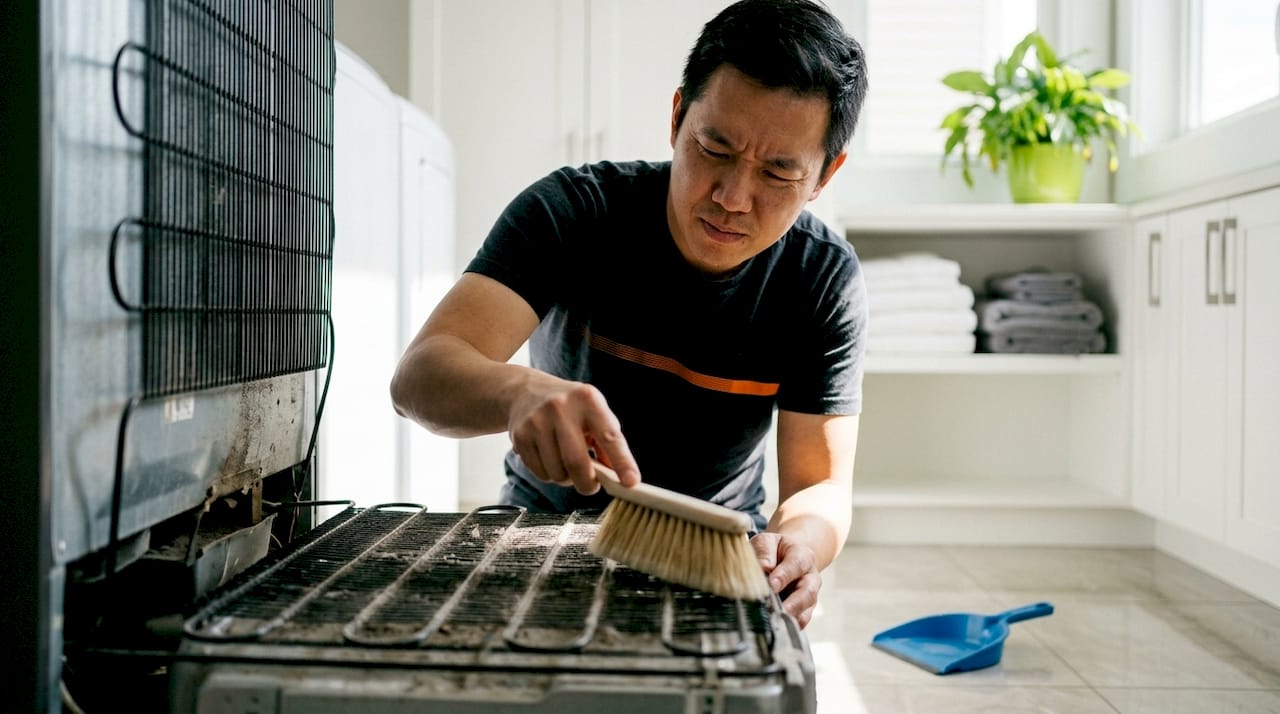
Clean condenser coils every 3–6 months to prevent compressor strain and maintain cooling efficiency. Dust-coated coils force the compressor to work harder, which shortens its life and raises your energy bill. Use a vacuum cleaner with a brush attachment to pull dust from the coils, which are typically located at the back or underneath the unit.
Door seals are just as important. Use the dollar bill test by closing a bill in the door and pulling it out. If it slides out easily, the seal is weak and cold air is escaping. Weak seals cause compressor strain and wasted electricity.
Dishwasher: filters and cycles
Cleaning dishwasher filters monthly prevents clogs, eliminates odors, and keeps wash performance sharp. Most filters twist out from the bottom of the tub and rinse clean under warm water with a soft brush. Running a hot cycle with white vinegar once a month also removes grease buildup from the spray arms and interior walls.
Dryer: lint trap and vent duct
Clean the lint trap after every single load. That habit takes ten seconds and directly reduces fire risk. Beyond the trap, annual dryer vent duct cleaning is critical because lint buildup in the duct is one of the leading causes of house fires. A lint brush kit with a flexible rod reaches deep into the duct where standard vacuums cannot.
Washing machine: drum and hoses
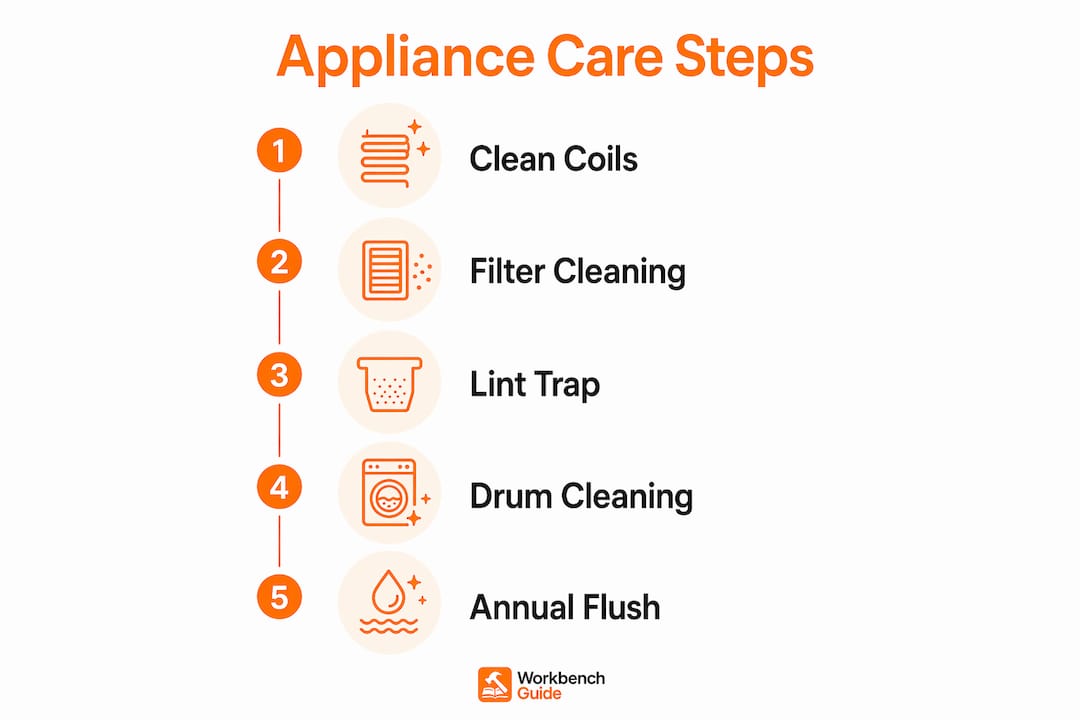
Running a cleaning cycle every 1–3 months with white vinegar or a commercial washer cleaner removes mold, residue, and odor from the drum. Check the inlet hoses monthly for cracks, bulging, or mineral deposits. A burst washing machine hose is one of the most common causes of serious water damage in homes.
Leaving the washer door open for at least an hour after each use lets moisture escape and prevents mold growth. This simple habit reduces musty smells better than deep cleaning alone.
Water heater: annual flushing
Flushing your water heater annually removes sediment buildup from the tank floor and can extend the unit’s lifespan from 6–8 years to 12–15 years. That is a significant return on a task that takes about 30 minutes. Workbenchguide has a full water heater maintenance guide if you want step-by-step instructions.
Pro Tip: Set a recurring phone reminder for each appliance task. Assign them to the first day of each month so nothing gets skipped during busy seasons.
How do local conditions affect your appliance care routine?
Homeowners should tailor maintenance frequency based on local environmental stressors like hard water and humidity. These factors accelerate wear in ways that a standard schedule does not account for. Ignoring them means your appliances age faster than they should.
Here is how to adjust your routine based on where you live:
- Test your water hardness. Use a water hardness test kit, available at most hardware stores, to measure mineral content. Readings above 7 grains per gallon indicate hard water that will coat heating elements and clog components in washers and dishwashers.
- Install a water softener. Installing a water softener can extend appliance life by up to 50% and reduce energy use by 15–30%. That payoff makes it one of the highest-return home upgrades for appliance longevity.
- Run monthly vinegar treatments. In high-hardness areas, run white vinegar through your dishwasher and washing machine monthly. This dissolves mineral deposits before they harden into scale on heating elements.
- Increase inspection frequency in humid climates. High humidity accelerates corrosion on rubber hoses, electrical connections, and metal components. In coastal or high-humidity regions, inspect hoses and connections every two weeks instead of monthly.
- Check for condensation around appliances. Moisture pooling near a refrigerator or dishwasher in a humid home signals a ventilation or seal problem that needs attention before corrosion sets in.
For homes with central air conditioning, the local climate also affects your HVAC system. Workbenchguide’s HVAC maintenance guide covers how humidity and temperature swings affect your system specifically.
Pro Tip: Your local water utility publishes annual water quality reports. Search “[your city] water quality report” to find your exact hardness level without buying a test kit.
What tools make appliance maintenance easier?
The right tools make appliance upkeep faster and more thorough. Most of these cost under $30 and pay for themselves the first time they prevent a repair call.
| Tool | Best Use | Approximate Cost |
|---|---|---|
| Vacuum with brush attachment | Refrigerator condenser coils | $0 (use existing vacuum) |
| Lint brush kit with flexible rod | Dryer vent duct cleaning | $15–$25 |
| Dishwasher filter brush | Filter and spray arm cleaning | $8–$12 |
| Water hardness test kit | Diagnosing mineral buildup risk | $10–$20 |
| White vinegar (gallon jug) | Descaling washers, dishwashers | $4–$6 |
| Washing machine cleaner tablets | Monthly drum cleaning | $10–$15 for 12 tablets |
A few notes on using these tools effectively:
- Affresh washing machine cleaner tablets are a reliable commercial option for front-load washers where vinegar alone may not fully address biofilm buildup.
- For dryer vent cleaning, a kit like the Holikme Dryer Vent Cleaning Brush extends up to 30 feet and fits most standard duct diameters.
- White vinegar is the most versatile tool on this list. It descales, deodorizes, and cuts grease without damaging rubber seals or plastic components.
For air conditioning maintenance, the tool requirements differ. Coil cleaner spray and fin combs are specific to HVAC units and worth keeping in your maintenance kit if you handle that work yourself.
When should you repair an appliance vs. replace it?
The repair-or-replace decision comes down to four factors. Getting this wrong costs money in either direction.
Consumer Reports stresses the economic benefit of maintaining older appliances rather than replacing them prematurely. The key is balancing repair costs against energy use and remaining lifespan.
Use this framework when facing a repair decision:
- Age of the appliance. If the unit is past 75% of its expected lifespan, a major repair rarely makes financial sense. A refrigerator typically lasts 10–15 years. Spending $400 on a compressor repair for a 13-year-old unit is a poor investment.
- The 50% rule. If the repair cost exceeds 50% of the cost of a new replacement unit, replace it. This threshold is widely used by appliance technicians and Consumer Reports analysts.
- Energy efficiency gains. Newer appliances, especially those with Energy Star certification, often use 20–30% less electricity than models from 10 years ago. The monthly savings can offset the cost of replacement within a few years.
- Availability of parts. For appliances older than 10 years, replacement parts may be discontinued or expensive. A repair that costs $150 today could require another $200 repair in six months if the underlying components are aging out.
- Features you actually need. Replacing a functioning appliance just for new features is rarely cost-effective. Focus on energy savings and reliability, not upgrades.
The best appliance upkeep methods keep your units running long enough that replacement becomes a planned decision, not an emergency one. Consistent preventative maintenance is what gives you that control.
Key takeaways
Consistent, task-specific appliance maintenance is the single most effective way to extend appliance life, reduce energy costs, and avoid unplanned repair bills.
| Point | Details |
|---|---|
| Routine tasks prevent failures | Clean coils, filters, and lint traps on a fixed schedule to stop small problems from becoming costly repairs. |
| Local conditions change your schedule | Hard water and high humidity require more frequent inspections and monthly vinegar treatments to prevent buildup and corrosion. |
| Annual flushing doubles water heater life | Flushing sediment once a year extends water heater lifespan from 6–8 years to 12–15 years. |
| Use the 50% rule for repairs | If a repair costs more than half the price of a new unit, replacement is the smarter financial choice. |
| Simple tools cover most tasks | A vacuum brush attachment, lint brush kit, and white vinegar handle the majority of routine appliance upkeep. |
The maintenance habit nobody talks about enough
Most appliance advice focuses on what to do. The harder problem is actually doing it consistently. I’ve seen homeowners with every tool on the shelf and a perfectly written checklist who still let their dryer vent go three years without cleaning. The issue is not knowledge. It is friction.
The fix I’ve found most reliable is using a maintenance calendar with specific task reminders rather than a general “do maintenance” note. Assigning each task to a specific date removes the mental overhead of deciding when to do it. When the reminder fires, the decision is already made.
The other mistake I see constantly is treating all appliances the same. A refrigerator in a dusty workshop needs coil cleaning every two months, not every six. A washing machine in a humid basement needs a cleaning cycle monthly, not quarterly. Your home has specific conditions, and your schedule should reflect them. Generic advice is a starting point, not a final answer.
Consistent upkeep also changes how you think about appliances. When you know your water heater was flushed eight months ago and your dryer vent was cleaned last spring, you stop worrying about surprise failures. That peace of mind is real, and it comes from building a system, not from one-time deep cleans.
— Sean
Stay organized with Workbenchguide
Knowing what to do is half the battle. Remembering when to do it is the other half. Workbenchguide gives you a complete home maintenance checklist that covers appliances, seasonal tasks, and home systems in one organized place. You get step-by-step DIY guides, smart reminders, and task tracking so nothing falls through the cracks. Whether you are managing a full appliance care schedule or just getting started, Workbenchguide keeps you ahead of repairs instead of reacting to them. Start your organized maintenance plan at Workbenchguide and stop paying for problems that routine upkeep prevents.
FAQ
How often should you clean appliance filters?
Dishwasher filters need cleaning monthly to prevent clogs and odors. Dryer lint traps require cleaning after every single use to reduce fire risk.
What is the best way to extend appliance life?
Routine preventative maintenance, including cleaning coils, flushing water heaters annually, and running drum cleaning cycles, can extend appliance lifespan by up to 50%.
Does hard water really damage appliances?
Hard water deposits coat heating elements and clog components in washers and dishwashers, which is a leading cause of premature failure. Installing a water softener reduces this damage and can cut energy use by 15–30%.
When is it better to replace than repair an appliance?
Replace an appliance when the repair cost exceeds 50% of the replacement cost or when the unit is past 75% of its expected lifespan. Energy efficiency gains from newer models often make replacement the better long-term value.
How do you prevent washing machine odors?
Leave the washer door open for at least an hour after each use to let moisture escape. Run a cleaning cycle with white vinegar or Affresh tablets every 1–3 months to remove mold and residue.