
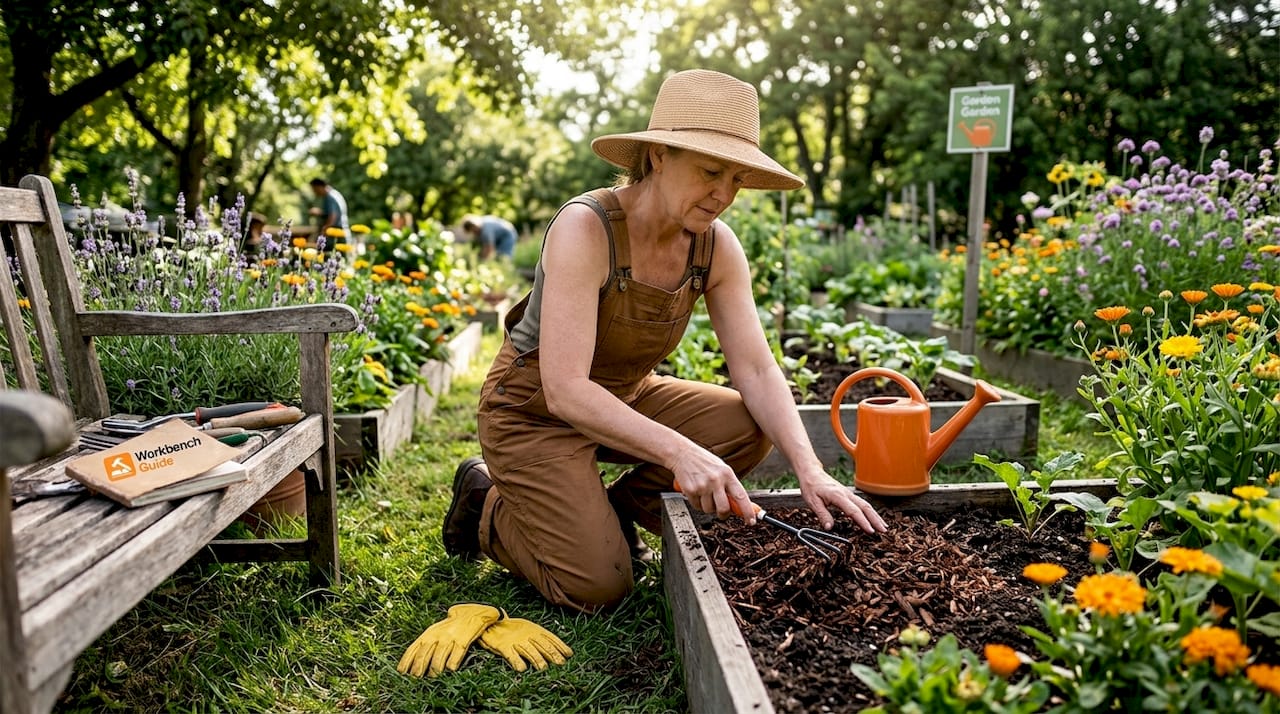
Most homeowners don’t lose their garden to one bad decision. They lose it to fifty small ones: skipped pruning, irregular watering, fertilizer applied at the wrong time. This garden maintenance guide exists to fix that pattern. You’ll find a clear framework covering tools, seasonal task schedules, watering strategy, and how to build a realistic routine that doesn’t take over your weekends. Whether you have a compact backyard or a sprawling yard, the principles here translate directly to healthier plants and far less frustration.
Table of Contents
- Key takeaways
- Your garden maintenance guide starts with the right tools
- Seasonal garden tasks: your year-round schedule
- Watering and soil care: where most gardens go wrong
- Common garden maintenance mistakes to avoid
- Building a realistic garden maintenance routine
- My honest take on garden maintenance
- How Workbenchguide keeps your garden on track
- FAQ
Key takeaways
| Point | Details |
|---|---|
| Start with the right tools | A kit of 8 to 10 well-chosen tools is enough for most home gardens up to 400 square meters. |
| Organize tasks by season | Breaking garden work into seasonal blocks prevents missed windows and keeps plants on track all year. |
| Water deeply, not frequently | Checking soil moisture at 6 inches beats any fixed weekly watering schedule for plant health. |
| Time amendments in the fall | Adding lime or sulfur in fall gives soil 3 to 6 months to adjust before spring planting begins. |
| Build a weekly zone routine | Dividing your garden into 30-minute work zones keeps maintenance steady without burning you out. |
Your garden maintenance guide starts with the right tools
Before you plant a single seed or pull a single weed, you need to know what you’re working with. Not just the plants. The tools and the soil underneath them.
The tools worth owning
You don’t need a garage full of equipment. According to garden maintenance research, a minimum kit of 8 to 10 well-chosen tools covers most domestic gardens up to 400 square meters. The non-negotiables: a quality spade, hand trowel, garden fork, pruning shears, loppers, a hoe, a watering can or hose with adjustable nozzle, a rake, and a wheelbarrow. Gloves don’t feel like a tool, but your hands will disagree after one session without them.
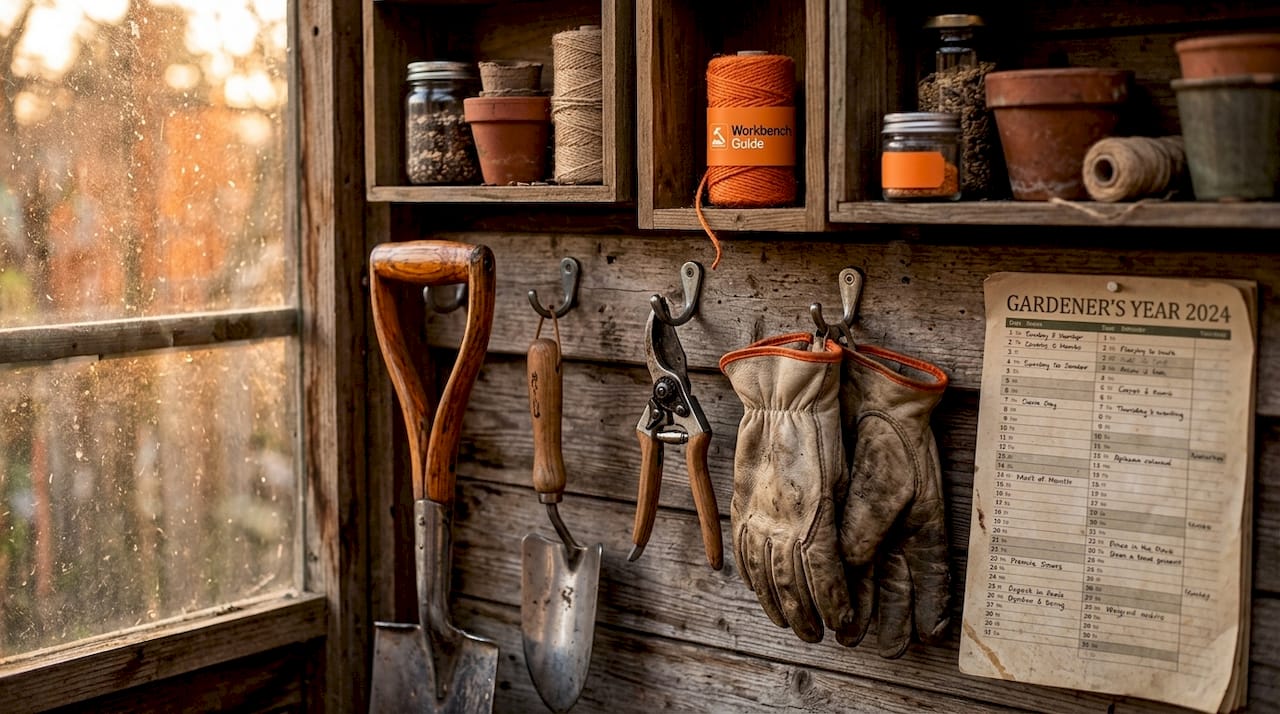
Buy durable over cheap. A steel-headed spade with a solid ash handle outlasts three flimsy discount versions. When a tool breaks mid-task, the job doesn’t get finished.
Organizing your garden space
Think of your garden in zones, not as one big area you deal with all at once. A typical backyard divides naturally: lawn, beds, borders, containers, and any utility areas like compost or tool storage. Each zone has its own rhythm and needs. Mapping this out before peak season means you’re never standing in the yard trying to decide what to tackle first.
Soil testing: the step most homeowners skip
Most vegetables and ornamentals thrive in soil with a pH between 6.0 and 7.0, with 6.5 being the sweet spot. If your soil pH is off, plants can’t absorb nutrients properly, no matter how much fertilizer you apply. Professional lab soil tests cost between $15 and $100 and are worth every cent for long-term results. Test your soil every 2 to 3 years, especially before establishing new beds.
Pro Tip: Take soil samples from at least three different spots in each bed, then mix them together before sending the sample. This gives you an accurate average reading rather than a misleading result from one spot.
Seasonal garden tasks: your year-round schedule
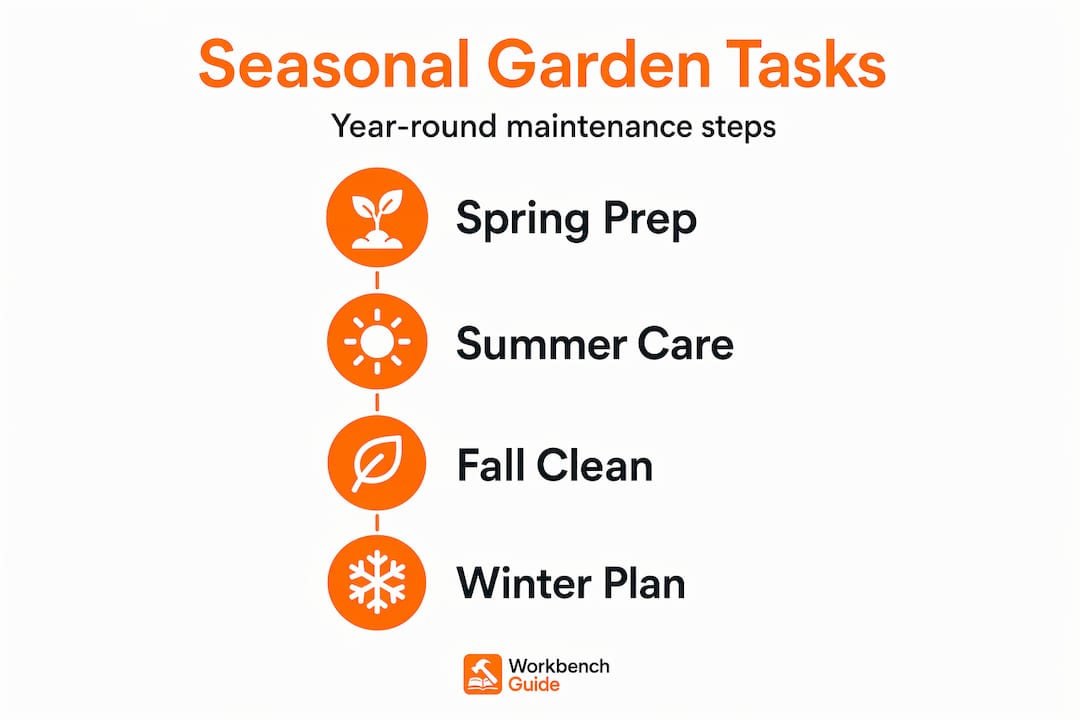
Getting your timing right is what separates a garden that thrives from one that just survives. Seasonal garden tasks aren’t suggestions. Miss a window and you’ll spend the next season compensating.
Spring: the setup season
Spring is when the whole year gets decided. Start with a thorough yard walkthrough to assess winter damage. Pruning in late winter, specifically February and March before new growth pushes out, is critical for most shrubs and roses. Miss this window and you get chaotic, unstructured growth instead of the strong flowering framework you want.
Here’s what to prioritize in spring:
- Prune dormant shrubs and roses before new buds break
- Edge all beds and borders to define growing zones clearly
- Turn and refresh compost piles built over fall and winter
- Apply a balanced slow-release fertilizer to borders and lawn areas
- Divide overcrowded perennials that finished blooming last year
- Set up supports for climbers and tall perennials before they need them
Summer: the maintenance season
Summer is about keeping everything going. The workload is lighter on tasks but heavier on monitoring. Watering becomes the main event, and early morning watering is most effective because it reduces evaporation and lowers the risk of fungal disease on leaves and stems.
Watch for pests, particularly aphids, slugs, and spider mites in dry spells. Deadhead flowering plants regularly to extend blooming. If you’re growing vegetables, harvest frequently because leaving ripe produce on the plant signals it to stop producing.
Pro Tip: In mid-summer, check whether your mulch layer has thinned below 2 inches. Top it up rather than waiting until fall. A thinning mulch layer means soil moisture drops faster during heat spikes.
Fall: the investment season
Fall is underrated by most homeowners. The work you do now pays dividends for the next two seasons. Fall is the optimal time to apply major soil amendments like lime and sulfur, which need 3 to 6 months to fully integrate before spring planting. Plant spring bulbs between September and November, clean up diseased plant material, and cut back perennials after the first hard frost.
Use your seasonal home prep window in fall to cover perennial roots with a protective mulch layer before freezing temperatures arrive.
Winter: the planning season
Winter is for planning, repairing tools, ordering seeds, and reviewing what worked and what didn’t. Sketch out any bed changes you want to make. Check stored bulbs for rot. A garden that gets thought about in winter starts spring six weeks ahead of one that gets ignored until March.
Watering and soil care: where most gardens go wrong
Watering is where homeowners cause the most unintentional damage. 85% of homeowners overwater their gardens without realizing it. The fix isn’t a stricter schedule. It’s learning to read your soil.
How to water correctly
Push your finger or a wooden dowel into the soil to a depth of 6 inches. If it comes out damp, your plants don’t need water yet. If it’s dry at that depth, water deeply and thoroughly. This method is more accurate than any timer-based system because it accounts for actual conditions: recent rain, temperature spikes, and soil composition.
For established roses specifically, 5 to 10 liters per plant weekly during dry spells is the target, delivered as one deep watering rather than a daily trickle. Deep, infrequent watering trains roots to grow down where moisture is stable, which makes plants more drought-tolerant over time.
The case for mulch
Mulch is one of the most underused tools in home garden care. Applied correctly, it suppresses weeds, retains moisture, moderates soil temperature, and slowly improves soil structure as it breaks down. Mulch should be 3 to 4 inches deep around plants, with a gap of at least 4 to 6 inches between the mulch and any trunk or woody stem. Mulch piled against trunks traps moisture against bark and causes rot over time.
Good mulching in late spring and again in early fall dramatically reduces the time you spend watering and weeding throughout the season.
Soil amendments beyond pH
Beyond pH, your soil may be lacking in organic matter, drainage structure, or key nutrients. Compost remains the best all-around amendment. Adding 2 to 3 inches of compost to beds each fall improves nearly every soil type whether it’s clay, sandy, or somewhere in between. For container plants and high-demand vegetable beds, established plants need feeding only when deficiencies appear or when they’re working harder than in-ground plants. Routine feeding without diagnosis wastes money and can burn roots.
Common garden maintenance mistakes to avoid
Even experienced gardeners make these errors. Recognizing them early saves significant time and plant loss.
- Overwatering. The single most common mistake. Yellow leaves, drooping despite wet soil, and root rot all point to too much water rather than too little.
- Mistimed pruning. Pruning late-flowering shrubs in spring removes the buds that would have bloomed. Know your plants’ bloom timing before cutting.
- Late-season fertilizing. Applying nitrogen fertilizer in late summer or fall pushes tender new growth that gets hit hard by first frosts. Timing and plant condition must guide every feeding decision.
- Ignoring soil pH. Plants can look nutrient-deficient even in well-fertilized soil if the pH prevents absorption. Always test before you amend.
- Reactive weed control. Pulling weeds after they set seed means you’re fighting the next generation before this one is gone. Weed before flowering, and mulch to prevent germination.
“Fighting your local climate is the most expensive thing you can do in a garden. Work with it, not against it.” — Professional landscaping principle cited by garden professionals
Building a realistic garden maintenance routine
The goal isn’t a perfect garden on a single weekend. It’s a livable routine that fits your schedule and keeps the garden healthy without becoming a second job.
A 300 to 400 square meter garden requires about 2 to 3 hours of weekly maintenance during peak season when you organize it into focused 30-minute zones. That’s a manageable commitment when it’s structured, and it’s an overwhelming mess when it isn’t.
Here’s how to set up a workable backyard upkeep guide for yourself:
- Divide your garden into 4 to 6 zones and rotate through them across the week
- Set one specific task per zone per session (weeding, deadheading, watering checks) rather than trying to do everything everywhere
- Keep a simple gardening checklist on your phone or posted in your tool shed for each zone and season
- Build one longer session, 60 to 90 minutes, into your schedule each month for bigger tasks like soil amendment, deep pruning, or replanting
Pro Tip: Native plants adapted to your local climate require significantly less water, feeding, and pest control than exotic species. Replacing even a quarter of your non-native plantings with locals cuts maintenance noticeably within two seasons.
Track what you do and when. A simple notes app entry after each session gives you a history that’s genuinely useful when something goes wrong or when you’re trying to remember what worked last year. Check the home maintenance checklist at Workbenchguide to layer your garden tasks into a broader home upkeep schedule.
My honest take on garden maintenance
I’ve watched a lot of homeowners approach their gardens the same way they approach a messy inbox. They ignore it until it’s overwhelming, then spend one intensive weekend trying to fix everything at once, then go back to ignoring it. That cycle doesn’t produce a great garden. It produces an exhausted homeowner and a garden that’s always catching up.
What I’ve learned is that the single biggest factor in garden success isn’t knowledge of plants. It’s the consistency of small actions. Fifteen minutes of weeding before it becomes an infestation. Checking soil moisture before assuming the plant needs water. Noting what bloomed and when so you remember to prune at the right time next year.
The seasonal structure in this article isn’t just a schedule. It’s a way of paying attention. Gardens respond to observation more than intervention. When you slow down and actually look at what’s happening in each zone, you stop making reactive mistakes and start making decisions based on real conditions.
My one piece of advice: get through two full seasons before you judge whether your approach is working. One season isn’t enough data. The garden that looks rough in June might be spectacular by September, and you’ll only know if you stayed consistent.
— Sean
How Workbenchguide keeps your garden on track
Staying consistent with garden care is easier when you have a system behind you. Workbenchguide is built exactly for that. The platform gives homeowners smart maintenance reminders, step-by-step DIY guides, and structured checklists so you always know what needs doing and when. Instead of relying on memory to catch every seasonal window, you get a clear schedule adapted to your property.
Whether you’re following a detailed gardening checklist or tracking repairs across your whole property, Workbenchguide keeps everything in one place. Start building your home and garden maintenance routine today and stop losing ground to missed tasks.
FAQ
What are the most important seasonal garden tasks?
Pruning in late winter, soil amendments in fall, and consistent watering in summer are the three most impactful. Missing the late winter pruning window leads to chaotic growth rather than healthy, structured plants.
How often should I test my garden soil?
Test your soil every 2 to 3 years, or before establishing any new planting beds. Most vegetables and ornamentals need a pH between 6.0 and 7.0 for proper nutrient absorption.
How deep should mulch be around plants?
Apply mulch 3 to 4 inches deep around plants, keeping it 4 to 6 inches away from any trunks or woody stems. Mulch piled against bark traps moisture and causes rot over time.
How do I know when to water my garden?
Check soil moisture at a depth of 6 inches rather than following a fixed schedule. If the soil is dry at that depth, water deeply. If it’s still moist, wait and check again in 24 hours.
How much time does garden maintenance actually take?
A well-organized garden of 300 to 400 square meters takes roughly 2 to 3 hours per week during peak growing season. Breaking the garden into 30-minute work zones keeps that time manageable and productive.