
Every fall, the same thing happens to thousands of homeowners: they mean to get ahead of seasonal tasks, but a few weekends slip by, temperatures drop fast, and suddenly a frozen pipe or a furnace that won’t start turns into a $1,500 emergency. A solid fall maintenance checklist is the difference between a home that handles winter well and one that hands you expensive surprises in January. This guide covers every critical area, from your lawn and gutters to your HVAC system and plumbing, giving you a specific, actionable plan before the cold sets in.
Table of Contents
- Your fall maintenance checklist starts in the yard
- Heating system and HVAC preparation
- Protecting gutters, roofs, and exterior surfaces
- Winterizing plumbing, sprinkler systems, and outdoor equipment
- Energy efficiency and safety checks for fall
- Why fall maintenance is more about prevention than repair
- Prepare your home this fall with WorkbenchGuide
- Frequently asked questions
Key Takeaways
| Point | Details |
|---|---|
| Regular lawn care | Mow, rake, and fertilize your lawn to prevent winter damage and promote healthy growth. |
| HVAC prep | Replace filters and test heating systems early to ensure safe and efficient operation. |
| Gutter and roof upkeep | Clean gutters and inspect roofs to avoid water damage and structural issues. |
| Winterize plumbing | Drain pipes and shut off outdoor water to prevent freezes and costly repairs. |
| Energy efficiency checks | Seal leaks, test detectors, and adjust fans to lower heating costs and improve safety. |
Your fall maintenance checklist starts in the yard
Most homeowners treat lawn care as an afterthought once summer ends. That’s a mistake. What you do to your yard in September and October directly affects how it looks in May, and it affects the health of your home’s foundation and drainage too.
Mowing and fertilizing
Keep mowing until your grass actually stops growing. According to Fleet Farm’s fall yard cleanup checklist, you should mow lawns until late October or early November, with the final cut at 1 to 1.5 inches to reduce snow mold risk. Taller grass going into winter creates the perfect damp environment for fungal disease.
Fertilizing in early fall is one of the highest-return tasks in autumn home upkeep. Applying 1 pound of nitrogen per 1,000 square feet strengthens root systems before the ground freezes, which means a faster, thicker green-up come spring.
Additional fall lawn and garden tasks:
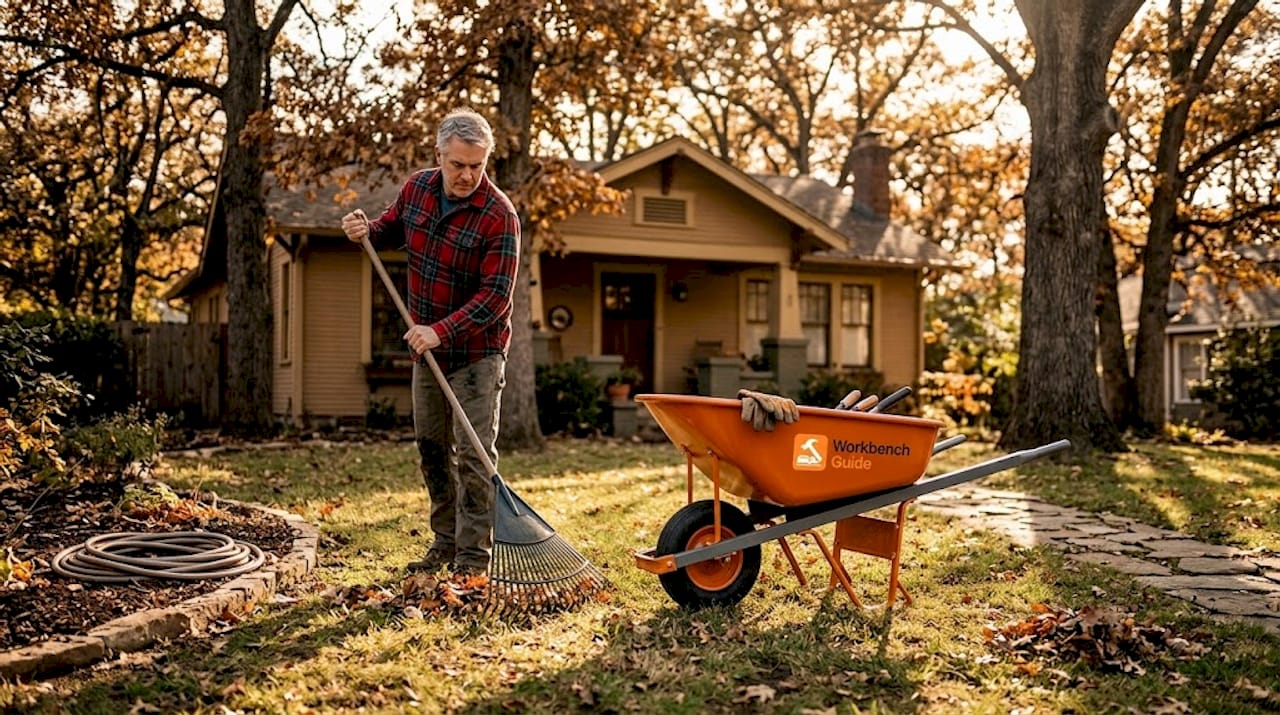
- Rake leaves every few days or at least weekly. A thick mat of wet leaves blocks sunlight and traps moisture, killing the grass underneath.
- Overseed thin or bare areas now so seed can establish before frost.
- Aerate compacted soil to let water and nutrients reach roots more effectively.
- Remove diseased plants completely rather than composting them, to break pest and disease cycles.
- Plant spring bulbs (tulips, daffodils, hyacinths) before the ground freezes.
- Mulch garden beds with 2 to 3 inches of shredded leaves or wood chips to insulate roots.
Pro Tip: After your final mow, run your mower until the fuel runs out, or add a fuel stabilizer before storing it. Old gasoline gums up carburetors over winter and is the number one cause of small engine startup failures in spring.
For more fall lawn care tips that carry through the whole year, it helps to think about your lawn as part of your larger seasonal home maintenance routine rather than a separate project.
With the yard prepared, the next step is to ensure your home’s vital systems are ready for colder weather.
Heating system and HVAC preparation
Your furnace has been sitting idle for months. Do not assume it will fire up perfectly when temperatures drop. Skipping HVAC prep is one of the most common and most costly mistakes in any pre-winter home checklist.
Steps to prepare your heating system:
- Replace the furnace air filter. Use the correct MERV rating for your system (typically MERV 8 to 11 for most homes). Replace furnace filters before the first freeze and test the heating mode for at least 15 minutes to confirm full ignition and airflow.
- Test the heating mode completely. Don’t just turn the thermostat up and walk away. Watch the ignition sequence, listen for unusual sounds, and check that warm air is actually coming from every vent.
- Test and inspect carbon monoxide detectors. This one matters more than most homeowners realize. CO detectors expire after 7 years even with fresh batteries, so check the manufacture date on the back of each unit.
- Vacuum cold-air return grilles. Dust buildup here forces your furnace to work harder and can trigger automatic shutoffs. A quick vacuum takes two minutes per vent.
- Inspect burners and flame sensors. If you see yellow or orange flames instead of blue when your furnace runs, that’s a sign of incomplete combustion and a reason to call a technician before winter.
Pro Tip: Set your thermostat to 68°F and run the system for a full 20 minutes before cold weather arrives. If the house doesn’t reach temperature within that window, something is wrong and it’s far easier to get a technician in October than during a cold snap in December.
For detailed furnace maintenance tips and a full breakdown of seasonal HVAC care, those resources walk you through every task step by step.
With HVAC systems ready, attention to exterior home maintenance prevents damage from winter weather.
Protecting gutters, roofs, and exterior surfaces
Water is the single biggest threat to your home in fall and winter. Gutters, roofing, and exterior sealing are the three lines of defense. Ignore any one of them and you’re looking at water intrusion, ice dams, rot, or pest entry by spring.
Key exterior tasks:
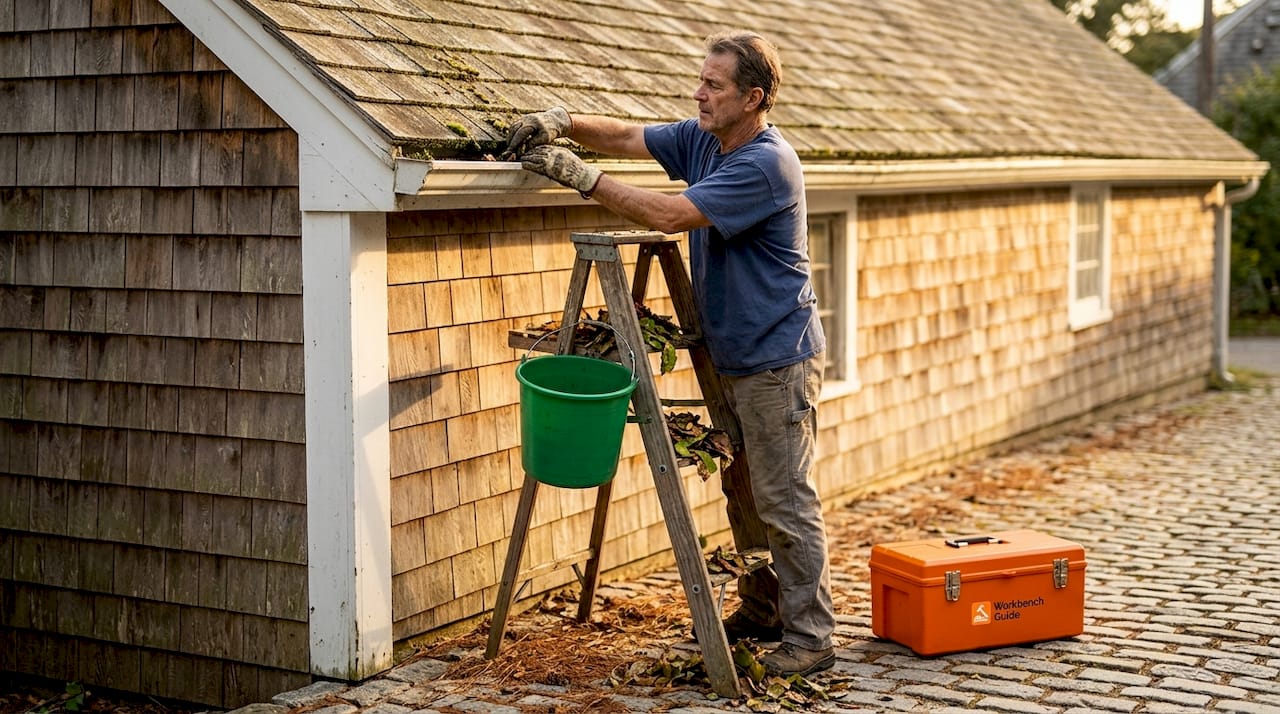
- Clean gutters twice a year using an extension ladder, and flush downspouts with a garden hose to check for underground clogs that cause water to pool at your foundation.
- Inspect the roof for missing, cracked, or curling shingles. Look for sagging areas, dark streaks from algae, and any spots where flashing has lifted around chimneys or vents.
- After leaves drop, remove dead limbs near the house and avoid heavy pruning on spring bloomers like forsythia or lilac, which set their buds in fall.
- Seal gaps around windows, doors, and where utilities enter the house. A single unsealed gap around a dryer vent or pipe penetration lets in cold air, moisture, and rodents.
| Exterior task | Why it matters | Recommended timing |
|---|---|---|
| Clean and flush gutters | Prevents water backup and ice dams | After leaves fall, late October |
| Roof inspection | Catches leaks before snow adds weight | September to October |
| Prune dead branches | Prevents storm damage and debris | After leaf drop |
| Seal windows and doors | Reduces drafts and heating costs | October, before first freeze |
| Inspect chimney and flashing | Prevents water intrusion and fire risk | September |
Pro Tip: When flushing downspouts, put your hand over the outlet while the water runs. If you feel strong flow, it’s clear. Weak or no flow means there’s a clog underground, often where the downspout connects to a buried drain line. A plumber’s snake clears these in under an hour.
Detailed guidance on roof and gutter maintenance can help you know exactly what to look for during your inspection and when to call a roofer.
Now that the exterior is secured, addressing plumbing and water systems protects against freeze damage.
Winterizing plumbing, sprinkler systems, and outdoor equipment
Frozen pipes are one of the most predictable home disasters there is. They’re also almost entirely preventable with about two hours of fall prep work. This is the section of your autumn property maintenance that pays for itself fastest.
Steps to winterize water systems:
- Disconnect all garden hoses from outdoor faucets. A hose left connected traps water inside the faucet body, which freezes and bursts the pipe even on frost-free spigots.
- Shut off the supply valves feeding outdoor faucets from inside the house, then open the outdoor valve to drain remaining water.
- Drain your irrigation or sprinkler system using the blow-out method (compressed air through each zone). If you’ve never done this, hiring a professional once to watch the process teaches you everything you need to do it yourself next year.
- Exercise all shut-off valves by turning them off and back on before the first freeze. Valves that haven’t moved in years can seize, which means you can’t shut off water quickly during an emergency.
Storing outdoor equipment properly:
- Drain fuel from gas-powered tools or add a fuel stabilizer and run the engine for two minutes to distribute it.
- Sharpen and lightly oil mower blades before storage.
- Drain and coil garden hoses before hanging them. Water left in hoses cracks the material over winter.
- Clean and dry all metal tools, then hang them off concrete floors to prevent rust from moisture.
For a full winterize home plumbing walkthrough, that guide covers indoor pipes, crawl space insulation, and what to do if you’re leaving your home vacant for weeks at a time.
With plumbing and equipment secured, finishing touches enhance comfort and energy savings indoors.
Energy efficiency and safety checks for fall
The final layer of fall home care tips focuses on what happens inside the envelope of your home. These tasks improve comfort, lower heating bills, and can literally save lives.
Fall indoor safety and efficiency tasks:
- Seal gaps around windows and door frames with weatherstripping or caulk. You can find drafts easily on a cold day by holding a lit stick of incense near the edges. Any smoke movement reveals a leak.
- Test every smoke detector and carbon monoxide detector. CO detectors should be replaced every 7 years regardless of battery status.
- Reverse your ceiling fan direction to clockwise at the lowest speed setting. Running fans clockwise in fall pushes warm air that collects near the ceiling back down into the living space, cutting heating costs by up to 25%.
- Vacuum cold-air returns throughout the house. This is often overlooked in a checklist for fall repairs, but clogged returns are a top cause of uneven heating and furnace strain.
- If your home is more than 20 years old, consider scheduling a professional energy audit. Infrared cameras show heat loss through walls and ceilings that you’d never detect otherwise.
Before winter arrives, think of your home the way a pilot thinks about preflight checks. You’re not looking for problems every time. You’re building a habit that catches the rare, serious issue before it becomes a crisis.
Pro Tip: The foam gaskets that go behind electrical outlet covers on exterior walls are a two-minute, $5 fix that most homeowners never think about. Those outlets are often direct cold-air paths into your wall cavity.
Find more energy efficiency tips alongside practical home safety checks to round out your indoor fall checklist.
Why fall maintenance is more about prevention than repair
Here’s the part nobody says directly: most homeowners approach fall maintenance as a list of chores they’ll eventually get to. That framing is exactly why so many end up with an emergency furnace replacement in February or a water-damaged basement ceiling in March.
The real value of a fall maintenance guide is not completing tasks. It’s catching the 10% of problems that, if missed, turn into the 90% of your annual repair costs. Neglected HVAC systems fail prematurely, and consistent homeowner maintenance catches the majority of early warning signs before they require a technician.
What separates homeowners who stay ahead of their homes from those who don’t isn’t motivation or time. It’s a system. When fall maintenance exists as a recurring event on your calendar, not a vague intention, you stop making decisions about whether to do it. You just do it. That mental shift alone changes the outcome.
The other thing worth saying: small fall investments compound. A $15 tube of caulk this October prevents a $400 window frame repair next spring. A $30 furnace filter now prevents a $1,200 heat exchanger failure in two years. These aren’t hypotheticals. They’re the exact scenarios that show up in contractor callouts every winter.
Treat preventative home maintenance as ongoing home care, not a seasonal chore, and your home will cost you significantly less over its lifetime.
Prepare your home this fall with WorkbenchGuide
Knowing what to do is half the battle. Staying organized and actually following through is where most homeowners lose momentum. WorkbenchGuide gives you a comprehensive home maintenance checklist that tracks every seasonal task across lawn care, HVAC, plumbing, and energy efficiency, so nothing slips through. The platform’s step-by-step DIY guides mean you can tackle most fall tasks yourself with confidence, and when something needs a pro, you’ll know exactly what to ask for. Start with the preventive maintenance platform to build your fall task schedule, or browse DIY maintenance project ideas to take on projects that save money and protect your investment all season long.
Frequently asked questions
How often should I replace my furnace air filter in fall?
Replace your furnace air filter before the first freeze in fall, then every three months through winter. A clogged filter makes your system work harder and shortens equipment life.
Why is it important to rake leaves regularly in fall?
Raking leaves weekly or every few days prevents thick wet layers from blocking sunlight and trapping moisture, which kills grass and creates conditions for snow mold.
When should I winterize my outdoor sprinklers and faucets?
Shut off and drain sprinkler systems and outdoor faucets before the first hard freeze, typically in late October across most of the U.S. Waiting too long risks burst pipes and costly water damage.
How can reversing ceiling fan direction help in fall?
Running ceiling fans clockwise at low speed pushes warm air pooled near the ceiling back down into the room, which can reduce heating costs by up to 25% without any other changes.