

A short-term rental maintenance checklist works because it replaces guesswork with a schedule: per-turnover checks between every guest, monthly upkeep on things that wear with use, seasonal work tied to weather, and annual inspections by licensed pros. Skip any tier and you’re gambling on which system fails first, usually HVAC, plumbing, or an appliance, since those three cause the most guest complaints and the fastest one-star reviews.
Here’s the rollout order that matters most. Start with per-turnover checks, since your cleaner is already inside the unit and can catch a leaking faucet or dead thermostat battery before the next guest checks in. Layer in monthly tasks next: filter swaps, GFCI tests, drain checks. Then build your seasonal calendar around HVAC service windows and winterization. Annual pro inspections come last, but book them now, since electricians and HVAC techs get booked solid months before peak season.
Your first move this week: add a five-minute walkthrough to your cleaner’s existing checklist and require one photo per flagged issue. That single change turns your cleaning staff into a built-in early-warning system, and it costs nothing beyond a five-minute conversation.
Pro Tip: Don’t wait for a “big” maintenance overhaul. A three-tier cadence, per-turnover, monthly, seasonal, backed by annual professional inspections is the recommended operational model for short-term rentals, and it starts paying off from week one.
Key Takeaways
A cadence based system of per turnover checks, monthly tasks, seasonal prep, and annual professional inspections is what prevents guest facing failures and protects rental income.
| Point | Details |
|---|---|
| Start with turnover checks | Add a five-minute walkthrough with photo sign-off to your cleaner’s routine this week. |
| Build a vendor bench | Confirm at least two vetted contacts each for plumbing, HVAC, and electrical before you need them. |
| Follow the three-tier cadence | Layer per-turnover checks, monthly tasks, and seasonal prep, then close the loop with annual pro inspections. |
| Document every service | Log photos, timestamps, and invoices so warranty claims and disputes have a paper trail. |
| Centralize with Workbenchguide | Use Workbenchguide’s scheduling, checklist, and asset-registry tools to move off spreadsheets as your portfolio grows. |
Table of Contents
- What Should Be on a Short-Term Rental Maintenance Checklist?
- Per-Turnover Checklist: What Cleaners Must Verify at Every Checkout
- Monthly Maintenance: Recurring Tasks That Stop Small Problems From Becoming Emergencies
- Seasonal Checklist: Prepare the Property for Climate and Occupancy Peaks
- Annual Professional Inspections: What Licensed Pros Should Cover and When to Book Them
- How Do You Operationalize a Maintenance Checklist?
- Finding, Vetting, and Managing Vendors and Emergency Contacts
- Budgeting and Prioritizing Maintenance Work
- Templates and a 30-Day Rollout Plan to Make the Checklist Operational This Month
- Why Maintenance Is a Financial Strategy, Not Just a To-Do List
- Simplify Maintenance With a Tool That Centralizes Your Checklists
- Frequently Asked Questions
- Sources
What Should Be on a Short-Term Rental Maintenance Checklist?
A short-term rental maintenance checklist needs four layers working together: a per-turnover inspection your cleaner runs after every guest, monthly tasks that catch mechanical wear, seasonal prep tied to your climate, and annual work performed by licensed trades. Miss the turnover layer and small issues, a slow drain, a flickering bulb, a smart lock running low on batteries, turn into guest complaints and refund requests. Skip the annual layer and you’re rolling the dice on your HVAC compressor or water heater failing mid-booking.
The industry term for this is preventative maintenance, and it’s distinct from cleaning. A cleaner scrubs counters and vacuums carpets; a maintenance check tests the smoke detector and looks for water stains under the sink. Most hosts who run into trouble have conflated the two, assuming a spotless unit is a functioning one. It rarely is.
Turnover inspections in particular carry outsized weight because they catch issues at the exact moment they’re cheapest to fix. Research on vacation rental maintenance shows that many guest-reported problems, a broken garbage disposal, a wobbly toilet seat, low water pressure, were present at the prior checkout and would have been caught by a structured turnover inspection. That’s the gap this checklist closes.
Per-Turnover Checklist: What Cleaners Must Verify at Every Checkout
Your cleaner sees the inside of your property more often than anyone else on your team, which makes them your best line of defense against small problems becoming bad reviews. Fold maintenance checks into the same visit as cleaning, and you get inspection coverage without adding a separate trip or extra labor cost.
A simple two-minute pass after each checkout, flick every light switch, run the faucets, flush every toilet, open the fridge, test the Wi-Fi, check that locks engage, catches a surprising share of issues before they ever reach a guest, according to operational guidance for vacation rental hosts. Layer a slightly deeper room-by-room check on top of that for full coverage:
- Kitchen: test the dishwasher cycle, check under the sink for moisture, confirm the disposal runs, and verify all burners ignite.
- Bathrooms: check for slow drains, test water pressure, inspect caulking around tubs, and confirm the toilet doesn’t run continuously.
- Bedrooms and living areas: test every lamp and overhead fixture, check remote batteries, and look for signs of pest activity under furniture.
- Entry and exterior: test the smart lock’s battery level, check the doorbell camera if one exists, and confirm exterior lighting works after dark.
- Mechanicals: reset the thermostat to your default setpoint, glance at the water heater for visible leaks, and press the test button on smoke and CO detectors.
Documentation turns a walkthrough into a defensible record. Require a photo for any failure beyond routine wear, cracked tile, water stains, appliance error codes, along with a mobile sign-off that logs the item, its location, a severity rating, and who’s responsible for the fix. That record protects you in damage disputes and gives your maintenance queue real data instead of vague texts from cleaners.
Pro Tip: Clear the dryer vent lint trap and the vent line itself at every single turnover, not just monthly. Lint buildup is a leading cause of dryer fires, and it takes thirty seconds when you’re already in the laundry area.
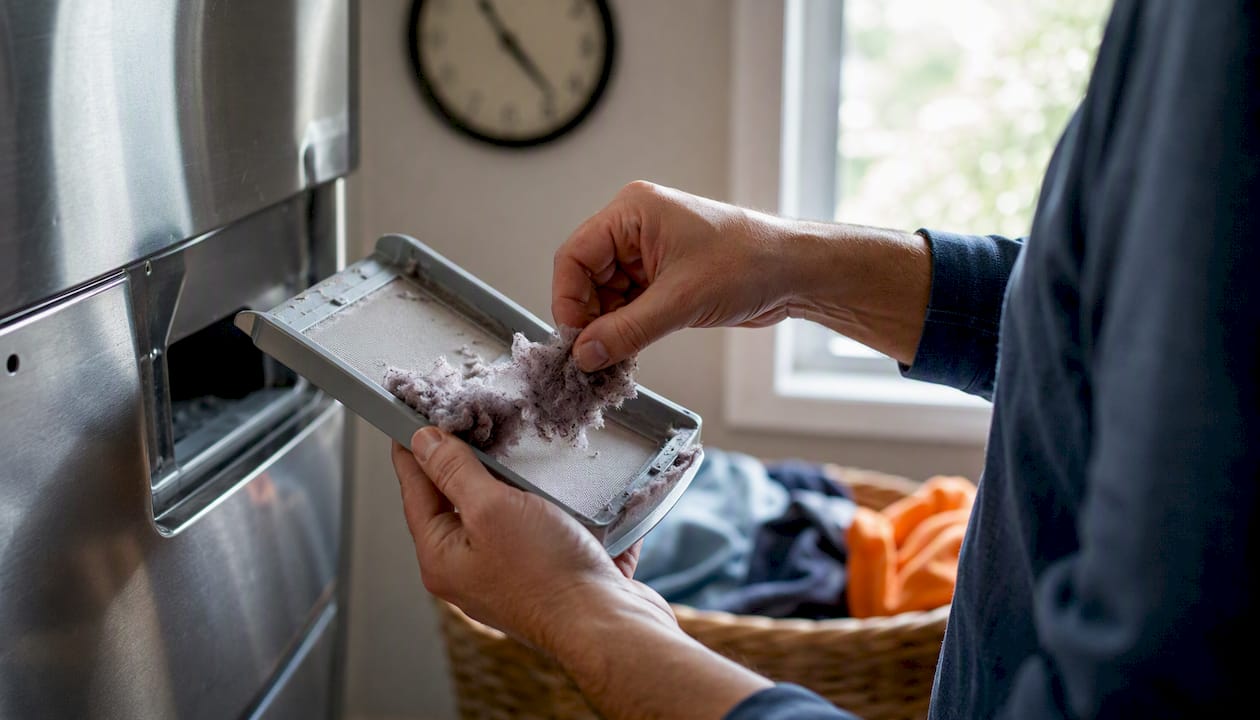
Triage matters as much as detection. A dead smoke detector battery or a locked-out guest is an immediate fix, something you handle same-day, no exceptions. A slow bathroom drain can usually wait for a scheduled vendor visit within the week. A hairline crack in exterior trim just needs monitoring on the next few turnovers. Build these three tiers into your workflow so cleaners know which findings trigger a same-day call and which go into next week’s work order.
Monthly Maintenance: Recurring Tasks That Stop Small Problems From Becoming Emergencies
Monthly maintenance targets the systems that degrade steadily with use rather than failing all at once. These are tasks that don’t need attention every turnover but will cause real damage if ignored for a full season.
Your monthly list should include testing every GFCI outlet (the little test/reset buttons in kitchens and bathrooms), checking HVAC filters and replacing them if dirty, observing whether drains are running slower than last month, verifying the refrigerator holds a safe temperature, inspecting appliance door seals for cracking, and checking washer and dryer hoses for bulging or cracking, since a burst hose can flood a unit in minutes.
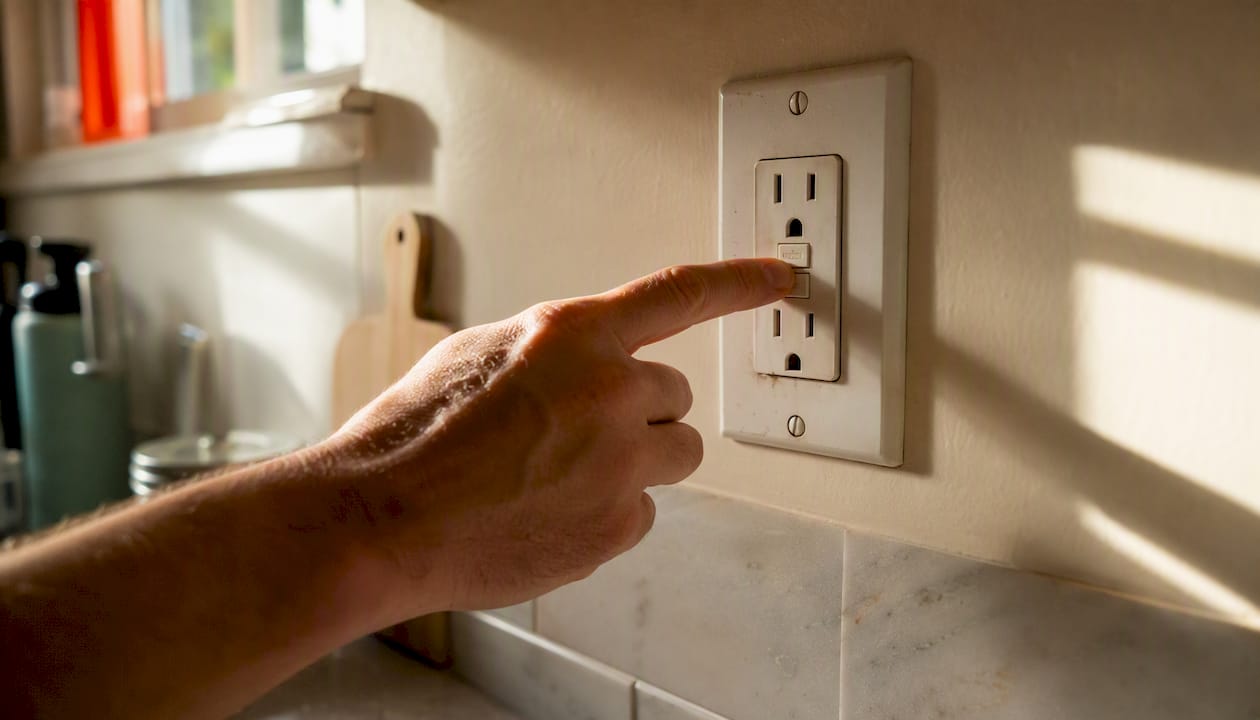
Ownership matters here more than most hosts realize. Your cleaner can handle visual checks, filter swaps, and GFCI testing during a regular turnover without adding much time. Anything requiring tools or diagnosis, a handyman visit works better, especially for appliance seal replacement or hose swaps. Your property manager or you as the owner should own the actual verification: reviewing photos, confirming the task got logged, and deciding when something graduates from “monitor” to “schedule a repair.”
If your property runs multiple turnovers a week, batch these monthly tasks into a single planned low-occupancy day rather than trying to squeeze them into every changeover. A vacation rental with heavy pet traffic or long-stay guests should shift some of these checks to a tighter, biweekly rhythm since appliance strain and wear accumulate faster.
Seasonal Checklist: Prepare the Property for Climate and Occupancy Peaks
Seasonal maintenance exists because your property faces predictable stress points tied to weather, and getting ahead of them protects both the building and your booking calendar. A rental that goes into summer with a dirty AC coil or into winter with exposed pipes is a rental heading toward an expensive service call during your busiest weeks.
Spring is your pre-cooling window: service the AC system, clean condenser coils, and clear gutters of winter debris before pollen season adds more buildup. Summer means monitoring filters more frequently since the system runs constantly, and checking exterior furniture and grills for wear before peak booking season hits. Fall is your pre-heating push: schedule furnace inspection, check weatherstripping on doors and windows, and clean gutters again before leaves pile up. Winter demands freeze protection, insulating exposed pipes, disconnecting and draining outdoor hoses, and confirming your heating system holds a safe minimum temperature even during vacancy stretches.
- Book HVAC service appointments at least six weeks before your peak season starts, since technicians get booked solid closer to the date.
- Clear gutters and downspouts in spring and fall at minimum, more often if the property sits under heavy tree cover.
- Inspect roof flashing and shingles after any major storm, not just on a fixed calendar.
- Check exterior furniture, grills, and hot tub covers before and after peak outdoor season.
- Walk the entire property after any vacancy longer than two weeks to catch issues that silently developed while no one was inside.
Property type changes this list considerably. A coastal rental needs more frequent exterior hardware checks since salt air accelerates corrosion on locks and railings. A mountain property needs aggressive freeze protection and probably a snow-load check on the roof. An urban condo often shifts seasonal responsibility partly to the HOA, but you still own the interior systems, so confirm exactly where that line sits before assuming someone else has it covered. For a deeper breakdown of quarter-by-quarter exterior prep, Workbenchguide’s seasonal home prep guide walks through the gutter, roof, and HVAC sequence in more detail.
Annual Professional Inspections: What Licensed Pros Should Cover and When to Book Them
Annual inspections are the layer most hosts skip, and it’s the one that prevents the biggest financial hits. A cleaner can spot a dripping faucet; only a licensed electrician can tell you your panel is one overloaded circuit away from a fire hazard.
Five systems belong on your annual pro-inspection list: a full HVAC tune-up covering both the furnace and AC unit, an electrical panel and circuit review, a whole-home plumbing inspection paired with a water heater flush, a roof and structural check, and pool or hot tub servicing if your property has one. Each of these should happen during your property’s off-season window, both because pros are easier to book and because any resulting downtime does less damage to your occupancy calendar.
| Inspection | Recommended timing | Owner | Verification |
|---|---|---|---|
| HVAC tune-up | Spring or fall (before peak season) | Licensed HVAC tech | Service report, photo of unit tag |
| Electrical panel review | Off-season, once yearly | Licensed electrician | Invoice, inspection report |
| Plumbing and water heater flush | Off-season, once yearly | Licensed plumber | Invoice, before/after photos |
| Roof and structural check | Fall, before winter | Roofing contractor | Written report, photos of any flagged areas |
| Pool or hot tub service | Pre-season and post-season | Certified pool tech | Service log, chemical readings |
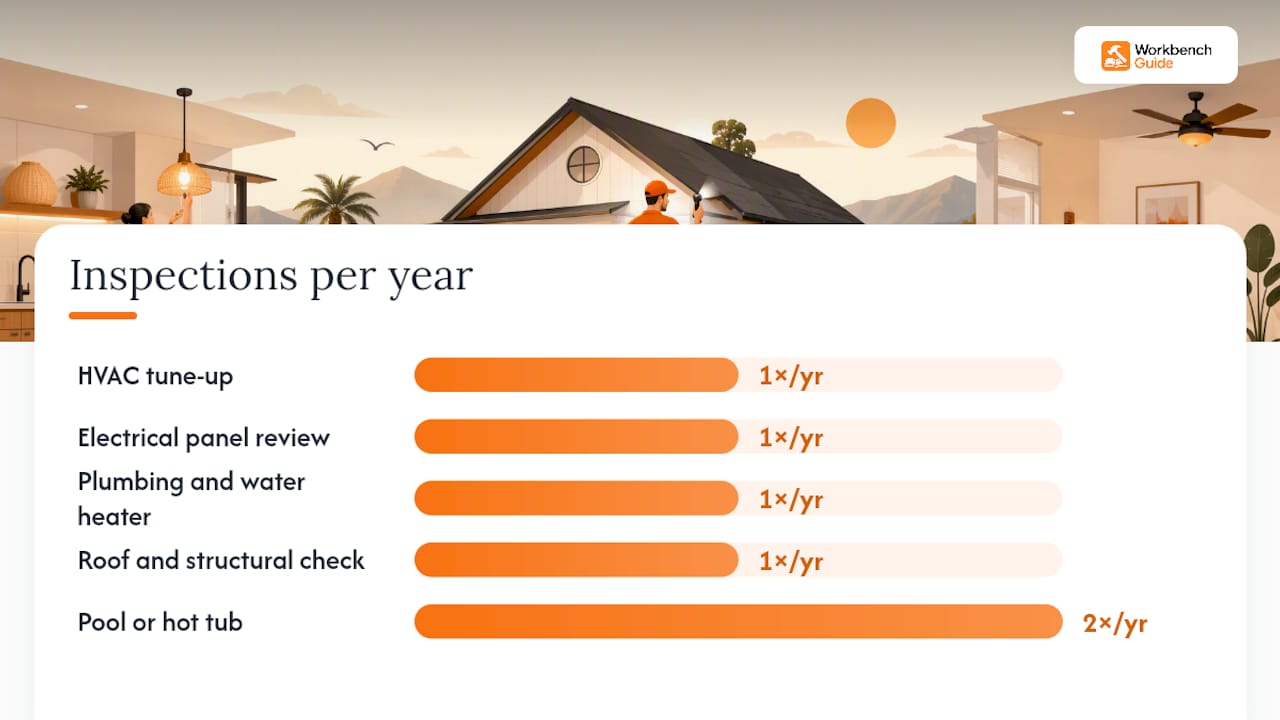
Set calendar reminders 60 days ahead of each due date since good vendors book out fast in the weeks right before peak season. Every inspection should generate three pieces of documentation: a photo, an invoice, and a written service report, filed together so you’re never scrambling to prove a system was serviced when a warranty claim or insurance question comes up.
Smoke and carbon monoxide detectors deserve a special note here. Test them at every single turnover, not just annually, and track device age separately since most units need full replacement every ten years regardless of battery condition. Build that replacement date into your annual inspection calendar so it doesn’t slip through the cracks. If your listing includes accessibility accommodations or specific guest communication around modifications, HUD’s fair housing and accessibility guidance is worth reviewing before you finalize house rules or refuse a reasonable request.
How Do You Operationalize a Maintenance Checklist?
A checklist only works if it’s actually followed, which means the format matters as much as the content. Every inspection item needs four fields at minimum: a timestamp, a photo, an assigned owner, and a priority level. Without all four, you end up with a pile of texts and no real record of what happened or who’s responsible for fixing it.
The task flow should run in a predictable sequence: your cleaner discovers an issue during turnover, that discovery generates a work order automatically, the work order gets routed to the right vendor based on trade, the vendor completes the job and submits photos, and your manager reviews and closes it out. For guest-facing issues, no hot water, a broken lock, no AC, set a hard service-level target of responding within two hours, even if the actual repair takes longer.
You have two real paths for tooling. A spreadsheet paired with a shared calendar and a photo folder works fine for one or two properties and costs nothing beyond your own discipline. Once you’re managing three or more units, preventative maintenance scheduling built around categorized task frequency and photo-backed checklists becomes far easier through purpose-built software, since manual tracking starts breaking down exactly when volume makes it matter most. Workbenchguide’s maintenance platform handles this by centralizing schedules, checklists, and task tracking so nothing depends on someone remembering to check a spreadsheet.
Pro Tip: Standardize your photo documentation before you need it for a dispute. Require one wide shot of the room, one close-up of the specific issue, and a photo of any model or serial number tag. Name each file with the property address, date, and issue in that order, and you’ll never waste ten minutes hunting through a camera roll during an insurance claim. Workbenchguide’s guidance on logging model numbers and warranty history alongside photo records shows how much faster repairs move when that information is already on file instead of being tracked down mid-emergency.
Finding, Vetting, and Managing Vendors and Emergency Contacts
Your maintenance checklist is only as good as the vendors backing it up, and most hosts build this list backward, scrambling for a plumber after the pipe has already burst. Building at least two vetted vendor contacts per trade, plumbing, HVAC, and electrical at minimum, before your first booking protects you from paying emergency-rate premiums and waiting days for a response.
Vetting doesn’t need to be complicated, but skipping it costs you later:
- Verify the vendor’s license and insurance directly, don’t just take their word for it.
- Ask for a response-time guarantee in writing, especially for guest-facing emergencies like no heat or no hot water.
- Get written estimates before authorizing any job over a set dollar threshold you decide in advance.
- Check at least two references from other rental property owners, not just homeowner clients.
- Confirm they’ll accept mobile work orders and photo evidence rather than requiring an in-person walkthrough for every job.
An introductory call before you ever need them matters more than most hosts expect. Walk the vendor through your access arrangements, lockbox codes, gate codes, whether a property manager needs to be present, and explain that you run a short-term rental business, not a single-family home. That context changes how they prioritize your calls when something breaks at 11 PM on a Saturday.
Set clear emergency spend authority in advance too. Decide the dollar amount your property manager can approve without calling you first, and write a short guest communication template for active issues: what you’ll say, how fast you’ll respond, and what compensation, if any, applies for extended disruptions. Once you’re running multiple properties, use that recurring volume to negotiate preferred-customer terms: faster response windows or discounted rates in exchange for consistent work. For a broader look at how property managers structure vendor relationships and daily oversight, Milwaukee PM’s guide to daily property manager duties covers the coordination side well.
Budgeting and Prioritizing Maintenance Work
Budget for maintenance as a fixed annual line, not a reactive expense you cover whenever something breaks. Most experienced hosts set aside a percentage of property value or a per-square-foot figure each year, then adjust upward heading into their busiest season since occupancy strain accelerates wear.
A proactive, scheduled maintenance program converts unpredictable emergency costs into planned, budgeted expenditures, which is the entire financial case for this system. Reactive maintenance, waiting until something fails, carries hidden costs beyond the repair bill itself: guest refunds, lost future bookings from a bad review, and the opportunity cost of a unit sitting dark while you scramble for a same-day vendor.
Prioritize spend in this order: safety issues first (no hot water, a broken lock, a nonfunctional smoke detector), then systems that directly affect the guest experience (HVAC, Wi-Fi, appliances), then exterior and cosmetic items that matter for listing photos and first impressions but don’t threaten a stay.
| Criteria | Safety issue | Guest-disruption risk | Cost to repair | Time to replace |
|---|---|---|---|---|
| No hot water | High | High | Moderate | 1-2 days |
| HVAC failure in peak season | Moderate | High | High | 2 days |
| Cosmetic wall damage | Low | Low | Low | Same day |
| Slow drain | Low | Moderate | Low | Same day |
| Roof leak | High | High | High | 3 days |
For the repair-versus-replace decision, weigh the appliance or system’s age against its repair history. Something under warranty with one repair on record is worth fixing. Something out of warranty with two or more service calls in the past year is usually cheaper to replace once you factor in the downtime risk and the listing impact of a unit sitting unavailable during peak weeks. Workbenchguide’s breakdown of the ROI behind preventative maintenance covers this math in more depth if you’re building out a formal reserve fund policy.
Templates and a 30-Day Rollout Plan to Make the Checklist Operational This Month
You don’t need to build this system from scratch. Start with five templates: a per-turnover checklist for cleaners, a monthly task sheet, a seasonal inspection sheet, a vendor contact log, and an asset registry tracking make, model, and warranty status for every major appliance and system in the property. Workbenchguide’s collection of downloadable checklists covers most of this ground if you’d rather adapt an existing format than build one from a blank page.
Roll it out over four weeks rather than trying to launch everything at once:
- Week 1: Audit the property and build your asset registry, every appliance, its model number, install date, and warranty status.
- Week 2: Integrate the per-turnover checklist into your cleaner’s existing routine and require photo sign-off on any flagged issue.
- Week 3: Schedule your seasonal and annual professional inspections and confirm at least two vendor contacts per major trade.
- Week 4: Run a live turnover with the full checklist in place, review what worked, and adjust the format before scaling it to additional units.
If you manage more than one property, pilot this entire process on your best-performing unit first. Work out the friction points, the confusing checklist item, the vendor who won’t take mobile work orders, before rolling it across your full portfolio. That one property becomes your template, and scaling from a tested system beats debugging four properties simultaneously.
Why Maintenance Is a Financial Strategy, Not Just a To-Do List
Most hosts treat maintenance as a chore list they get to when things slow down. That’s backward. Every dollar spent on a scheduled filter change or a proactive vendor visit is a dollar you didn’t spend on an emergency call-out, a guest refund, or the review damage from a stay gone wrong. The math favors prevention every time, and it isn’t close.
The hosts who run this well share one habit: they document everything. Not because they’re paranoid, but because a photo and a timestamp turn a maintenance program from a vague good intention into something defensible. When a guest disputes a damage charge, or an insurer questions a claim, the host with a dated photo and a service invoice wins that conversation in minutes. The host without one spends a week arguing from memory.
What surprises most new hosts is how much of this system runs on their cleaning staff rather than on expensive service contracts. A cleaner who’s been trained to flag a running toilet or a loose cabinet hinge is worth more to your maintenance program than a quarterly inspection you paid a contractor for, simply because they’re inside the unit fifty-plus times a year instead of four. Workbenchguide’s research on the benefits of preventive maintenance backs this up: consistent, low-cost, high-frequency checks outperform infrequent deep audits almost every time.
Simplify Maintenance With a Tool That Centralizes Your Checklists
Spreadsheets and text threads work until you’re running more than one property, then something always slips through the cracks. Workbenchguide centralizes the entire system: recurring task schedules, photo and invoice attachments tied to each service record, an asset registry for every appliance’s make, model, and warranty status, and ready-to-use templates for turnover, monthly, and seasonal checks. Instead of juggling a cleaner’s text messages and a separate calendar reminder for the HVAC tune-up, everything lives in one place with a documented history you can pull up instantly.
If you’re ready to move off spreadsheets, start with Workbenchguide’s home maintenance checklist and adapt it to your property’s specific systems this week.
Frequently Asked Questions
How often should a short-term rental be inspected?
Run a quick inspection at every single turnover, deeper monthly checks on mechanical systems, seasonal prep tied to your climate, and full professional inspections once a year for HVAC, electrical, plumbing, and roofing.
What’s the difference between cleaning and maintenance for a vacation rental?
Cleaning addresses appearance, wiped counters, vacuumed floors, fresh linens. Maintenance addresses function, whether the dishwasher actually runs a full cycle, whether the smoke detector passes its test button, and whether the water heater shows signs of a leak.
Do I need a professional inspection every year even if nothing seems wrong?
Yes. Many system failures, a cracking electrical panel, a slowly failing water heater, don’t show visible symptoms until they fail completely, and an annual inspection by a licensed pro catches these before they become emergencies.
How many vendor contacts should I have per trade?
Keep at least two vetted contacts per major trade, plumbing, HVAC, and electrical, so you’re never stuck paying emergency rates because your one plumber is unavailable.
Can cleaners handle maintenance checks, or do I need a separate inspector?
Cleaners can absolutely handle visual checks and simple tests, lights, faucets, locks, thermostat, smoke detectors, if you give them a structured checklist and require photo documentation. Save licensed trades for diagnosis and repair work.
Sources
The operational structure in this checklist draws on a handful of sources worth bookmarking. Oxmaint’s turnover-focused checklist breaks down room-by-room inspection points in more granular detail than most host guides. Breezeway’s preventative maintenance schedule guide is a solid reference for how to categorize tasks by frequency if you’re building a system for a larger portfolio. And StaySTRA’s vendor management guidance covers the vendor-vetting process in more depth than we could fit here.
For downloadable templates, Workbenchguide’s checklist and guide library has ready-to-adapt formats for every cadence tier discussed above. And if your listing involves any accessibility accommodations, guest rule enforcement, or nondiscrimination questions, HUD’s fair housing and equal opportunity guidance is the primary source to check before finalizing house policies.
- Hud
Leave a Reply