
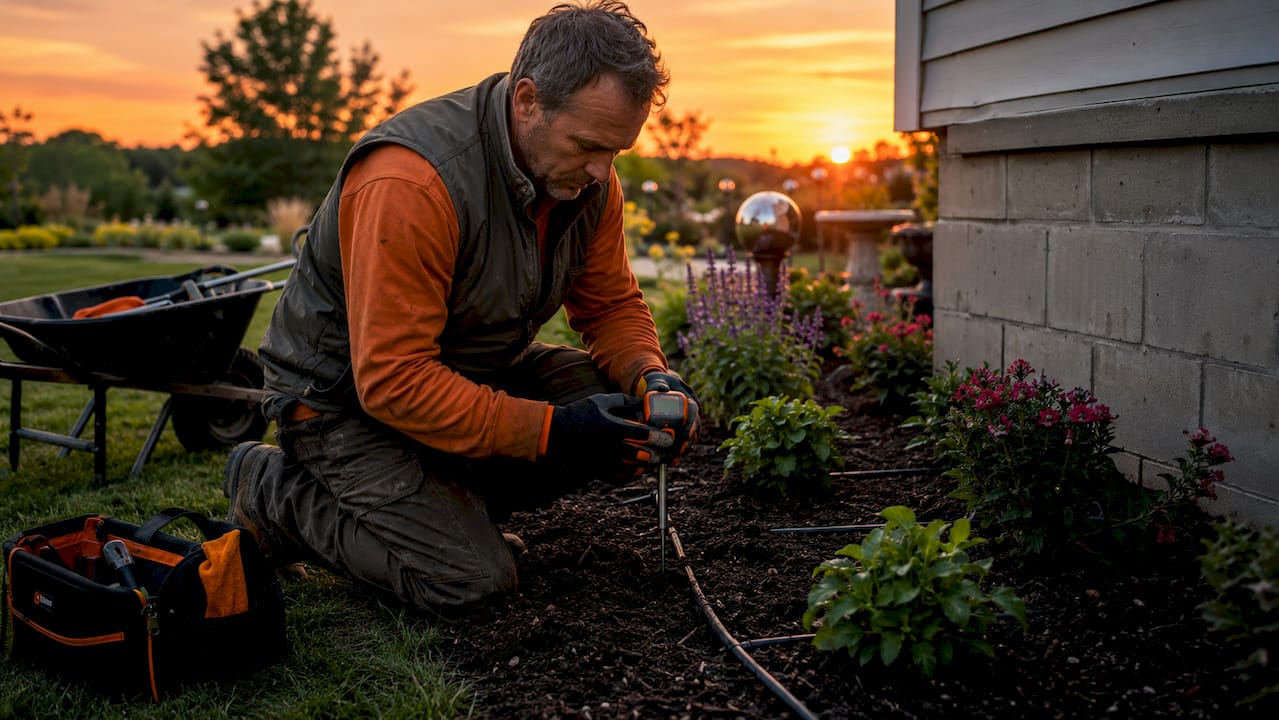
Landscaping is defined as the primary moisture management system that determines whether your home’s foundation stays stable or shifts, cracks, and leaks. Foundation problems stem from uneven water distribution in the soil surrounding your home, not just from structural defects. The role of landscaping for foundation health is to control where water goes, how fast it drains, and how much moisture the soil holds at any given time. Get that wrong, and you face one of the most expensive repair bills a homeowner can encounter. Basement water damage affects 98% of U.S. homes at some point, with an average repair cost of $15,400 per claim.
What is the role of landscaping for foundation stability?
Landscaping controls three forces that directly threaten your foundation: hydrostatic pressure, soil shrinkage, and differential settlement. Hydrostatic pressure builds when water pools against your foundation walls and pushes inward. Soil shrinkage happens when plants or drought pull moisture out unevenly, causing the ground to contract under one section of the slab. Differential settlement is what you see when one corner of your house sinks faster than another.
Proper grading, strategic planting, and managed irrigation each address one of these forces. No single fix covers all three. That is why the importance of landscaping for buildings goes far beyond curb appeal. It is an active, ongoing system that requires the same attention as your roof or HVAC.
How does grading protect your foundation?
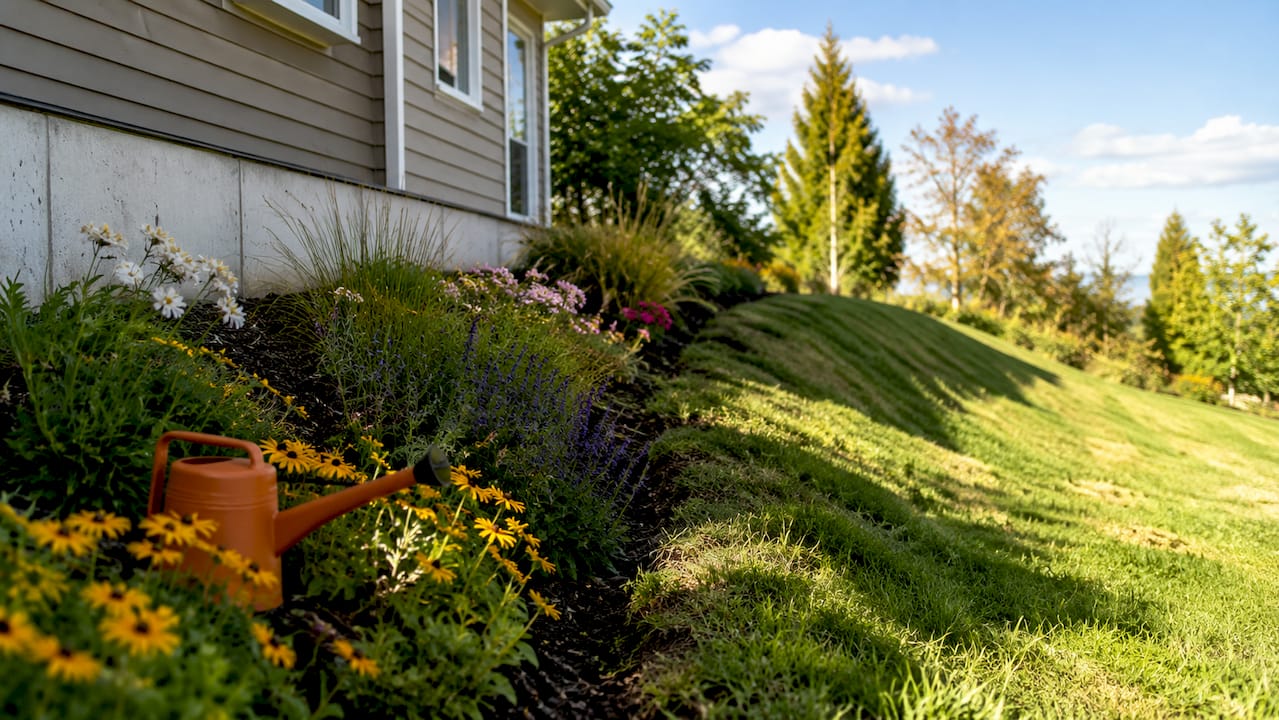
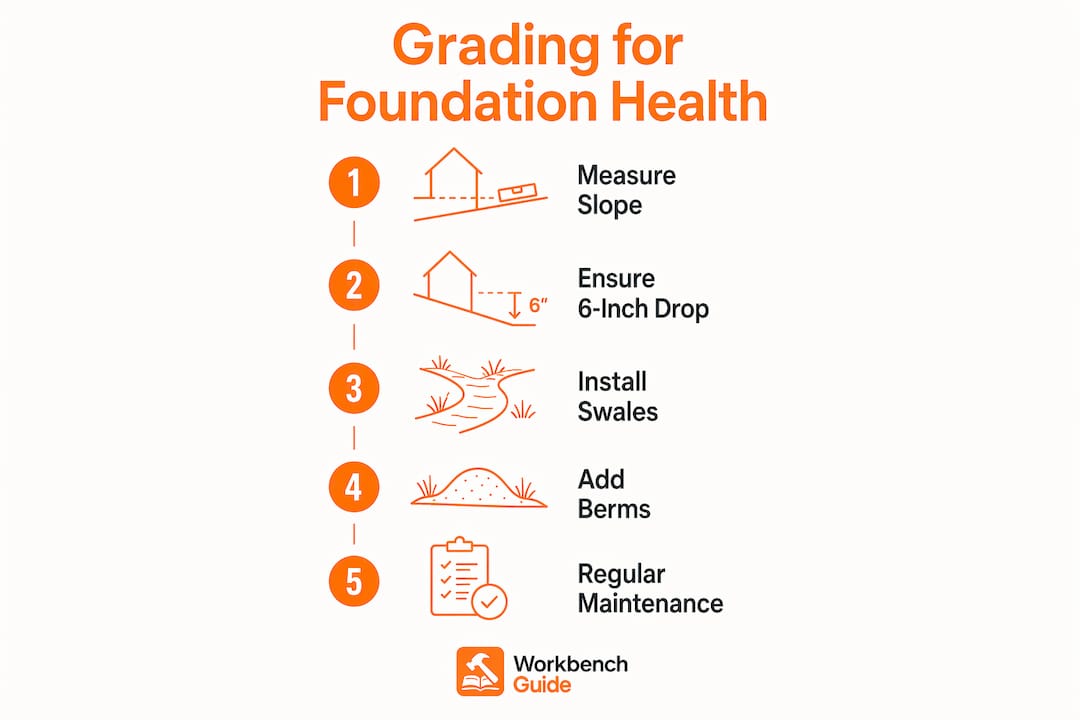
Grading is the single most effective foundation protection tool available to homeowners. The accepted standard, referenced in IRC Section R401.3, requires a minimum 6-inch drop over 10 feet from the foundation wall. That 5–6% slope sends surface water away before it can saturate the soil and build pressure against your walls.
When grading fails, water sits against the foundation. Saturated soil creates hydrostatic pressure that forces moisture through hairline cracks and, over time, widens them. Poor grading also accelerates frost heave in cold climates, where water trapped near the footing freezes, expands, and physically lifts sections of the foundation.
Grading settles and shifts over time. Landscaping changes, tree roots, and seasonal freeze-thaw cycles all alter the slope around your home. A grading inspection every two to three years catches problems before they become structural.
Drainage features like swales (shallow channels that redirect runoff) and berms (raised soil ridges) complement grading by giving water a clear path away from the house. They work best when designed as part of the overall yard layout, not added as afterthoughts.
Pro Tip: Place a level on a long board against your foundation and measure the drop at the far end. If the board tips toward the house instead of away, you have negative grading that needs correction.
| Grading slope | Effect on foundation | Maintenance need |
|---|---|---|
| Less than 2% (under 2.4 inches per 10 feet) | Water pools near foundation; high hydrostatic risk | Immediate regrading required |
| 5–6% (6 inches per 10 feet) | Rapid runoff; low moisture accumulation | Inspect every 2–3 years |
| Over 10% | Fast runoff but erosion risk; soil loss near footing | Add erosion control plants or ground cover |
How far should plants be from your foundation?
Plant placement is the most underestimated factor in how landscaping affects foundation health. Shrubs should sit 3–5 feet from the foundation; large trees that reach 50 feet or more at maturity need 25–50 feet of clearance. These distances are not arbitrary. They reflect how far roots travel and how much water a mature plant pulls from the surrounding soil.
Root damage is widely misunderstood. Roots rarely crush intact concrete. The real mechanism is moisture extraction. A large oak or willow pulls hundreds of gallons of water from the soil each week during summer. That extraction causes the soil to shrink and pull away from the foundation unevenly, which triggers differential settlement.
Overplanting near the foundation creates a second problem: dense foliage traps moisture against the siding and walls. That sustained dampness accelerates wood rot, attracts pests, and keeps the soil near the foundation perpetually wet.
Mulch is useful for moisture retention in garden beds, but it needs to stay clear of the structure itself. Keep mulch at least 12 inches from the foundation siding to prevent termite attraction and moisture buildup against the wall.
Pro Tip: Before planting anything near your house, look up the mature spread of the root system, not just the canopy. A plant labeled “compact” at the nursery can still send roots 15 feet in search of water.
Safe planting distances by plant type:
- Ground cover and low perennials: 12–18 inches from the foundation wall
- Small shrubs (under 4 feet mature height): 2–3 feet from the foundation
- Medium shrubs (4–6 feet mature height): 3–5 feet from the foundation
- Small ornamental trees (under 25 feet): 10–15 feet from the foundation
- Large shade trees (over 40 feet): 25–50 feet from the foundation
- Willows, poplars, and silver maples: 50 feet minimum due to aggressive root systems
For seasonal garden maintenance that accounts for plant growth and soil conditions, a structured schedule prevents both overplanting and neglect.
How do irrigation, gutters, and seasonal maintenance protect foundations?
Inconsistent soil moisture from irrigation and tree root activity causes more foundation movement than most homeowners realize. Overwatering near a slab causes clay-heavy soils to swell. A drought period, or a large tree pulling water from the same area, causes rapid shrinkage. Both extremes stress the foundation in opposite directions.
Gutters and downspouts are part of the landscaping drainage system, even though most homeowners treat them separately. A clogged gutter dumps concentrated water directly at the foundation during every rainstorm. Extending downspouts 4–10 feet away from the foundation wall prevents that concentrated runoff from saturating the soil in one spot.
Recommended maintenance tasks and schedules:
- Spring: Inspect grading around the full perimeter after frost heave season. Fill any low spots that slope toward the house.
- Spring: Check downspout extensions and clean gutters after winter debris accumulation.
- Summer: Monitor irrigation zones near the foundation. Adjust timers to avoid overwatering during wet periods.
- Late summer: Watch for soil pulling away from the foundation during drought. Slow, deep watering near the perimeter stabilizes moisture levels.
- Fall: Clear leaves from drainage swales and check that berms are intact before the rainy season.
- Fall: Remove mulch that has crept within 12 inches of the siding and reapply at a safe distance.
- Winter: Inspect foundation walls for new cracks after the first hard freeze. Early detection limits repair costs.
For a full fall home inspection checklist that covers drainage and grading alongside other seasonal tasks, Workbenchguide provides a structured guide built for homeowners.
| Moisture extreme | Common cause | Preventive landscaping action |
|---|---|---|
| Soil swelling near foundation | Overwatering, poor drainage, clay soil | Regrade, add drainage swale, reduce irrigation frequency |
| Soil shrinkage and gap formation | Drought, large tree root uptake | Slow deep watering at perimeter; remove or relocate aggressive trees |
| Pooling water after rain | Negative grading, clogged downspouts | Correct slope; extend downspouts; add French drain if needed |
What are the biggest landscaping mistakes that damage foundations?
The most damaging landscaping mistakes are the ones that look fine for years before the foundation shows symptoms. By then, repair costs are significant.
Construction-related soil compaction limits healthy root growth and natural water drainage near foundations. Homes built on compacted fill soil have reduced permeability from the start, which means landscaping choices matter even more in those yards.
Homeowners frequently overplant foundations for instant aesthetics without accounting for mature plant size. A row of arborvitae planted 18 inches from the house looks tidy at three feet tall. At 20 feet tall and 6 feet wide, those same plants trap moisture, block inspection access, and pull water from the soil unevenly.
Pro Tip: Walk your foundation perimeter after a heavy rain. Any area where water sits for more than 30 minutes after the rain stops is a drainage problem that needs correction before the next season.
Common mistakes homeowners make and how to avoid them:
- Planting too close: Always use mature size, not nursery size, to determine placement distance.
- Mulch against siding: Keep a clear 12-inch gap. Mulch against wood siding invites termites and rot.
- Ignoring downspout direction: A downspout that empties toward the house negates all other drainage work.
- Skipping grading checks: Grading shifts every few years. A one-time correction is not permanent.
- Watering on a fixed schedule regardless of rainfall: Soil near the foundation needs consistent moisture, not a fixed calendar. Adjust irrigation based on actual conditions.
- Assuming roots are the main threat: Moisture imbalance causes far more foundation damage than direct root pressure. Address water first.
For guidance on monitoring foundation cracks that may signal soil movement, Workbenchguide offers a practical homeowner’s guide.
Key Takeaways
Proper landscaping is the most cost-effective foundation protection a homeowner can maintain, requiring correct grading, strategic planting distances, managed irrigation, and seasonal inspections.
| Point | Details |
|---|---|
| Grading is the first defense | Maintain a 6-inch drop over 10 feet from the foundation to prevent hydrostatic pressure. |
| Plant distance matters | Keep shrubs 3–5 feet away and large trees 25–50 feet away to prevent moisture-driven soil movement. |
| Roots cause indirect damage | Roots extract moisture and shrink soil unevenly rather than physically breaking concrete. |
| Mulch needs a gap | Keep mulch at least 12 inches from foundation siding to prevent termites and moisture buildup. |
| Seasonal checks prevent repairs | Inspect grading, gutters, and drainage each spring and fall before problems compound. |
What I’ve learned from watching homeowners get this wrong
Most homeowners treat landscaping as decoration and foundation care as a separate, reactive problem. That split thinking is expensive. Every grading issue I have seen that led to a basement leak started with a yard that looked perfectly fine from the street.
The grading check is the first thing I recommend to any homeowner, and it is the most skipped. People spend thousands on plants and hardscaping without ever confirming that water moves away from the house. A $15 level and 20 minutes of walking the perimeter would catch most problems before they start.
The other pattern I see constantly is underestimating how large plants grow. A homeowner plants a fast-growing shrub for privacy, and within five years it is pressing against the siding, trapping moisture, and blocking access to the foundation wall. Planning for mature size is not complicated. It just requires looking at a plant tag before you dig.
The homeowners who avoid costly foundation repairs are not the ones who spend the most on landscaping. They are the ones who inspect consistently, correct grading when it shifts, and keep water moving away from the house every season. That discipline, more than any specific plant or product, is what protects the investment.
— Sean
Workbenchguide makes foundation maintenance manageable
Foundation protection through landscaping is not a one-time project. It requires consistent attention across every season, from spring grading checks to fall gutter cleaning to summer irrigation adjustments. Workbenchguide gives homeowners a structured way to stay on top of every task without relying on memory or guesswork.
The home maintenance checklist on Workbenchguide covers foundation care, drainage inspection, gutter maintenance, and seasonal yard tasks in one organized resource. You get reminders when tasks are due, step-by-step guidance for DIY work, and access to contractor help when a job goes beyond what you want to tackle alone. Staying ahead of landscaping maintenance is the most direct way to avoid the repair costs that catch homeowners off guard.
FAQ
What is the minimum grading slope for foundation protection?
The accepted standard is a 6-inch drop over the first 10 feet from the foundation wall, which equals a 5–6% slope. This slope moves surface water away fast enough to prevent soil saturation and hydrostatic pressure buildup.
How far should trees be planted from a house foundation?
Large trees that reach 50 feet or more at maturity should be planted 25–50 feet from the foundation. Smaller ornamental trees need at least 10–15 feet of clearance to prevent root-driven soil moisture extraction.
Do tree roots actually break through concrete foundations?
Roots rarely break intact concrete directly. The primary damage comes from roots extracting soil moisture unevenly, which causes the soil to shrink and pull away from the foundation, leading to settlement and cracking.
How does irrigation affect foundation stability?
Overwatering near a slab causes clay soils to swell, while underwatering during drought allows rapid soil shrinkage. Both extremes create uneven pressure on the foundation, so consistent, moderate irrigation near the perimeter is the goal.
How often should homeowners check their foundation grading?
A grading inspection every two to three years is the standard recommendation. Frost heave, landscaping changes, and soil settling all shift the slope over time, so a one-time correction does not stay effective permanently.
Leave a Reply