
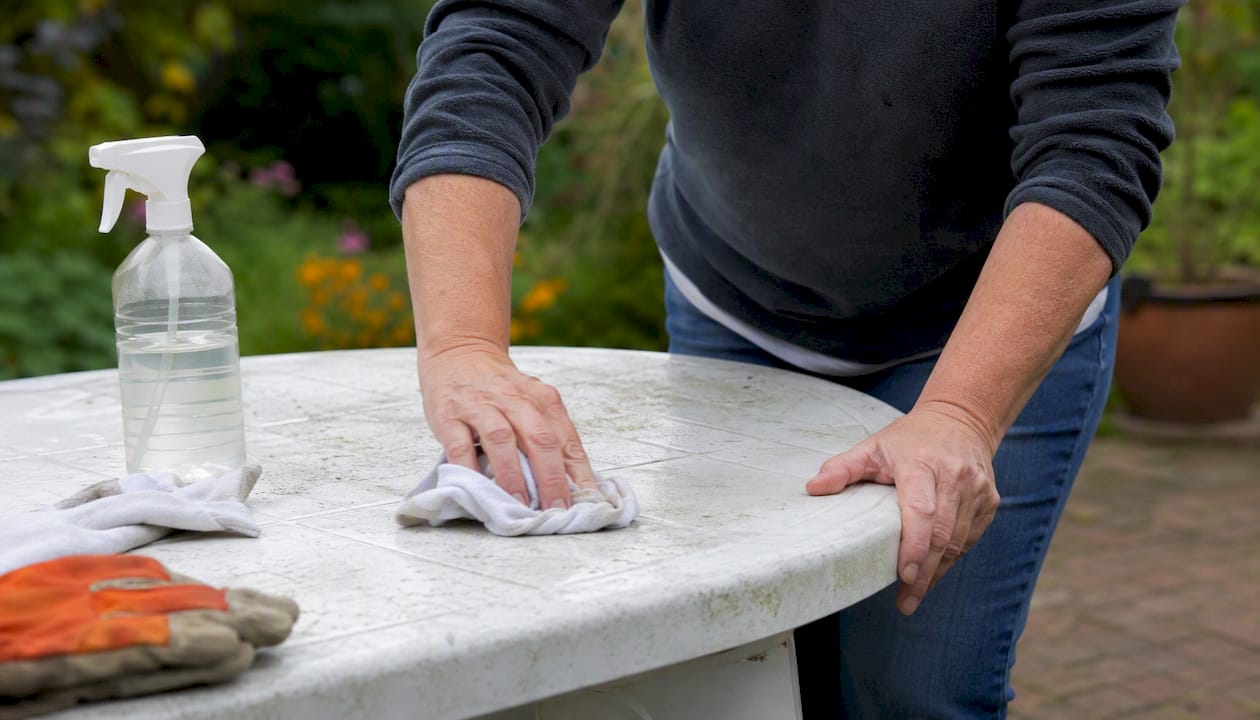
Warm water, a squirt of mild dish soap, and a soft brush handle most jobs, as recommended in the best way to clean interior doors. Wipe or scrub gently, rinse well, and let the piece air-dry. That combination lifts pollen, dust, and everyday grime off plastic and resin patio furniture without touching the surface finish.
Stains, chalky fading, or mildew need a stronger approach, but you still don’t reach for solvents or steel wool. A quick spot-test on a hidden spot always comes first.
- Routine dirt: warm water + dish soap + soft brush
- Stains or oxidation: vinegar solution or baking soda paste
- Mildew: diluted cleaner, gentle scrub, thorough rinse
- Always spot-test in a hidden area before treating the whole piece
Cleaning pros generally favor mild dish soap and water for everyday care and save deeper cleans for two to four times a season, which is enough to prevent buildup from dulling the plastic permanently.
Key Takeaways
Mild dish soap and warm water handle routine cleaning, while vinegar, baking soda, and diluted commercial cleaners solve stains, oxidation, and mildew without damaging plastic finishes.
| Point | Details |
|---|---|
| Start mild | Use warm water and dish soap first; escalate to vinegar or baking soda only for stains. |
| Spot-test always | Test any cleaner on a hidden area for 10 to 15 minutes before full application. |
| Avoid harsh tools | Skip solvents, wire brushes, and undiluted bleach on colored plastic to protect finishes. |
| Deep clean seasonally | Plan two to four deep cleans per season, with light wipes in between. |
| Automate the schedule | Workbenchguide turns this cleaning routine into recurring reminders so tasks don’t slip. |
Table of Contents
- Tools and Supplies for Cleaning Plastic Outdoor Furniture
- Is It Safe to Use Bleach or Chemicals on Plastic Furniture?
- How Do You Clean Plastic Patio Furniture for Everyday Dirt?
- How Do You Deep Clean Stained or Faded Plastic Furniture?
- What’s the Safest Way to Remove Mildew and Algae From Plastic Furniture?
- How Do You Get Rid of Ink, Grease, and Scuff Marks on Plastic Chairs?
- Rinsing, Drying, and Protecting Plastic Furniture After Cleaning
- How Often Should You Clean Plastic Outdoor Furniture?
- When Is the Best Time of Day to Clean Outdoor Furniture?
- Can You Clean the Cushions and Fabric Covers on Plastic Furniture?
- Keep Your Cleaning Schedule on Track With WorkbenchGuide
- Sources
Tools and Supplies for Cleaning Plastic Outdoor Furniture
You don’t need a garage full of gear. A bucket, a soft-bristled brush, a couple of microfiber cloths, a sponge, a garden hose, and a pair of rubber gloves cover almost every job on this list.
For cleaners, keep it simple:
- Mild dish soap (the same bottle you use in the kitchen)
- White vinegar for stains and mineral deposits
- Baking soda for a gentle paste on faded or chalky spots
- A diluted multi-purpose cleaner like Simple Green for tougher grime, or a dedicated product like 30 Seconds Outdoor Cleaner for mildew-prone surfaces
- Scotch-Brite non-abrasive pads for stuck-on spots that a cloth can’t budge
Skip wire brushes and metal scouring pads entirely. They scratch plastic in ways that trap dirt permanently.
Pro Tip: Keep a small caddy with dish soap, vinegar, and one microfiber cloth right by the back door. A 90-second wipe after a storm beats an hour of scrubbing next weekend.
Is It Safe to Use Bleach or Chemicals on Plastic Furniture?
Not without real caution. Spot-test first: dab your cleaner on a hidden spot, like the underside of a seat or the back of a leg, and wait 10 to 15 minutes to check for discoloration or softening before treating the whole piece.
Avoid straight solvents, undiluted bleach on colored plastic, aggressive abrasive pads, and pressure washers held too close to the surface. Cleaning experts note that harsh chemicals and abrasives can permanently damage finishes that can’t be sanded and refinished the way wood can.
Repeated or heavy-handed use of bleach and solvents doesn’t just clean plastic. Over time it breaks down protective coatings and the surface itself, leaving furniture more prone to fading and cracking.
Wear gloves and eye protection when working with concentrated cleaners, cover nearby plants before rinsing runoff, and work in open air rather than an enclosed porch.
Pro Tip: If a cleaner smells strong enough to make your eyes water, it’s strong enough to need diluting before it touches your furniture.
How Do You Clean Plastic Patio Furniture for Everyday Dirt?
Weekly upkeep is genuinely simple. Follow these steps for a set of chairs or a table that just needs the pollen and dust knocked off:
- Remove cushions and set them aside.
- Brush off loose debris, leaves, and dry dirt with a soft brush.
- Mix warm water with a few drops of mild dish soap in a bucket.
- Wipe or scrub gently with a sponge or soft cloth, working section by section.
- Rinse thoroughly with a garden hose.
- Let the piece air-dry or towel-dry if you need it ready sooner.
A small bistro set takes about 10 minutes. A full six-chair dining set with a table runs closer to 30 to 40 minutes.
For quick touch-ups between full cleanings, especially after a storm:
- Wipe down seats and armrests where water pools
- Check for bird droppings or tree sap and treat immediately
- Knock pollen off before it bakes on in the sun
How Do You Deep Clean Stained or Faded Plastic Furniture?
Visible staining, a chalky gray film, or mildew spots call for something beyond soap and water. Routine cleaning maintains; deep cleaning restores.
For colored plastic, mix a quarter cup of white vinegar per quart of warm water, which handles most surface stains without bleaching the color. A baking soda paste, applied with a damp cloth, works as a mild abrasive on chalky or sun-faded spots. For set-in grime that won’t budge, a small amount of diluted dishwasher detergent can help, though you should use it sparingly and rinse well afterward.
The process:
- Apply your chosen mix directly to the stained area.
- Let it sit for 5 to 10 minutes to loosen grime.
- Scrub gently with a soft brush or Scotch-Brite non-abrasive pad.
- Rinse thoroughly, checking that no residue remains in seams or joints.
- Repeat once if the stain is still visible.
Commercial cleaners have their place too. Simple Green publishes dilution ratios for both light daily cleaning and stronger moderate-grime jobs, and products like 30 Seconds Outdoor Cleaner are built specifically for outdoor mildew and algae. Follow the label’s dilution instructions exactly, and spot-test before covering the whole surface.
Pro Tip: For badly sun-faded white plastic, a baking soda paste rubbed in circles with a damp cloth restores much of the original brightness without any harsh chemical.
What’s the Safest Way to Remove Mildew and Algae From Plastic Furniture?
Mildew shows up as fuzzy black or green spots, usually in shaded corners or seat crevices, and it’s different from dirt or dye stains that wipe off flat. If it smudges when you rub it and leaves a musty smell, you’re dealing with mildew, not grime.
Start safer, escalate only if needed:
- Try a vinegar solution or diluted oxygen-based cleaner first
- Baking soda paste works for light growth
- A diluted bleach solution (never full strength) is acceptable for stubborn mildew on white or light-colored plastic only, used briefly and rinsed immediately
If you’re using a pressure washer, keep the nozzle at least 12 inches from the surface, start on the lowest effective setting, and avoid spraying directly into seams or joints. Cover nearby plants before you start, since runoff from cleaners and bleach solutions can burn foliage, and rinse thoroughly when you’re done.
Pro Tip: Mildew tends to return to the same shaded spot. If one corner keeps growing it back, move the furniture a few inches into more sun and airflow.
How Do You Get Rid of Ink, Grease, and Scuff Marks on Plastic Chairs?
Localized marks rarely need a full cleaning session. Treat them on the spot instead:
- Baking soda paste lifts most surface grime and light scuffs
- White vinegar on a cloth handles mineral deposits and mild stains
- Rubbing alcohol on a cotton ball can remove ink and permanent marker; spot-test first since it can dull some finishes
- Dish soap degreases oil and grease stains; follow with a warm water rinse
- For hard scuffs on thick, solid plastic furniture (not thin resin wicker), very light sanding is a last resort, and only on furniture you’re not worried about the finish on
Rinsing, Drying, and Protecting Plastic Furniture After Cleaning
Rinse from top to bottom so soap and grit run off rather than resettle in creases. Leftover cleaner residue attracts dirt faster the next time.
- Rinse thoroughly, checking joints and seat grooves for leftover suds.
- Air-dry in shade when possible, or towel-dry if you need the furniture back in use quickly.
- Skip cleaning in direct, blazing sun since solutions dry too fast and streak.
A light coat of automotive paste wax or a UV protectant spray can add shine and slow future fading. The tradeoff: wax can make seats slightly slippery when wet, so skip it on chair surfaces kids or older adults use often.
Pro Tip: Save UV protectant for tabletops and armrests, and leave seat surfaces bare for better grip.
How Often Should You Clean Plastic Outdoor Furniture?
A realistic schedule beats sporadic deep cleans. Wipe furniture down after storms or heavy pollen days, do a light soap-and-water clean regularly during peak pollen season, and reserve deep cleaning a few times per season, in line with what cleaning professionals recommend for buildup control.
Before storing furniture for winter, clean it fully, remove and store cushions separately, and cover pieces or move them indoors if your region sees hard freezes or heavy snow load. A checklist you can reuse each season:
- Quick wipe after any storm or high-pollen day
- Light clean every 1 to 2 weeks in spring and early summer
- Deep clean at the start and end of the outdoor season
- Full clean and cushion removal before winter storage
| Point | Details |
|---|---|
| Routine wipe | Wipe pollen and dust off weekly during heavy season to prevent buildup. |
| Deep clean cadence | Plan two to four deep cleans per season for stains and oxidation. |
| Pre-storage step | Clean fully and remove cushions before winter storage or covering. |
Adding these dates to a deck and exterior maintenance checklist keeps outdoor furniture on the same schedule as the rest of your yard upkeep.
When Is the Best Time of Day to Clean Outdoor Furniture?
Pick an overcast day or clean in early morning shade. Direct sun dries cleaning solutions too fast, which leaves streaks and forces you to redo sections.
Keep supplies within reach, since spot-treating a mess the day it happens takes a fraction of the effort a set-in stain does later. Cleaning pros generally treat a handful of deep cleans per season as the benchmark, with light wipe-downs filling the gaps in between.
Pro Tip: Clean furniture right before a light evening dew rather than in midday heat. The extra humidity keeps soap workable longer, so you get better coverage with less scrubbing.
Can You Clean the Cushions and Fabric Covers on Plastic Furniture?
Most plastic and resin furniture sets come with cushions or fabric seat covers, and those need separate treatment from the frame. Check the tag first. Many outdoor cushion covers are labeled machine washable on a gentle, cold cycle, while foam inserts almost always need to stay out of the washer entirely.
For removable, washable covers, machine wash on cold with mild detergent, skip the dryer, and let them air-dry fully in shade before putting them back on. For foam cushions that can’t come apart from their covers, spot clean instead: mix warm water with a small amount of mild dish soap, work it into the stain with a soft brush, then blot with a clean damp cloth to lift the suds rather than scrubbing the soap deeper into the foam.
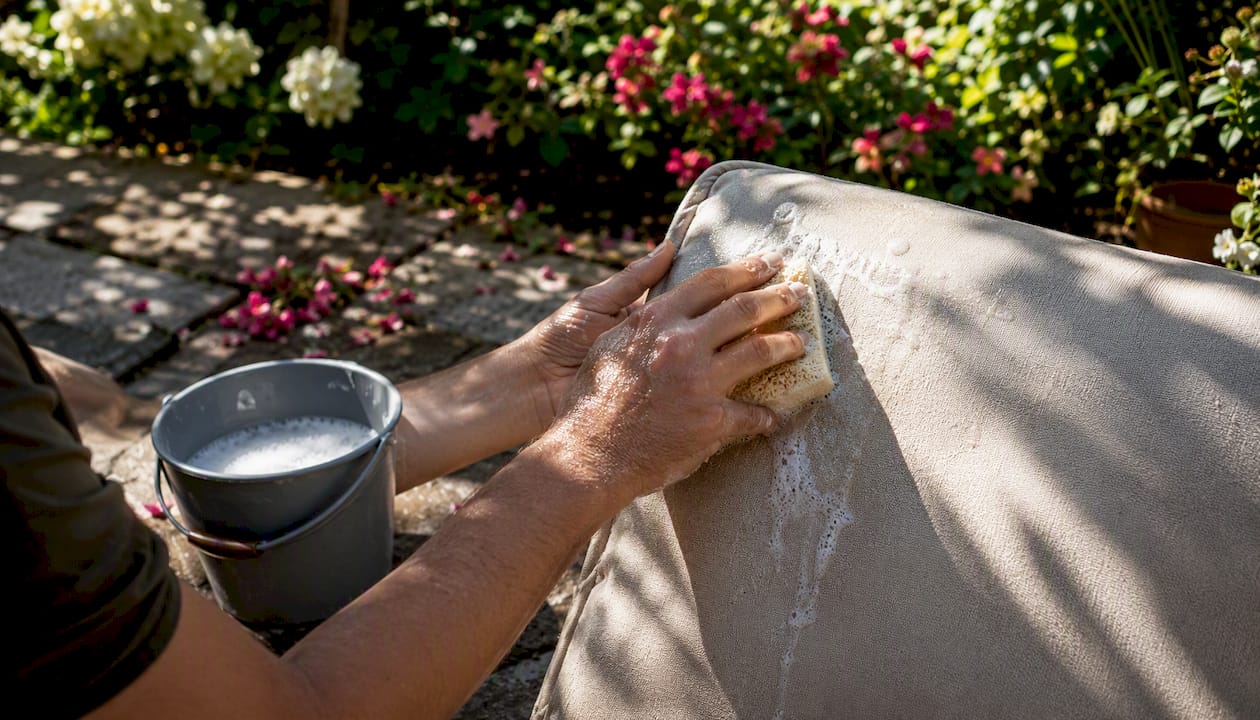
Mildew on cushions is more stubborn than mildew on hard plastic because foam holds moisture. A diluted white vinegar solution applied with a spray bottle, left for a few minutes, then blotted dry, handles most light mildew spots on fabric. Always let cushions dry completely in open air before storing them or stacking them on furniture, since trapping moisture is exactly what invites mildew back. If a cushion smells musty even after cleaning, it’s usually the foam core holding water, and drying it fully in sun (fabric side down to protect color) for a full day often solves it.
A maintenance-first approach beats crisis cleaning every time
Furniture that gets wiped down after storms rarely needs the harsh stuff. Skipping that habit is how a five-minute job turns into an afternoon with vinegar and baking soda paste. If there’s one opinion worth taking from this guide, it’s that mild, safe cleaners handled on a routine outperform occasional aggressive scrubbing with anything stronger. That’s the whole philosophy behind treating outdoor care as a schedule, not a reaction.
Keep Your Cleaning Schedule on Track With WorkbenchGuide
Reading a cleaning guide is easy. Remembering to actually do it every two weeks through pollen season, and again before the first freeze, is the part most homeowners drop. Workbenchguide fixes that gap by turning this guide’s schedule into recurring reminders tied to your actual property, not a sticky note you’ll lose by July.
If you’d rather keep it on paper, a printable checklist taped inside a shed door works fine too. But for anyone managing more than one outdoor space, or juggling furniture care alongside gutters, decks, and HVAC filters, a home maintenance checklist that pings you automatically saves the mental math. Set up your first reminder now and add “clean plastic patio furniture” as a recurring task before pollen season catches you off guard.
Sources
- The Ultimate Guide to Maintaining Plastic Patio Furniture
- Cleaning Pros Spill the Secret to Keeping Outdoor Furniture Clean All Summer
- How to Clean Outdoor Furniture for a Seasonal Refresh
- How To Clean Plastic Patio Furniture
Leave a Reply