
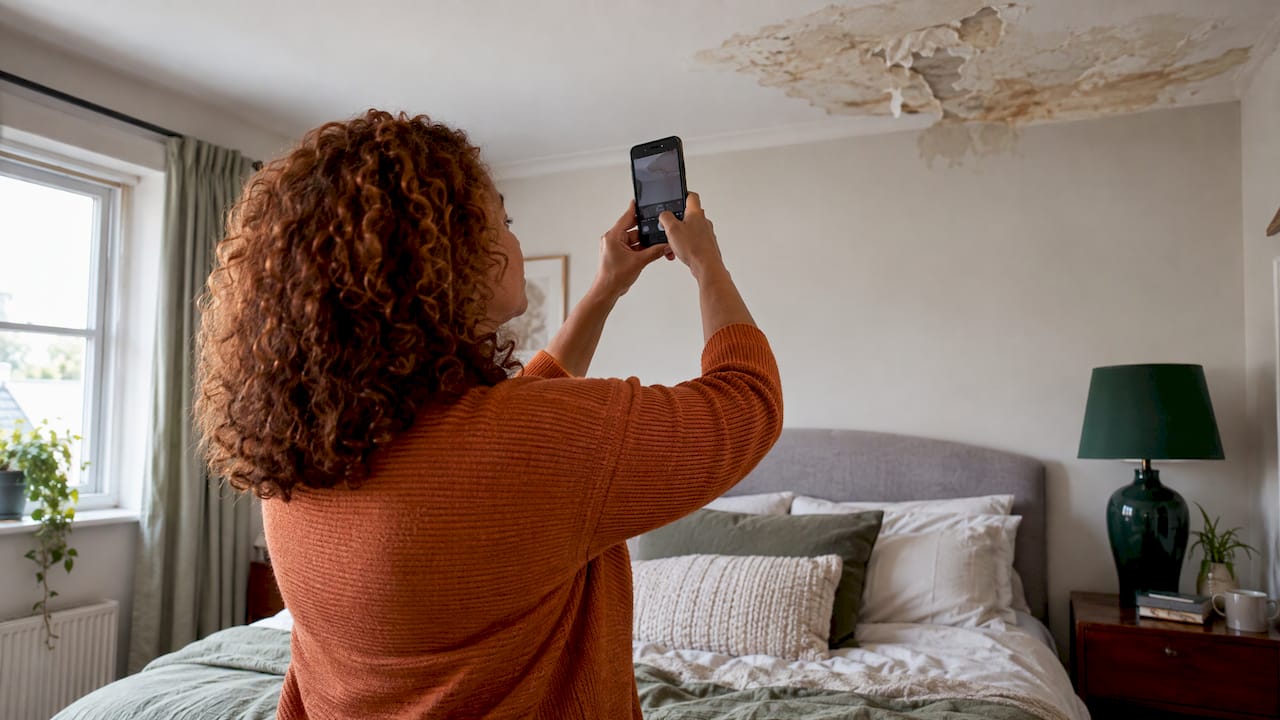
Good claim documentation answers four questions for your insurer: what happened, what was damaged, what it was worth, and what you spent afterward. Capture the date, time and cause of the loss, photos and video of every damaged area, a list of damaged or missing belongings with proof of ownership, and every receipt and conversation that follows. Start before you clean up, and keep it all in one place.
TL;DR
- Record the date, time, cause and a detailed description of the damage, then photograph and video the inside and outside of the home before you move or discard anything.
- Build a room-by-room inventory with purchase dates, condition and price paid, and back it up with receipts, bills, old photos or your own memory if records are gone.
- Make temporary repairs to stop further damage, save every receipt, and hold off on permanent repairs until the adjuster has seen the damage.
- Keep a log of every call and visit: who you spoke with, when, and what was said. Follow up in writing.
- Records you gather before a loss make the whole process faster, so set them up now.
Table of Contents
- What to document first
- How to photograph and video the damage
- Build an inventory and prove what you owned
- Preserve evidence while you prevent more damage
- Temporary repairs and living expenses
- Keep a communication log
- Forms, estimates and the paperwork insurers ask for
- Our perspective
- Set up your records before the next loss
- Keep your claim records in one place
- FAQ
- Sources
What to document first
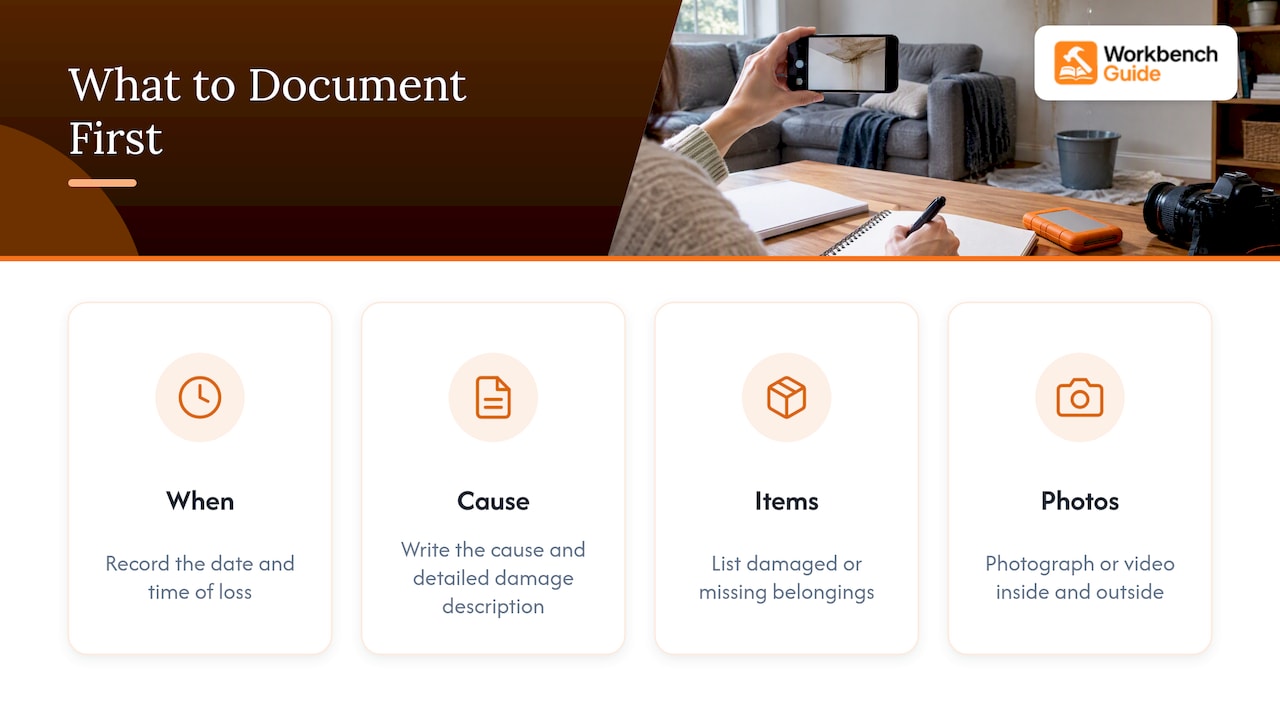
FEMA tells homeowners to write down the date, time, cause and a detailed description of the damage, list missing or damaged items, and photograph or video the damage inside and outside the home. That is your starting point, and it takes less than an hour for most losses.
Why the effort? Regulators say it pays off. California’s insurance department notes that the more information you provide about your loss, the sooner the claim can be settled. Louisiana’s department says detailed records can help a claim be processed faster and make it more likely you realize the full settlement value.
Before you pick up a camera, make sure the area is safe. Minnesota’s Department of Commerce advises residents to make sure the area is safe and secure and, if the structure is safe to enter, shut off the electricity. If there is standing water, a smell of gas, sagging ceilings or exposed wiring, stay out and call the utility, the fire department or an electrician first. Photos are never worth an injury.
The first-hour list
- Note the date and time of the loss and what you believe caused it.
- Walk the exterior and take wide shots of each side of the house, then close-ups of roof, siding, windows, fences and detached structures.
- Walk every affected room and shoot the same way: wide, then close.
- Write a short description of each damaged area as you go.
- Start a list of damaged or missing items.
- Contact your insurer and ask for a claim number and adjuster name.
If the loss is storm related, our storm damage checklist walks through what to check and document, area by area.
How to photograph and video the damage
The NAIC’s post-disaster guide says to take photos or videos of damaged areas and personal property. The National Flood Insurance Program is more specific: take wide-angle and close-up photos and videos of walls, floors and furniture, and record serial numbers of electronics and appliances. The advice applies to any type of loss, not only floods.
A workable routine:
- Shoot wide first. A wide shot of each room shows context: where the damage sits, what is nearby, how far it spreads.
- Then go close. Cracks, water lines, burn marks, dented shingles, broken glass. Put a tape measure or coin in the frame for scale.
- Use video for narration. Walk slowly and talk through what you see. Say the room, the item and what happened to it.
- Photograph labels. Model and serial number plates on appliances, water heaters, HVAC units and electronics.
- Capture the cause. A fallen tree, a burst pipe, a failed supply line or an open window. If the cause is removed later, the photo is the only evidence.
- Keep originals. Do not crop or edit. Back them up to cloud storage the same day, since a phone can be damaged in the same event.
Take photos before you move, clean or discard anything. The Louisiana guide warns against throwing away damaged items until an adjuster has inspected them or the insurer says otherwise.
Build an inventory and prove what you owned
For contents claims, the adjuster needs to know what each item was, how old it was, what shape it was in and what it cost. The NAIC suggests describing when items were bought, their condition and how much you paid, if known, and says a video inventory is an option.
A simple inventory table works well:
| Room | Item | Brand / model | Approx. purchase date | Price paid | Condition | Proof |
|---|---|---|---|---|---|---|
| Living room | TV | Make and model | Year or month | Amount | Good | Receipt, photo of serial plate |
| Kitchen | Refrigerator | Make and model | Year | Amount | Fair | Owner’s manual, warranty card |
| Bedroom | Dresser | Unknown | Approx. year | Estimate | Good | Photo in background of family picture |
If you have no receipts
Most people do not. California’s guide says old receipts, bills and photographs can help establish price and age, and that if records are unavailable you should work from memory. Louisiana’s department lists purchase receipts, invoices, before-and-after photographs, inventory materials and proof of property ownership as records that assist the process.
Practical places to look for proof:
- Photos on your phone and social media, especially holidays and gatherings where rooms show in the background.
- Credit card and bank statements, and online order histories.
- Owner’s manuals, warranty cards and registration emails.
- Photos of the room taken when you listed or bought the house.
The NAIC says that without a formal inventory you can work from memory and use phone photos to recreate a list. Wisconsin’s insurance commissioner offers a method: picture the contents of every room and write down what you remember. Walk through mentally, one room at a time, opening each closet and drawer.
Valuables deserve extra attention. FEMA’s list of items to gather includes firearms, jewelry and other valuables along with key documents such as birth certificates, passports and insurance papers. Check your policy for sub-limits on categories like jewelry, and keep appraisals where you have them.
Preserve evidence while you prevent more damage
You have two jobs at once: protect the home and protect the evidence. The NAIC’s guide says to secure the property to prevent further damage, make essential repairs, avoid permanent repairs before talking with your insurer, and report damage as soon as you decide to file. Wisconsin’s guide agrees that permanent repairs should wait until an adjuster has assessed the damage.
In practice:
- Do the emergency work. Tarp the roof, board up broken windows, shut off water, extract standing water. Photograph before, during and after each step. Our guide to emergency home repairs covers the sequence.
- Hold the permanent work. New roofing, flooring or cabinetry can wait until the adjuster has inspected.
- Keep samples. The flood program notes that small samples of damaged materials, like carpet or insulation, can help prove losses to an agent.
- Discard hazards after photos. The same program advises you to immediately discard health hazards like spoiled food, moldy clothing, cushions or pillows once photographed.
Water damage to floors is a common example. If you have vinyl or other resilient flooring, this overview of vinyl floor water damage explains what happens to it and what to do, which helps you describe the damage accurately and dry the area while the evidence stays intact.
Temporary repairs and living expenses
Save every receipt for materials used in temporary repairs. California’s guide says to keep receipts for temporary repair materials and for relocation expenses. Wisconsin’s commissioner likewise says to make temporary repairs and keep receipts to include in your claim.
If the house is not livable, loss-of-use coverage may apply. California’s department explains that it may cover additional living expenses such as temporary housing, food and utility costs, and that you should keep the bills and receipts. Whether your policy includes it, and how much, depends on the policy, so ask your insurer before you book anything long term.
A tidy way to track these costs is a single running sheet with date, vendor, what it was for, amount and how you paid. Photograph each paper receipt at the moment you get it, because thermal paper fades.
Keep a communication log
Claims run over weeks, and details blur. The NAIC advises taking notes when meeting with the adjuster, including the adjuster’s name and contact information. Minnesota’s Department of Commerce recommends a log of who you spoke with, when, and a summary of the conversation.
New York’s Department of Financial Services adds a useful habit: after an adjuster’s visit, follow up in writing to reflect your understanding of the visit. A two-line email works: who came, what was inspected, what they said would happen next.
A log entry only needs five fields:
| Date and time | Person and role | Method | Summary | Next step |
|---|---|---|---|---|
| Date | Name, company | Phone, email, in person | What was said or promised | Who does what, by when |
Forms, estimates and the paperwork insurers ask for
When you report the claim, have your policy number, the insurer’s contact details and your personal information ready, along with your photos, videos and item lists, as FEMA lists. The NAIC suggests asking early for your claim or reference number, how long you have to file, the deductible amount, and whether you need repair estimates before filing. Deadlines vary by state and policy, so get yours in writing.
Two terms come up often:
- Proof of loss. California’s department describes it as a formal statement a policy owner makes to the insurer about a loss, meant to give the insurer information to determine the extent of its liability. Ask whether and when your insurer needs one.
- Scope of loss. In California, this should include the degree of damage, the quality of materials and workmanship, and the measurements needed to calculate quantities, according to the same guide. Your own contractor estimate should follow that structure so you can compare it with the adjuster’s.
For theft or vandalism, Progressive notes you must provide a copy of the police report. File the report first and keep the report number with your claim file.
To understand what repairs should cost, many homeowners request several estimates. A marketplace where you can compare sealed contractor bids on a scoped project gives you written numbers to set beside the adjuster’s figures. Keep every estimate, including the ones you do not use.
Our perspective
Most claim trouble we see is not about coverage. It is about memory. Six weeks after a storm or a burst pipe, nobody remembers which month the water heater was replaced, what the roofer said, or where the receipt went.
That is why we built Workbench Guide around records. When maintenance tasks, repairs, photos, notes and home systems already live in one place, a claim becomes an export of what you have, not a scavenger hunt. Dated photos of a healthy roof or a working sump pump are also the “before” half of a before-and-after comparison.
We think the same discipline that prevents expensive repairs also protects you when something goes wrong. Regular checks catch problems early, and the log of those checks shows how the home was kept. Our guides turn contractor knowledge into steps anyone can follow, so emergency measures like shutting off water or tarping a roof are done correctly and documented as you go.
Our plans are built for that: one place for reminders, repair tracking, checklists and documentation, for one home or many.
Sean
Set up your records before the next loss
Everything above is easier when the groundwork is done. A few habits make the difference:
- Do an annual home walkthrough with photos. Date-stamped images of each room, the roof, the foundation and the mechanical systems. Our piece on why regular inspections prevent expensive repairs explains what to look for.
- Keep a living inventory. Update it when you buy something expensive. Photograph serial plates once and store them.
- Store records in two places. One cloud copy, one offline. Our guide to homeowner record keeping covers what to keep and for how long, and the homeowner binder setup gets you organized in about half an hour.
- Log maintenance. Receipts for repairs, upgrades and service visits show the home’s condition and age of systems.
- Review your policy yearly. The NAIC says reviewing a policy annually with an agent helps you understand how your coverage needs change over time. Ask specifically about deductibles, sub-limits for valuables and loss-of-use coverage.
If you own rental property, condition records matter even more. Our guide to documenting rental unit condition shows how to capture a unit quickly and consistently.
Living in a hurricane zone? Our hurricane prep checklist includes the documentation steps to complete before landfall.
Keep your claim records in one place
Workbench Guide gives homeowners a single home for reminders, checklists, repair tracking, photos and notes. The Homeowner plan is $7 per month or $70 per year, and Owner Plus is $12 per month or $120 per year. Landlords and property managers can manage several properties on the PM plans. See the plans and pricing to choose one that fits your home.
FAQ
How soon should I document damage after a loss?
Immediately, once the area is safe. Take photos and video before you clean up, move or discard anything, and report the damage to your insurer as soon as you decide to file, as the NAIC advises. Your policy and state set filing deadlines, so ask your insurer for yours in writing.
What if I do not have receipts for damaged belongings?
Use other proof. Old photos, bank and card statements, owner’s manuals and online order histories can show ownership, price and age. California’s guide says that if records are unavailable you should work from memory, and Wisconsin’s commissioner suggests picturing each room and writing down what you remember.
Can I repair damage before the adjuster comes?
Make temporary repairs to prevent further damage, such as tarping a roof or shutting off water, and keep the receipts. Hold off on permanent repairs until the adjuster has assessed the damage and your insurer has been consulted.
Should I keep damaged items?
Yes, until the adjuster has inspected them or your insurer says otherwise. Photograph health hazards such as spoiled food or moldy cushions and then discard them, and consider keeping small samples of damaged materials like carpet or insulation.
What records should I keep during the claim?
Keep your claim number, adjuster’s name and contact details, a log of every conversation, written follow-ups, estimates, forms and all receipts for temporary repairs and living expenses. For theft or vandalism, add a copy of the police report.
Sources
- FEMA: What information do I need to file a home insurance claim?
- California Department of Insurance: Residential Property Claims Guide
- Louisiana Department of Insurance: Catastrophe Claims Process Disclosure Guide
- NAIC: Post-Disaster Claims Guide
- National Flood Insurance Program: Document Flood Damage
- Wisconsin Office of the Commissioner of Insurance: Consumer’s Guide to Settling Property Insurance Claims
- Minnesota Department of Commerce: Tips for Residential Property Owners and Renters on Filing a Claim
- New York Department of Financial Services: Disaster and Flood Recovery
- Progressive: Homeowners Insurance Claims
- BidWolf: contractor bids on home projects
- Vinyl Floor Water Damage: What Happens and What to Do
Leave a Reply