
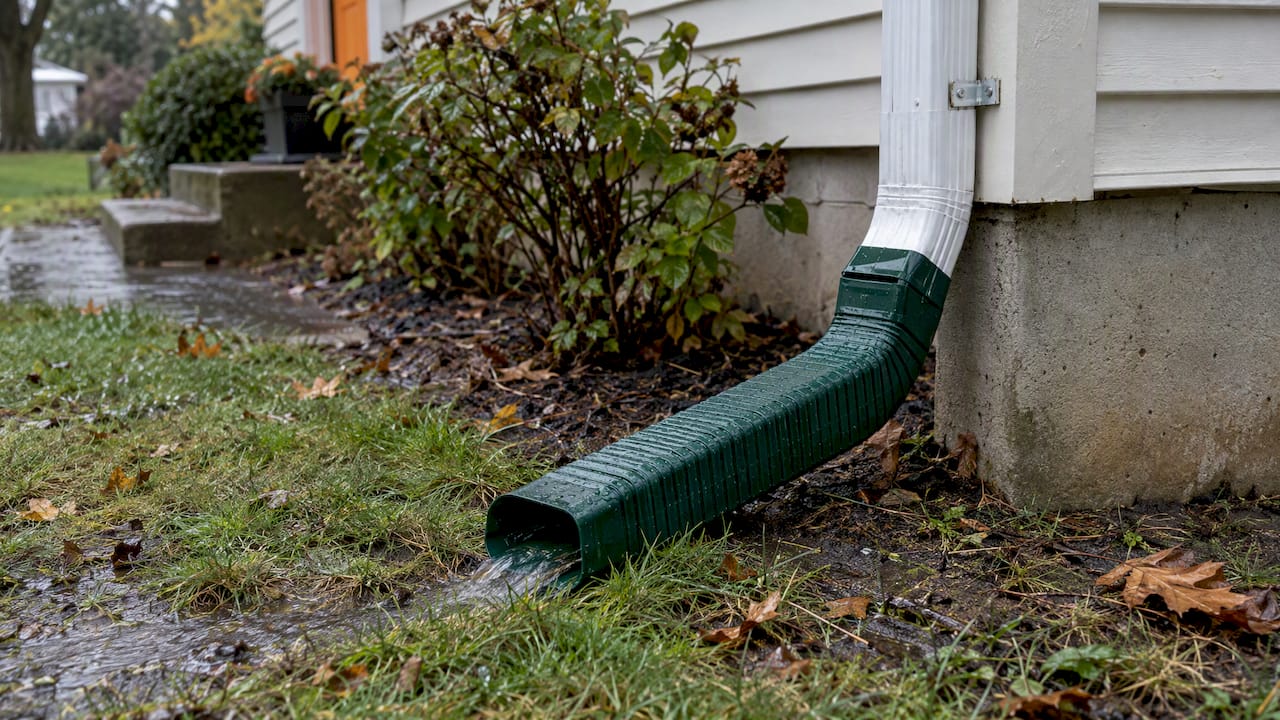
To prevent basement flooding, stop water before it reaches the foundation. Fix the grading, extend the downspouts, keep gutters clear, and make sure a sump pump with a backup can handle the worst storm you expect. Sealants and interior coatings come last, not first. Most wet basements trace back to a few cheap outdoor problems that nobody checked for years.
This guide goes in the order that saves money: free and low-cost fixes, then waterproofing, then drainage and pumps, then insurance. It ends with a yearly routine so none of it gets forgotten.
TL;DR
- Control the source first. Grading, gutters and downspouts do more than any coating, and they cost the least.
- Interior sealants and membranes are often temporary. They can fail or push water to a new spot.
- If groundwater is the problem, a footing drain that leads to a sump pump is the lasting fix. Add a battery or generator backup, because storms often cut power.
- Standard homeowner policies typically exclude surface water and sewer backup. Check for endorsements before the rain, not after.
- Put every check on a calendar so it happens each season.
Table of Contents
- Why basements flood in the first place
- Start with the cheapest fixes: grading, gutters and downspouts
- Find and reduce moisture sources inside
- Waterproofing the basement: what actually works
- Drainage solutions when the ground is saturated
- Sump pump backup options
- Will insurance cover basement flooding?
- Our perspective
- A yearly basement-protection routine
- Put the routine on autopilot
- When to call a professional
- FAQ
- Sources
Why basements flood in the first place
Water gets into a basement in three main ways. It runs over the ground toward the house, it soaks into saturated soil and pushes against the walls, or it comes up through drains and pipes. Each has a different fix, so work out which one you have before you spend money.
- Surface water: puddles by the foundation, overflowing gutters, downspouts that dump next to the wall, soil that slopes toward the house.
- Groundwater: water seeping through the wall-floor joint or rising through the slab after long rain or snowmelt. The pressure on the walls is called hydrostatic pressure.
- Plumbing and sewer: a failed sump pump, a backed-up floor drain, a burst pipe or a leaking water heater.
University of Minnesota Extension is blunt about priorities: the best approach is to remove or control the source of the moisture first, rather than trying to stop water as a last line of defense. Building America researchers add a useful reality check: no waterproofing system is 100% foolproof, so the best defense is keeping the soil around the foundation from becoming saturated.
Start with the cheapest fixes: grading, gutters and downspouts
UMN Extension describes the logical and cost-effective order as simple, low-cost fixes first, such as managing grading and gutter discharge, before any complex interior or exterior drainage work. That order is right, and it is where most homeowners can fix the problem on a Saturday.
Slope the ground away from the house
The soil next to your foundation should fall away from the wall. The 2009, 2012 and 2015 International Residential Code require impervious surfaces within 10 feet of the foundation to slope 2% away from it. For soil and other permeable surfaces, the same resource recommends a slope of at least 0.5 inches per foot for 10 feet.

A simple test: lay a straight board and a level on the ground out from the wall. If the soil is flat or tilts toward the house, add compacted fill and re-grade. Keep the soil well below siding and wood framing so you do not create a different problem.
Keep gutters clear and discharge far from the wall
Gutters only protect the foundation if they carry water away. This Old House advises cleaning gutters of debris at least once a year, and in tree-heavy yards, twice a year, after leaves drop and again in spring, is a sensible habit. Look for these:
- Sagging sections that hold water or spill over the edge.
- Loose seams and clogged downspout elbows.
- Downspouts that end at the foundation. Add extensions or splash blocks so roof water lands several feet from the house. Several of the pages that rank for this topic suggest five to six feet as a minimum.
Roof water that gets behind flashing or around penetrations can also end up inside the walls and down to the basement. The basics of roof leak repair help you tell a roof leak from a foundation leak when you see a damp wall.
Watch trees and window wells
City of Cincinnati stormwater guidance says to keep trees away from the foundation, because roots can create easier pathways for water to travel toward the walls. Grading, gutter management and keeping vegetation back work together to reduce pressure on basement walls.
Window wells are a common weak point. Prince George’s County’s homeowner drainage manual says that regular maintenance of window wells, with functional covers or drains, is critical to preventing surface water from entering. Clear leaves and debris, check that the drain at the bottom is open, and fit clear covers if the well collects water.

Find and reduce moisture sources inside
Not every damp basement is a flood. Before you blame the foundation, remove indoor sources, which is the first step in UMN Extension’s guidance on seepage and moisture. Check for:
- Dryer vents that discharge into the basement instead of outdoors.
- Slow plumbing leaks at supply lines, the water heater and the washing machine hoses.
- Condensation on cold water pipes in humid summer weather.
- Wet laundry hung to dry and unvented bathrooms.
A dehumidifier helps with humidity, but it is no answer to liquid water. If you see standing water, stains that return after every storm, or white mineral crust on the wall, you have a water-entry problem, not a humidity problem.
Waterproofing the basement: what actually works
“How do I waterproof my basement?” is the most common version of this question, and the honest answer is that it depends on where the water comes from.
Seal cracks and check the walls
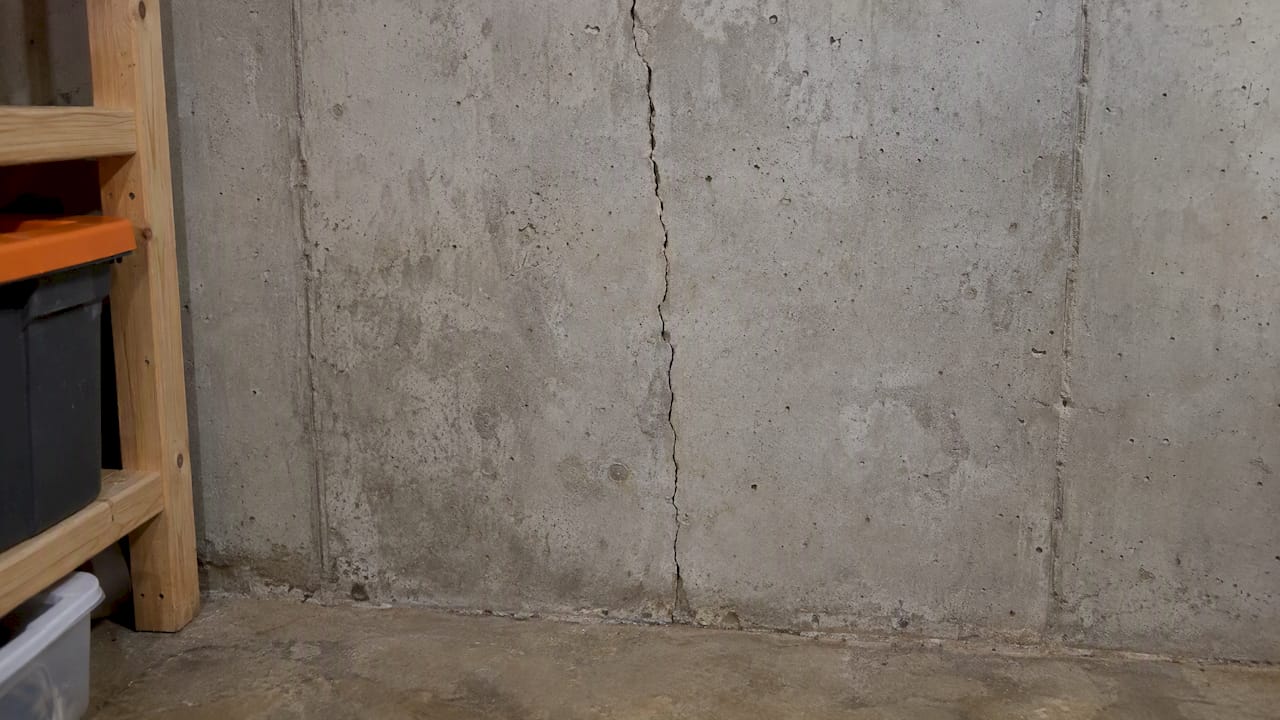
When water is present, the Illinois Department of Natural Resources advises you to check for wall cracks and to look into whether you need sewer backup protection. Small cracks that seep can be patched with hydraulic cement or an appropriate crack-injection product. Active, widening or horizontal cracks, and walls that bow inward, are structural signs. Call a structural engineer, not a coating salesperson.
Be skeptical of interior coatings and membranes
Paint-on waterproofers and interior membranes are cheap and tempting. UMN Extension warns that they are often temporary fixes: they fail as they deteriorate, or they simply force water to find a new way in. A coating can be reasonable on a wall that is merely damp after you have fixed the outdoor causes. It is a poor first move on a wall that is being pushed on by groundwater.
What is the cheapest way to waterproof a basement?
It is the sequence, not a product:
- Extend the downspouts and clean the gutters.
- Re-grade the soil so it slopes away from the wall.
- Clear and cover the window wells.
- Seal minor cracks and fix indoor moisture sources.
- Only then, if water still enters, price out drainage and a pump.
Many homeowners never get past step 3.
Drainage solutions when the ground is saturated
When the soil stays wet and the water table rises, surface fixes are not enough. Illinois DNR describes the standard remedy for saturated ground: install a footing drain around the foundation that collects groundwater and directs it to a sump, where it is pumped out.
You will see these terms from contractors:
| Approach | What it does | Where it fits |
|---|---|---|
| Exterior footing drain or French drain | Collects water at the footing or in the yard and carries it away | Persistent groundwater or a yard that holds water against the house |
| Interior perimeter drain with sump | Catches water at the wall-floor joint inside and sends it to a pump | Seepage at the joint when exterior excavation is impractical |
| Yard swale or surface drain | Redirects surface runoff around the house | Water running toward the house from a slope or a neighbor’s yard |
| Sump pump | Pumps collected water outside, away from the foundation | Almost any basement with a drain system |
Exterior excavation is expensive and disruptive, so get at least two written bids and ask each contractor to explain why the water is entering. If the answer skips grading and gutters, keep asking. A drain installation is also a good moment to photograph the work before it is buried and to file the warranty and invoice with your home records.
Sump pump backup options
A sump pump is only as good as its power and its intake. Illinois DNR lists the usual failure causes: debris-clogged intakes, loss of electrical power and overloading, any of which can turn the drainage system into a path for water to enter. Heavy storms tend to cause outages at the same time the pump works hardest.
The same guide points to a battery system or generator as backup, and to cleaning the pump intake to clear blockages. In practice that gives you these choices:
- Battery backup pump: a second pump on its own battery that takes over when power fails or the main pump quits. Angi puts battery backup installation at about $600 to $1,200 when you hire a pro, so budget for a range and get local quotes.
- Generator: covers the sump and other circuits during a long outage, but needs fuel and someone home to run it.
- Water-powered backup: works from municipal water pressure and needs no electricity, but it is not allowed everywhere, so ask your local utility or building department first.
- High-water alarm: a cheap sensor that warns you before the water reaches the floor.
Maintenance is a five-minute job a few times a year. Pour a bucket of water into the pit and confirm the pump starts, the float moves freely and water discharges outside. Clean the intake screen, check that the discharge line is not frozen or blocked, and test the battery. If your area has a hurricane season, the hurricane home prep checklist fits the same routine.
Will insurance cover basement flooding?
Often it will not, and this is the gap that turns a wet basement into a financial disaster. Prince George’s County’s guide says standard homeowner policies typically do not cover basement flooding from surface water or sewer backup, and that you should ask about flood or sewer backup endorsements on your own policy.
Flood insurance through the National Flood Insurance Program is also narrow for basements. FEMA’s fact sheet says basement coverage is limited to specific building items and cleanup. It does not treat every belonging down there the same as the rest of the house.
Call your agent and ask three things:
- Do I have water backup or sump overflow coverage, and what is the limit?
- Is surface-water flooding excluded, and can I buy separate flood coverage?
- What does the policy say about a pump that fails during a power outage?
Move valuables off the floor in any case, and keep photos of what you store there. That documentation helps if you ever file a claim.
Our perspective
We talk with homeowners who spent thousands on a basement fix and then discovered the downspout was still emptying against the wall. Flooding is rarely a single event. It is the end of a slow chain: gutters that went uncleaned for two seasons, a sump pump nobody tested since it was installed, a window well that filled with leaves. Each link is cheap to check, and each is easy to forget.
That is why we built Workbench Guide around reminders, step-by-step guides and records instead of one-off advice. The people who stay dry are usually not the ones with the most expensive system. They are the ones who know the date they last cleaned the gutters and tested the pump, and who can find the warranty for the drain they paid for. We think home maintenance should be predictable, and a plan on the calendar beats a spreadsheet you stop updating.
Our advice: do the free fixes this month, test the pump before the rainy season, and call the insurer before you need them.
— Sean
A yearly basement-protection routine
Flood prevention is mostly timing. A rough yearly schedule:
| When | What to do |
|---|---|
| Early spring | Check the grading for settling after winter, clear window wells, test the sump pump, look for new foundation cracks |
| Before the rainy or storm season | Test the battery backup, check the discharge line, confirm downspout extensions are attached |
| Late fall | Clean gutters after the leaves drop, disconnect hoses, check that the discharge line will not freeze |
| After every major storm | Walk the perimeter, look for pooling, check the basement corners and the sump pit |
| Once a year | Review your insurance, photograph the basement and its contents, file records of repairs |
If you want a simple way to start, our guide to organizing home maintenance with a two-minute monthly habit shows how to turn lists like this into something you do. Keeping dated photos of the basement, the pump and any repairs also pays off at resale, as in our notes on home project photos.
Put the routine on autopilot
Workbench Guide sends smart maintenance reminders for tasks like gutter cleaning and sump pump tests, with step-by-step DIY guides, checklists and a place for photos, notes and repair records. The Homeowner plan is $7 per month or $70 per year, and Owner Plus is $12 per month or $120 per year. Landlords and property managers with several buildings can look at the PM Lite plan at $25 per month, PM Plus at $49 per month and PM Enterprise at $99 per month, all on the same pricing page. If you want to see how it works first, start from our home page.
When to call a professional
DIY covers the outdoor basics and the pump tests. Call a pro when:
- Cracks are horizontal, stair-stepped or widening, or a wall bows inward. Start with a structural engineer.
- Water returns after you fixed grading and gutters, which points to groundwater and a possible drain system.
- Sewage backs up through a floor drain. Call a plumber and ask about backwater valves.
- The sump runs constantly or cycles with no rain. That could be a high water table or a failing check valve.
- Electrical outlets, panels or appliances are wet. Stay out and call a licensed electrician.
FAQ
How do I stop water from seeping into my basement?
Find the source first. Clean gutters, extend downspouts, re-grade the soil away from the foundation and cover or drain the window wells. If water still comes in, check wall cracks and look at a footing drain with a sump pump, since interior coatings alone often fail.
Will insurance cover basement flooding?
Usually not under a standard homeowner policy. Surface water and sewer backup are typically excluded, and NFIP basement coverage is limited. Ask your agent about water backup endorsements and separate flood coverage.
How long can water sit in a basement?
The shorter, the better. A widely repeated guideline is to dry wet materials within 24 to 48 hours to head off mold. Remove standing water safely, ventilate, and discard soaked porous items. If the water was sewage or touched electrical equipment, call professionals.
What is the cheapest way to waterproof a basement?
Start with free or cheap outdoor fixes: clean gutters, add downspout extensions, improve the grading and clear window wells. Experts at UMN Extension recommend these before any costly interior or exterior drainage work.
Sources
- Moisture in basements: causes and solutions, UMN Extension
- Final Grade Slopes Away from Foundation, Building America Solution Center
- How to Protect Home Foundations from Storm Water, City of Cincinnati
- How To Stop Basement Flooding, This Old House
- A Homeowner’s Guide to Drainage Problems and Solutions, Prince George’s County
- Guide To Floodproofing, Illinois DNR
- Sump pump battery backup cost, Angi
Leave a Reply