
Assemble a three-day supply kit, secure everything that can fly off your property, confirm your evacuation route and out-of-state contact, and back up your insurance policy and IDs before the season starts. Finish the kit and paperwork the moment a Hurricane Watch is issued. Finish window protection, gutter clearing, and yard security before a Hurricane Warning goes into effect.
TL;DR:
- Homeowners should reinforce garage doors and roof connections well before a hurricane warning to prevent internal pressure from causing structural failure.
- Emergency supplies should be stocked for at least three days, with a focus on water, nonperishable food, batteries, medications, and important documents stored securely.
- Yard clearance and outdoor gear securing must be completed before a hurricane warning, as wind-driven debris remains the primary cause of damage.
- Evacuation plans need to include alternate routes, pet arrangements, and regular practice, with a full tank of fuel kept throughout hurricane season.
- Confirm flood insurance coverage separately from homeowners policies, and document your property with photos before the storm to facilitate claims afterward.
Table of Contents
- Building Your Hurricane Home Prep Checklist: Emergency Supplies
- Home Protection Tasks Before the Storm Arrives
- What’s the Difference Between a Hurricane Watch and a Warning?
- After the Storm: Insurance, Documents, and Safe Re-Entry
- Preparing for Water and Sewage Outages
- Hurricane Prep for Elderly, Disabled, or Infant Household Members
- Securing Outdoor Structures and Vehicles
- Seasonal Habits Beat Last-Minute Scrambling
- Get Hurricane-Ready With Workbench Guide’s Maintenance Tools
- Sources
- FAQ
Building Your Hurricane Home Prep Checklist: Emergency Supplies
Start with water. Ready recommends one gallon per person per day, with at least a three-day supply on hand, though homeowners in hurricane-prone regions often stretch that to a longer supply given how long outages can drag on after a major landfall.
Food matters just as much as water, but the details trip people up. A pantry full of canned soup is useless without a manual can opener when the power’s out.
Here’s what belongs in a well-stocked kit:
- Water: one gallon per person per day, minimum three-day supply
- Nonperishable food, plus a manual can opener, infant formula, or special-diet items as needed
- A NOAA Weather Radio (battery or hand crank), flashlights, and extra batteries
- Charged power banks for phones and medical devices
- A one-week supply of medications, plus copies of prescriptions
- Waterproof container for physical documents, backed by an encrypted cloud copy
- A go bag with cash, keys, phone chargers, pet food and leashes, and one comfort item per family member
Pro Tip: Set a recurring reminder for June 1, the official start of the Atlantic hurricane season, to rotate stored water, check food expiration dates, and swap batteries in every flashlight and radio. Stale batteries are the number one reason emergency gear fails when you actually need it.
The rule of thumb from Ready.gov is simple: build for a minimum of three days, but treat that as a floor, not a target, if you live anywhere within reach of storm surge or prolonged outages.
Home Protection Tasks Before the Storm Arrives
Wind doesn’t damage a house so much as it launches things at it. A patio chair at 100 mph becomes a battering ram, which is why clearing the yard ranks above almost everything else on a serious hurricane readiness list.
Work through this before a warning is issued:
- Bring in or tie down outdoor furniture, grills, and potted plants; anchor sheds where you can
- Clean gutters and downspouts, and clear yard drains so water has somewhere to go
- Protect windows with permanent shutters or 5/8 inch exterior grade plywood, cut to fit ahead of time
- Check roof to wall connections and garage door reinforcement
- Move valuables upstairs, place sandbags at doorways, and elevate equipment in flood prone areas
Skip the tape. Storm safety research consistently debunks the old advice to X your windows with duct tape. It does nothing to stop glass from shattering under wind pressure and can actually make the shards larger.
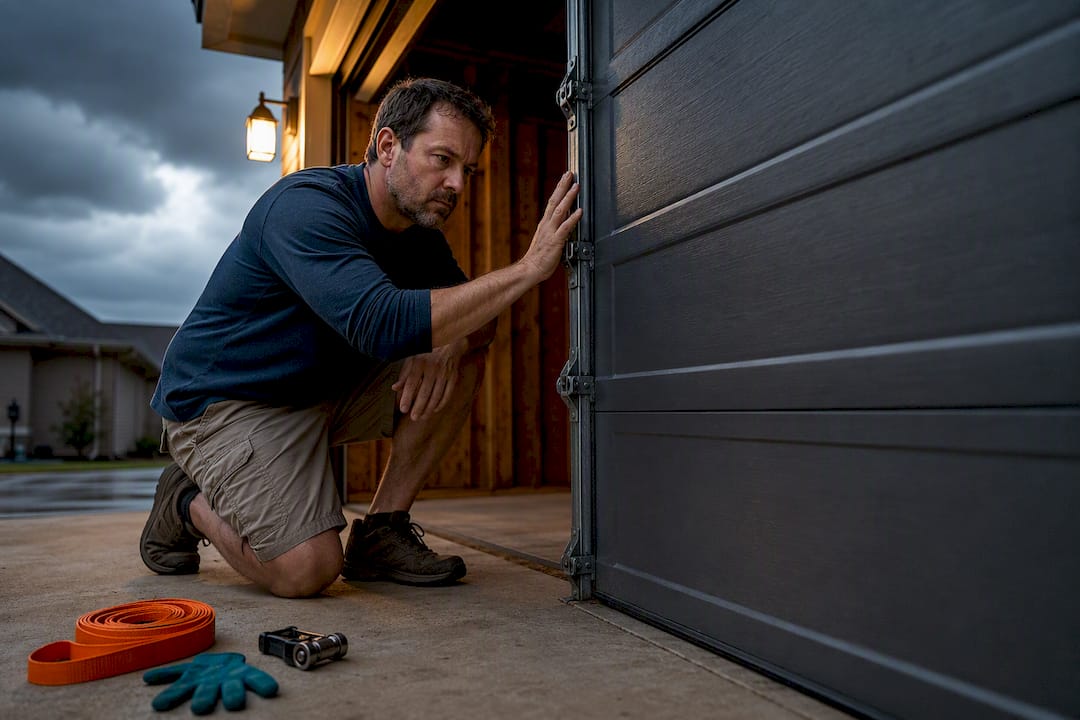
Garage doors deserve more attention than most homeowners give them. Once wind breaches a garage door or entry door, internal pressure spikes and can blow the roof off from the inside. Reinforcing that door and verifying hurricane straps at the roofline are two of the highest-impact fixes a homeowner can make, and a licensed contractor can usually handle both in an afternoon; learn more about how to winterize your doors.
Pro Tip: Walk your gutters and roofline every fall using a roof inspection checklist instead of waiting for a storm warning. Loose shingles and clogged downspouts are far easier to catch, and cheaper to fix, in calm weather.
Structural work, electrical repairs, and anything involving a ladder above a single story is where DIY should stop and a licensed contractor should start.
What’s the Difference Between a Hurricane Watch and a Warning?
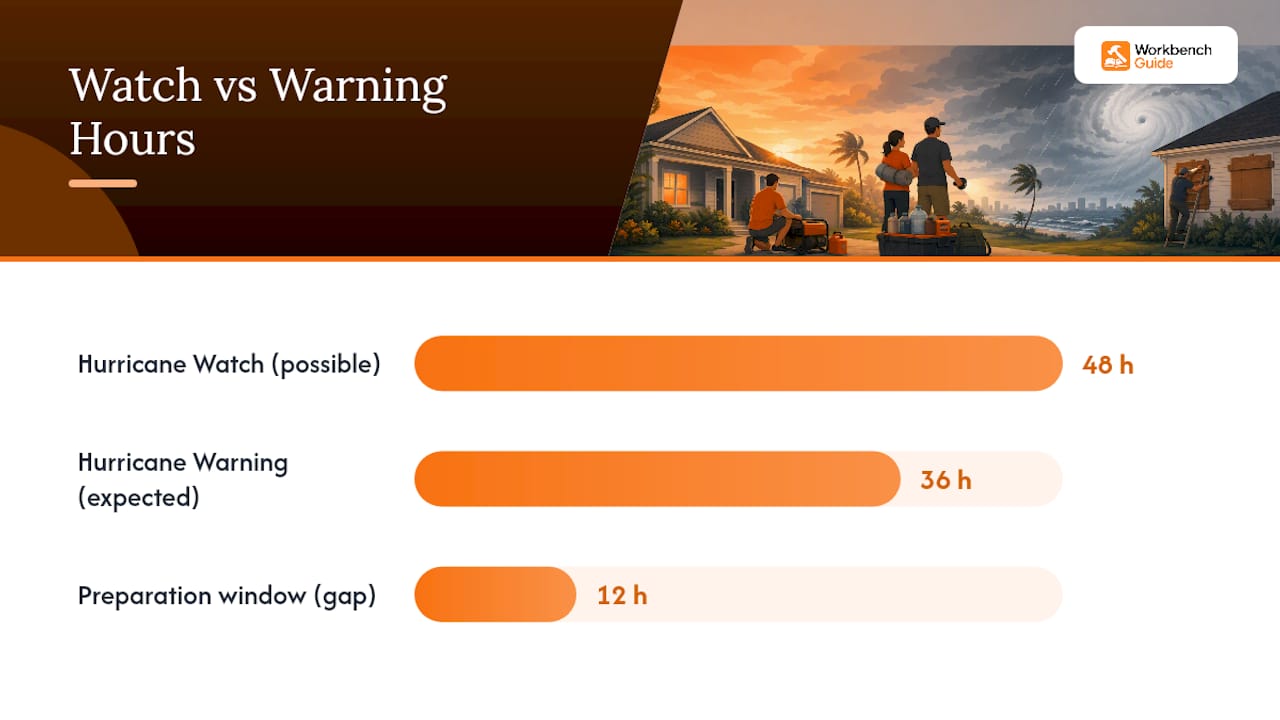
A Hurricane Watch means hurricane conditions are possible within about 48 hours. A Hurricane Warning means those conditions are expected, typically issued roughly 36 hours before tropical storm force winds arrive, according to NWS guidance. That 12-hour gap is your real preparation window, and it disappears fast.
Sign up for alerts through more than one channel: the FEMA app, a NOAA Weather Radio, your county’s community alert system, and standard Wireless Emergency Alerts. Ready.gov notes that layering alert sources improves your odds of getting evacuation instructions with enough lead time to act.
Your evacuation checklist should cover:
- Your evacuation zone and two separate routes out, in case one is blocked
- A designated meeting place and an out-of-state contact everyone can reach
- A pet plan, including carriers, food, and vaccination records
- A vehicle topped off with fuel and stocked with a basic emergency kit
Practice the plan once a year, including with kids and pets, and assign a “who does what” role to each adult in the house. Confusion costs minutes you won’t have. And keep your gas tank at least half full all season as a standing habit, not just when a storm shows up on the radar.
After the Storm: Insurance, Documents, and Safe Re-Entry
Standard homeowners insurance typically excludes flood damage. FEMA’s guidance points out that even a few inches of floodwater can cause thousands of dollars in damage, which is why checking your NFIP or private flood policy before hurricane season starts matters more than most homeowners realize.
Photograph and video every room, and every major belonging, before the storm. Store those files in an encrypted cloud account alongside scanned copies of your policy, IDs, and property deed.
On re-entry:
- Check for structural damage, gas odors, and downed power lines before going inside
- Use a flashlight, never a candle, if power is out
- Photograph all damage with dates visible, and keep receipts and serial numbers for claims
- Call your insurer and, if needed, FEMA’s disaster helpline
- Tarp or board up openings temporarily and line up a contractor for permanent repairs
Preparing for Water and Sewage Outages
Municipal water systems and sewage treatment plants often lose power right alongside homes, and a boil-water notice can follow a hurricane by days, not hours. Store enough drinking water for your household separate from any water you’re keeping for sanitation or cleaning.
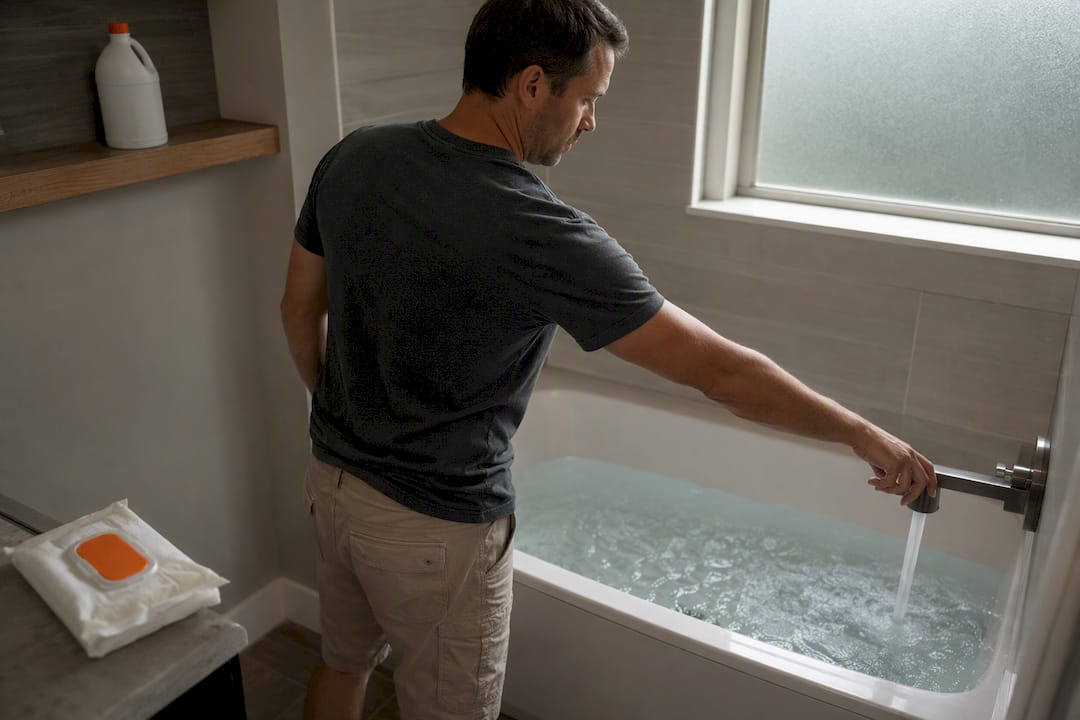
Fill your bathtub before the storm arrives if you have advance notice. That water won’t be safe to drink, but it works for flushing toilets and washing hands if the taps run dry. Keep a supply of unscented household bleach on hand, since a small, properly diluted amount can disinfect water in an emergency, and pack moist wipes or hand sanitizer for the days when running water simply isn’t there.
Sewage backups are the part people forget until it’s too late. If storm surge or heavy rain overwhelms local sewage systems, wastewater can back up into low drains and toilets. A backflow valve installed on your main sewer line prevents that, and it’s worth asking a licensed plumber about before hurricane season, not during it.
Skip flushing anything but human waste and toilet paper in the days around a storm; wipes and paper towels are the fastest way to clog a system that’s already under stress. If your water pressure drops or goes out entirely, shut off the main valve to your water heater to protect it from damage, and keep a manual can opener and paper plates on hand so dishwashing isn’t competing with your limited water supply.
Hurricane Prep for Elderly, Disabled, or Infant Household Members
A standard three-day kit doesn’t cover a family member on oxygen, or an infant who needs formula mixed with clean water every few hours. Build a separate supply list for anyone with specific medical or mobility needs, and do it well before a watch is issued.
For elderly or disabled household members, that means a two-week medication supply where a pharmacy allows it, backup batteries or a car charger for medical devices like CPAP machines or motorized wheelchairs, and a written list of diagnoses, medications, and doctor contacts that any first responder or shelter staff could use. If evacuation is likely, register with your county’s registry for people with disabilities or medical needs, which many Florida, Texas, and Gulf Coast counties maintain specifically to flag households that need transport assistance or a special-needs shelter.
For infants, pack at least a week of formula, bottles, diapers, and wipes, plus a battery-powered means to sterilize bottles if you use them. Breastfeeding parents should still keep backup formula on hand in case stress or dehydration affects supply.
Whoever in your household needs extra help evacuating should be the first name on your “who does what” list, not an afterthought worked out during the actual scramble.
Securing Outdoor Structures and Vehicles
Sheds, carports, and detached garages take wind loads a homeowner rarely thinks about until a storm rips one apart. Anchor a shed to its foundation with ground anchors or straps if it isn’t already bolted down, and clear out anything inside that could become a projectile if the structure fails.
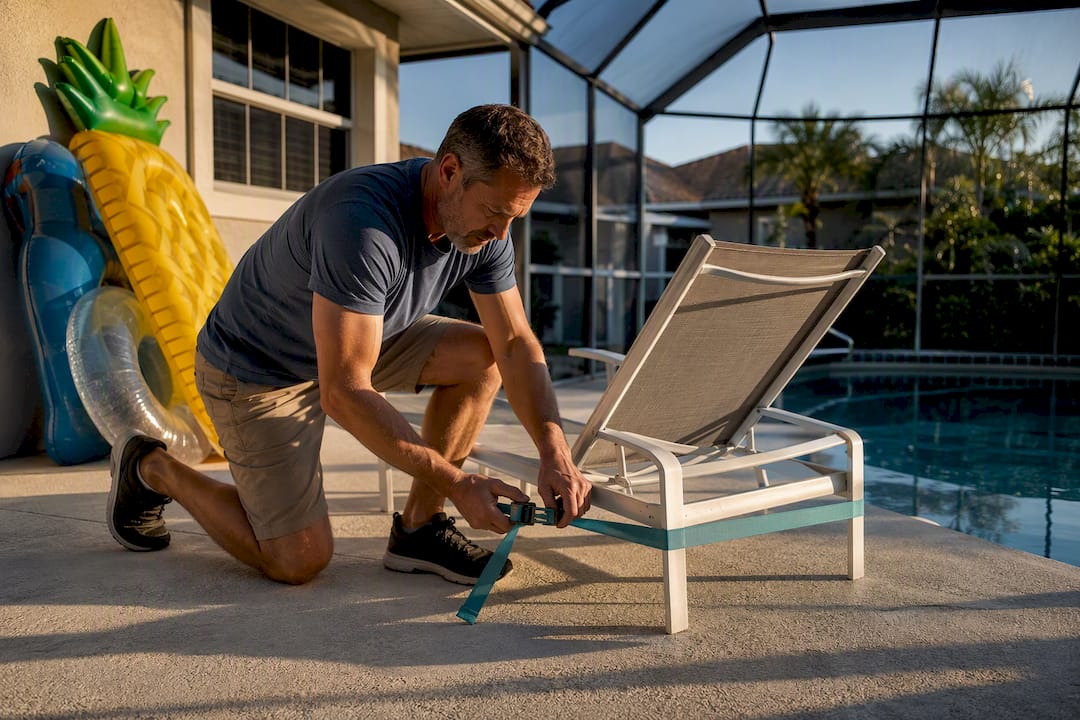
Pools deserve a look too. Secure or remove pool furniture and floats, and if you have a screened pool enclosure, know that most aren’t rated for hurricane-force wind and will likely lose panels. That’s expected, not a sign something went wrong.
For vehicles, your safest move is usually getting them out of the flood zone entirely, parked at higher ground or with family inland. If that’s not possible, move vehicles away from trees, power lines, and low-lying spots where storm surge or flash flooding pools first. Garages offer some protection, but only if the garage door itself is reinforced, since a failed door is one of the most common ways wind gets inside a structure and does real damage.
Seasonal Habits Beat Last-Minute Scrambling
The homeowners who handle hurricane season best aren’t doing more work in June. They’re doing the same small tasks every season so nothing piles up right before a storm.
Gutter cleaning, roof checks, and battery swaps become five-minute jobs instead of weekend emergencies when they’re on a running schedule instead of a mental note. That’s the whole logic behind maintenance checklists and reminders: they turn a once-a-year panic into a habit you barely notice, which is exactly the gap seasonal home maintenance tools are built to close.
— Sean
Get Hurricane-Ready With Workbench Guide’s Maintenance Tools
A home maintenance platform can turn a once-a-year scramble into a set of small, scheduled tasks you actually finish. Instead of hunting for a printable checklist every June, you get standing reminders for gutter cleaning, garage door checks, and kit rotation built into your home’s own maintenance calendar, plus step-by-step DIY guides and access to contractor Q&A when expert advice is needed.
Set up gutter and roof inspection reminders before hurricane season starts, track when you last rotated your emergency water and batteries, and keep photos of your property’s condition stored in one place for insurance purposes. If you manage more than one property, the same system scales across all of them. Start with the home maintenance checklist and set your first reminder today.
Sources
Download supply-kit checklists at Ready.gov, track storms through NOAA’s National Hurricane Center, and review evacuation timing at Weather.gov. For post-disaster help, contact FEMA directly.
FAQ
What should be in a hurricane prep kit?
A basic kit needs one gallon of water per person per day for at least three days, nonperishable food with a manual can opener, a NOAA Weather Radio, flashlights, extra batteries, a one-week medication supply, and waterproof copies of key documents, per Ready.gov.
What should I include on my hurricane prep list for 2026?
Beyond the standard kit, prioritize document backups in an encrypted cloud account, confirmed evacuation routes, reinforced garage doors and roof-to-wall connections, and a checked flood insurance policy since standard homeowners coverage typically excludes flood damage.
What are the 5 P’s of preparedness?
Definitions vary by agency, but a common version covers people, prescriptions, papers, personal needs, and priceless items, meaning your household, medications, key documents, everyday essentials, and irreplaceable belongings should all have a plan before a storm hits.
What should you stock up on before a hurricane?
Stock water, nonperishable food, batteries, medications, cash, fuel for vehicles and generators, and plywood or shutters for window protection. Avoid relying on tape for windows since it does not prevent glass breakage from wind-driven debris.
How do I know when to finish my hurricane preparations?
Finish assembling your kit and documents when a Hurricane Watch is issued, roughly 48 hours before possible impact, and complete home protection tasks like shutters and yard clearing before a Hurricane Warning, issued about 36 hours out, according to NWS guidance.
Leave a Reply