
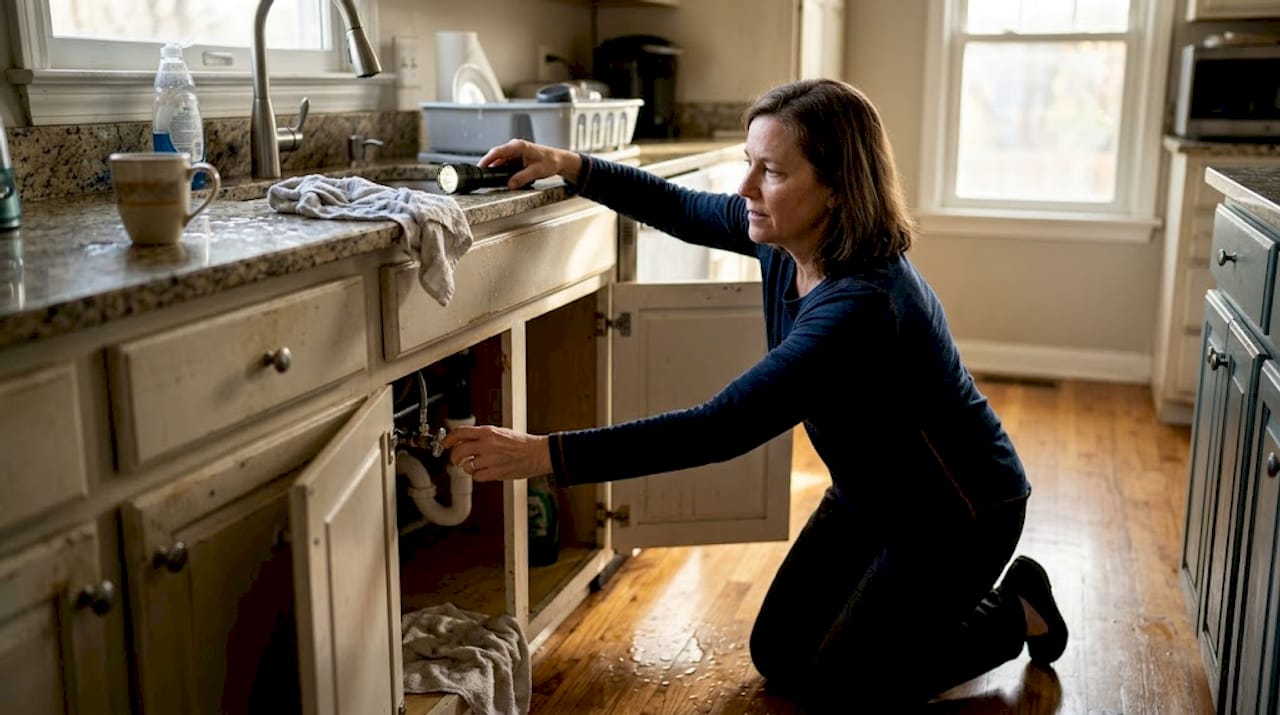
It’s midnight. Water is pouring from a burst pipe under your kitchen sink, soaking the cabinets and creeping toward the hardwood floor. Your heart is racing, and you have no idea what to call first. Every homeowner faces a moment like this eventually, and the difference between a manageable fix and a financial disaster almost always comes down to knowing exactly what to do in the first 30 minutes. This guide walks you through a proven, step-by-step process for handling emergency home repairs, from containing the damage to coordinating professionals and protecting your wallet.
Table of Contents
- Identify and contain the emergency
- Document damage and start communication
- Coordinate with professionals and insurance
- Accessing financial and government assistance
- Restoring your home and future-proofing against emergencies
- What most homeowners miss about emergency repairs
- Get proactive about home repairs with WorkbenchGuide
- Frequently asked questions
Key Takeaways
| Point | Details |
|---|---|
| React fast and contain hazards | Quick action and basic safety measures can greatly limit damage during emergencies. |
| Document everything for claims | Detailed records and timely insurance communication ensure smoother and faster repairs. |
| Explore all financial aid options | Grants, loans, and insurance can ease repair costs, so know what you may qualify for. |
| Use checklists and digital tools | Modern repair tracking and reminders help avoid repeat emergencies and manage the process stress-free. |
Identify and contain the emergency
The very first thing you need to do when a home crisis hits is identify what you are dealing with and stop it from getting worse. Speed matters here. A slow response can turn a $500 repair into a $5,000 one.
Common emergencies include burst pipes, roof damage, and HVAC breakdowns, and any of them can escalate fast if left unaddressed. Knowing the type of emergency tells you which utility to shut off and whether you need 911 or a licensed contractor.
Here is a quick comparison of common emergencies and the right first response:
| Emergency type | Immediate action | Call who first |
|---|---|---|
| Burst pipe | Shut off main water valve | Emergency plumber |
| Roof leak | Contain with buckets, cover with tarp | Roofing contractor |
| HVAC failure | Turn off system at thermostat | HVAC technician |
| Electrical hazard | Shut off circuit breaker | Electrician or 911 |
| Gas leak | Evacuate, do not use switches | 911 and gas company |
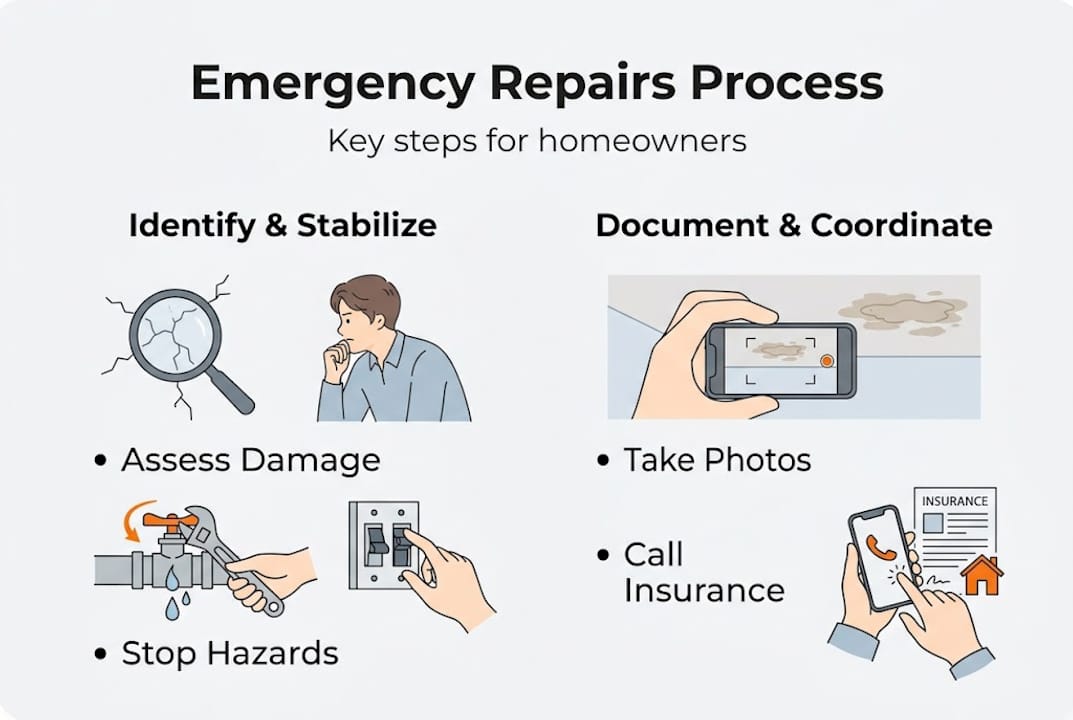
Once you know what you are dealing with, focus on containment:
- Shut off the water main for any plumbing emergency
- Kill power at the breaker for electrical issues
- Block airflow to slow fire spread if safe to do so
- Place towels or buckets to limit water spread
- Keep children and pets away from the affected area
If there is any risk to life, call 911 first. Everything else can wait.
One thing many homeowners overlook: dust control during renovations is critical to avoid hazardous exposures, especially in older homes where lead paint or asbestos may be present. Even emergency repairs can disturb these materials, so always prioritize structural stability over cosmetic fixes.
Pro Tip: Walk your home once and locate your main water shutoff, electrical panel, and gas valve. Photograph their locations and save them in your phone. When panic sets in, you will not have to guess.
Being proactive about these basics is exactly what preventing costly repairs is all about. A solid home maintenance checklist can help you stay ahead of the systems most likely to fail.
Document damage and start communication
Once the situation is stable, it is time to capture details and reach the right contacts. Documentation is not just paperwork. It is your financial protection.
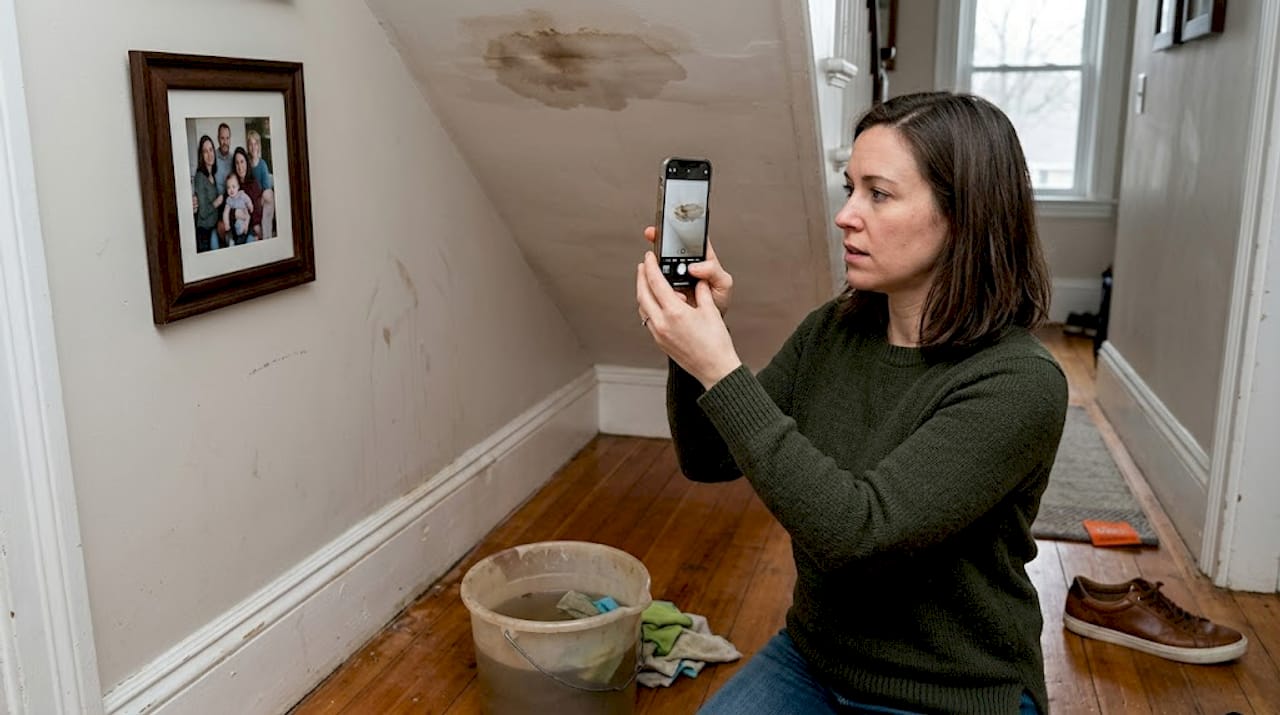
Insurance companies need evidence. The more thorough your records, the faster your claim moves. Filing within 24-48 hours with solid documentation is critical, as average repair completion runs nearly 30 days from the date of the incident.
Follow these steps in order:
- Photograph everything before touching or cleaning anything. Capture wide shots and close-ups.
- Record a video walkthrough narrating what happened and what you see.
- List damaged items with estimated values, model numbers if available, and purchase dates.
- Save all receipts for emergency supplies, temporary fixes, and hotel stays if displaced.
- Call your insurance company to open a claim and get a claim number.
- Contact emergency services or a contractor depending on the severity.
- Notify your mortgage lender if the damage is significant, since they may have requirements tied to your homeowner’s policy.
Here is a simple reference for who to contact and when:
| Contact | When to call | What to have ready |
|---|---|---|
| Insurance company | Within 24-48 hours | Photos, policy number, damage list |
| Emergency contractor | Immediately if unsafe | Description of damage, address |
| Mortgage lender | Within 48-72 hours | Claim number, repair estimate |
| Local authorities | If safety is at risk | Incident details |
Pro Tip: Start a home repair log right now, even if nothing is broken. A running record of maintenance, repairs, and contractor contacts becomes invaluable when an emergency hits. First-time homeowners especially benefit from this habit, and first-time homeowner tips can help you build that system from day one.
If you are unsure how the claims process works, learn how it works before an emergency forces you to figure it out under pressure.
Coordinate with professionals and insurance
After reporting the emergency, it is time to mobilize repairs and manage claims. This is where organization pays off.
Choosing the right professional matters. A general handyman is not the right call for a burst pipe or a failed electrical panel. Match the trade to the problem:
- Plumber for water supply, drainage, or sewage issues
- Electrician for panel problems, wiring failures, or outages
- Roofer for storm damage, missing shingles, or active leaks
- HVAC technician for heating or cooling system failures
- Structural engineer if you suspect foundation or load-bearing damage
Get at least two estimates when time allows, and always verify licenses and insurance before anyone starts work.
On the insurance side, claim payment averages 40.7 days in 2026, though digital tools and direct repair programs are shortening that timeline. Many insurers now offer apps that let you upload photos, track claim status, and communicate with adjusters in real time. Use them.
Key statistic: Average repair completion is 29.6 days. Average insurance payment is 40.7 days. That gap means you may need to cover some costs upfront.
Some insurers offer a direct repair program, where they connect you with pre-vetted contractors. These programs can speed things up, but always read the fine print. You generally have the right to choose your own contractor.
Pro Tip: Assign one person in your household as the single point of contact for all repair and insurance communication. Juggling multiple voices creates confusion and slows everything down.
Our repair checklists can help you track every step of the coordination process, and the home repair advice on our blog covers specific trade scenarios in detail.
Accessing financial and government assistance
Beyond insurance, some emergencies need outside funding or special assistance. Not every homeowner has a fully stocked emergency fund, and that is okay. There are real options available.
Here is an overview of the main sources of financial help:
- Homeowner’s insurance covers most sudden and accidental damage, subject to your deductible
- USDA Section 504 loans and grants provide up to $40,000 for repairs at 1% interest for eligible rural homeowners, with grants available for elderly or low-income households to remove health and safety hazards
- FEMA disaster assistance helps qualified households after federally declared disasters
- HUD-approved housing counselors can guide you through local and state programs
- Personal loans or home equity lines of credit (HELOCs) offer fast access to funds if you have equity built up
- City and county programs sometimes offer emergency repair grants, especially for seniors
To apply for government programs, gather these documents in advance: proof of income, proof of homeownership, a repair estimate from a licensed contractor, and any insurance denial letters if applicable.
“USDA Section 504 grants may cover the full cost of hazard removal for elderly and low-income homeowners who cannot repay a loan. This is one of the most underused resources in emergency home repair.”
Do not wait until you are in crisis to research these options. Bookmark the USDA and FEMA program pages now. More homeowner financial tips are available on our blog if you want to plan ahead.
Restoring your home and future-proofing against emergencies
With repairs complete, focus turns to preventing a repeat emergency and building long-term peace of mind. Restoration is not just about fixing what broke. It is about making sure it does not break again.
Follow these steps after any major repair:
- Conduct a final walkthrough with your contractor before signing off on the work. Check that everything matches the written scope.
- Get all warranties in writing. Most professional repairs come with a labor warranty. Know what it covers and for how long.
- Document the completed work with photos and receipts. Add them to your home repair log.
- Schedule a follow-up inspection 30 to 60 days after completion to catch any issues that surface later.
- Update your home inventory to reflect any replaced appliances, fixtures, or structural elements.
The EPA recommends focusing on structural stability during restoration rather than cosmetic improvements, and using modern inspection tools to verify the work is sound before closing out the project.
For ongoing prevention, set recurring reminders for your highest-risk systems. HVAC filters, water heater inspections, roof checks after storms, and gutter cleaning are the four most common sources of preventable emergencies. A few hours of routine maintenance each season can eliminate most of them.
Pro Tip: Use a digital reminder app or a platform like WorkbenchGuide to schedule seasonal checks. A 15-minute inspection of your water heater twice a year is far cheaper than an emergency replacement. Explore prevention strategies to build a system that works for your home.
What most homeowners miss about emergency repairs
Here is the part no one talks about enough: emotional stress is the biggest threat to a smooth recovery. When a pipe bursts or a roof fails, your brain shifts into survival mode. That is exactly when people forget to take photos, skip writing things down, or agree to a contractor’s verbal estimate without getting anything in writing.
The homeowners who recover fastest are not the ones with the most money. They are the ones who stayed organized under pressure. A simple maintenance checklist built before an emergency becomes a decision-making anchor when your hands are shaking.
Disorganization has hidden costs too. Missing a 48-hour claim window, losing a receipt, or failing to document pre-existing conditions can cost you thousands in denied coverage. The fix is not complicated. It is a folder, a log, and a habit of writing things down. Digital tools make this easier than ever, and the homeowners who use them consistently report far less stress when the unexpected hits.
Get proactive about home repairs with WorkbenchGuide
Handling an emergency is stressful enough without scrambling to find the right information at the worst possible moment.

WorkbenchGuide is built for exactly this situation. You can access step-by-step home repair guides for dozens of common emergencies, use the maintenance checklist to stay ahead of problems before they become crises, and set smart reminders for seasonal upkeep. Whether you are a first-time buyer or a seasoned homeowner, the WorkbenchGuide platform gives you one organized place to track repairs, store contractor contacts, and know exactly what to do next. Start before the next emergency finds you.
Frequently asked questions
What are the most common emergency home repairs?
Common emergencies include burst pipes, roof leaks, and HVAC breakdowns. These issues often require urgent professional help and can escalate quickly without fast action.
How quickly should I file an insurance claim after emergency damage?
File your claim within 24-48 hours and include photos and a damage list to avoid delays in approval and repair scheduling.
Are there grants or loans available for urgent home fixes?
Yes, USDA Section 504 loans and grants and FEMA disaster aid can help eligible households cover the cost of urgent hazard repairs.
How long does an emergency home repair typically take?
Average repair completion runs about 29.6 days, with insurance payments arriving in roughly 40.7 days on average.
What should I do first in a home emergency?
Immediately contain the problem by shutting off utilities and securing the area. Structural stability and hazard containment always come before cosmetic concerns.
Recommended
- Blog – WorkbenchGuide
- Preventing Costly Home Repairs: The Small Checks That Save Thousands – WorkbenchGuide
- WorkbenchGuide – Modern home maintenance platform with DIY guides, schedules, checklists, and task tracking to help owners and managers care for properties confidently.
- First-Time Homeowner Tips: A Simple System for the First 90 Days – WorkbenchGuide