

Most homeowners assume that major repairs are just bad luck, something that happens out of the blue with no warning. The truth is most expensive home repairs are predictable and preventable. A small roof leak ignored for one season can turn into thousands of dollars in structural damage. A clogged dryer vent can start a fire. Preventative maintenance simply means taking scheduled, proactive steps to keep your home’s systems and structure in good shape before problems develop. This guide walks you through the real costs of skipping maintenance, the core principles of a solid routine, and a practical plan you can actually stick to.
Table of Contents
- Why preventative maintenance matters: The hidden costs of doing nothing
- Core principles of preventative home maintenance
- Step-by-step: A practical routine for every homeowner
- Common mistakes and smart solutions for real homes
- A homeowner’s perspective: What really makes preventative maintenance stick
- Easily stay on top of home maintenance with WorkbenchGuide
- Frequently asked questions
Key Takeaways
| Point | Details |
|---|---|
| Prevention saves money | Catching problems early can save up to 10-20 times compared to emergency repairs. |
| Simple routines work best | Monthly and seasonal checklists keep your home in top shape without overwhelm. |
| Start with safety tasks | Focus first on HVAC, plumbing leaks, and smoke or CO detectors for maximum impact. |
| Batch and automate reminders | Use apps or family calendars to make preventive maintenance manageable for everyone. |
Why preventative maintenance matters: The hidden costs of doing nothing
Most people wait until something breaks before they fix it. That reactive approach feels normal because repairs seem unavoidable. But proactive home maintenance extends asset life by 20%, cuts energy costs by 10 to 20%, and prevents the kind of cascading damage where a small leak becomes $15,000 in water damage. Reactive maintenance almost always costs more because you’re paying emergency premiums, losing warranties, and dealing with damage that spread while you waited.
“The single most expensive word in home ownership is ‘eventually.’ Eventually I’ll fix that drip. Eventually I’ll clean those gutters. Eventually always costs more than now.”
Think about what that looks like in real numbers. A routine HVAC service call costs $100 to $200. Replacing a failed HVAC unit because it was never serviced runs $5,000 to $12,000. Cleaning your gutters twice a year costs a few hours or $150 to a contractor. Repairing the fascia, soffit, and foundation damage from years of overflowing gutters can run $3,000 to $8,000. The math is never close.
What’s actually at risk when you skip maintenance?
Here are the most common and costly problems that develop when homeowners take a reactive approach:
- Water leaks and moisture intrusion: Small drips behind walls or under sinks cause mold, rot, and structural damage over months.
- HVAC system failure: Filters clogged with dust make systems work harder, shortening their lifespan dramatically.
- Appliance breakdowns: Refrigerators, water heaters, and dishwashers all have maintenance needs that, when ignored, lead to early failure.
- Roof damage: Missing shingles or cracked flashing let water in, and the damage spreads fast once it starts.
- Electrical and fire hazards: Overloaded circuits, worn wiring, and clogged dryer vents are leading causes of house fires.
Beyond the financial hit, there’s the stress factor. Emergency repairs don’t happen at convenient times. They happen on holiday weekends, during cold snaps, or right before you’re trying to sell the house. Preventing costly home repairs through consistent small checks is genuinely one of the highest-return habits a homeowner can build. You can also review a home repair savings breakdown to see exactly how much routine care saves over time compared to emergency fixes.
The bottom line: doing nothing is never free. It’s just a delayed payment with interest.
Core principles of preventative home maintenance
Preventative maintenance is proactive, scheduled care. It’s not about fixing things that are broken. It’s about inspecting, cleaning, testing, and servicing your home’s systems on a regular schedule so they stay in working order. Think of it the same way you think about oil changes for your car. You don’t wait for the engine to seize. You follow a schedule.
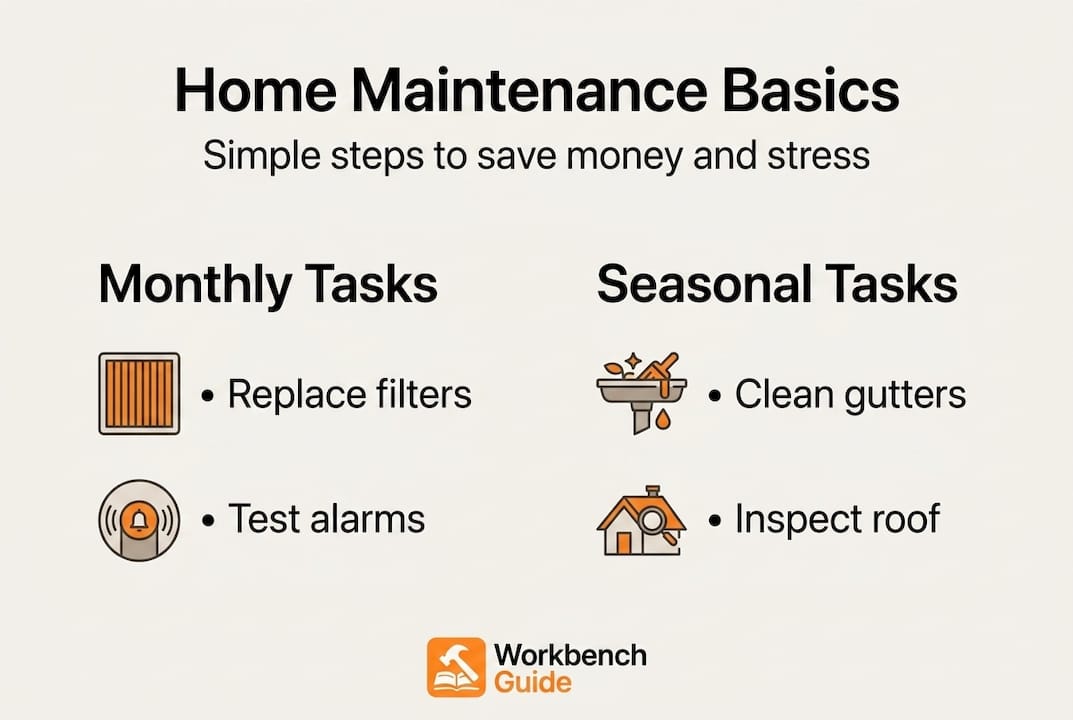
A home maintenance guide from Freddie Mac breaks down the practical tasks every homeowner should follow, month by month and season by season. Here’s a simplified view of what that looks like:
| Frequency | Example tasks |
|---|---|
| Monthly | Replace HVAC filters, test smoke and CO detectors, check under sinks for leaks, clean range hood vents |
| Spring | Inspect roof and gutters, service AC unit, check window and door seals, clean out window wells |
| Summer | Clean dryer vents, inspect exterior paint and siding, check deck for rot or loose boards |
| Fall | Service furnace, flush water heater, winterize outdoor faucets, clean gutters again |
| Winter | Monitor attic for ice dams, change heating filters, check for drafts around doors and windows |
The four big categories of home maintenance every homeowner should track are:
- Safety systems: Smoke detectors, CO detectors, fire extinguishers, and electrical panels.
- Structural integrity: Roof, foundation, siding, windows, and doors.
- Home systems: HVAC, plumbing, water heater, and electrical.
- Exterior and drainage: Gutters, downspouts, grading, driveways, and landscaping near the foundation.
Working through these categories in order keeps you focused on what matters most. Safety first, then structure, then systems, then exterior. That priority order ensures that if you’re short on time or budget, you’re protecting the things that matter most.
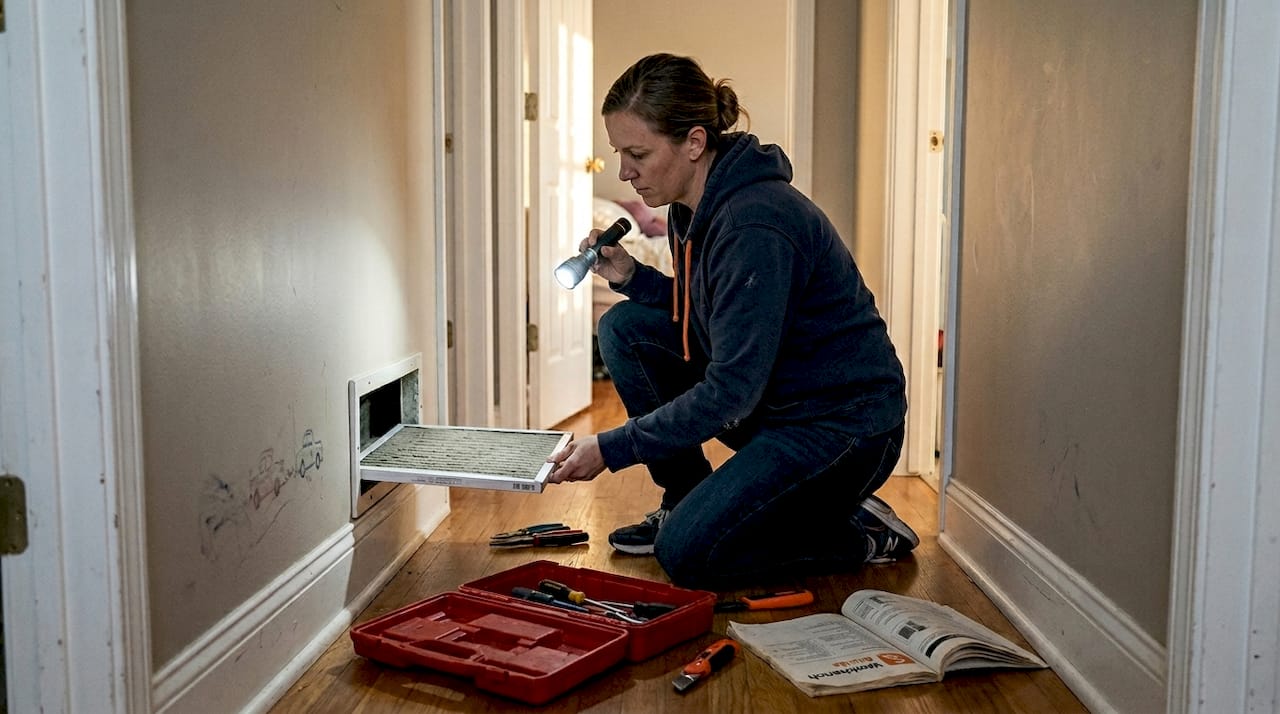
Pro Tip: Don’t try to tackle everything at once. Pick two or three tasks per month and rotate through your categories. A full home maintenance checklist organized by season makes this much easier to manage without feeling overwhelmed. You can also browse guides and checklists to find task-specific step-by-step instructions for each category.
The goal is consistency, not perfection. A homeowner who does 70% of the right tasks on a regular schedule will always come out ahead of one who plans a perfect routine but never follows through.
Step-by-step: A practical routine for every homeowner
Knowing what to do is only half the battle. The other half is actually doing it on a consistent schedule without burning out. Here’s a practical routine you can follow throughout the year, organized to keep the workload manageable.
Monthly tasks (takes about 30 minutes):
- Replace or inspect HVAC filters (1-inch filters need monthly replacement; thicker filters every 3 months).
- Test smoke detectors and CO detectors by pressing the test button.
- Check under all sinks and around the toilet base for any signs of moisture or slow drips.
- Run water in guest bathrooms and rarely used fixtures to prevent drain traps from drying out.
- Clean the kitchen range hood filter to prevent grease buildup and fire risk.
Seasonal deep checks (takes 2 to 4 hours per season):
- Spring: Walk the roof perimeter from the ground with binoculars, clean gutters, schedule AC service, inspect window caulking.
- Summer: Clean the dryer vent from the outside, inspect deck boards and railings, check exterior paint for peeling or cracking.
- Fall: Schedule furnace service, flush sediment from the water heater, disconnect and drain garden hoses, clean gutters again after leaves fall.
- Winter: Check attic insulation for moisture or ice dam signs, replace heating filters, inspect weatherstripping on all exterior doors.
According to a home maintenance checklist from ValuePenguin, preventive maintenance delivers a return on investment of 10 to 20 times what you’d spend on an emergency repair. That’s not a small margin. It’s the difference between a $150 furnace tune-up and a $6,000 furnace replacement in January.
Pro Tip: Set recurring calendar reminders on your phone for the first weekend of each month and the first weekend of each new season. Batching similar tasks together, like doing all your exterior checks in one Saturday walk-around, saves time and keeps the habit from feeling like a burden. Learning how home maintenance platforms help with automated reminders can take the mental load off completely.
Tools and supplies every homeowner should keep on hand:
- A good flashlight and a headlamp for attic and crawlspace checks
- A caulk gun and fresh tubes of exterior and interior caulk
- HVAC filters in the correct size for your unit (buy a 6-month supply at once)
- A voltage tester for basic electrical checks
- A garden hose with a pressure nozzle for flushing gutters and downspouts
- A moisture meter for checking walls near plumbing or in the basement
If you’re new to owning a home, first-time homeowner tips can help you build a solid system in your first 90 days before small oversights turn into bigger issues.
Common mistakes and smart solutions for real homes
Even homeowners with good intentions fall into predictable traps. The most common mistake isn’t laziness. It’s overcomplicated systems that feel like too much work, so nothing gets done at all. Here’s what to watch for.
The five most common home maintenance mistakes:
- Ignoring small leaks: A slow drip under a sink or around a toilet base seems minor. Left alone for months, it rots the subfloor and creates mold behind the cabinet.
- Skipping detector tests: Smoke and CO detectors with dead batteries or expired sensors are a genuine safety risk. Testing takes 10 seconds.
- Forgetting gutters: Gutters clogged with leaves and debris push water against the fascia, into the soffit, and eventually down the foundation wall. Clean them twice a year minimum.
- Not documenting tasks: Without a record of what you’ve done and when, you’ll either repeat tasks unnecessarily or miss critical ones entirely.
- Ignoring seasonal prep: Outdoor faucets left connected in freezing weather burst pipes. AC units not serviced before summer fail on the hottest day of the year.
A 2025 Cost of Home Safety Report from NerdWallet found that 61% of homeowners handle maintenance reactively, which leads to higher costs and debt. Professionals consistently recommend doing a fresh-eye walkthrough of your home twice a year, ideally in spring and fall, to catch issues you’ve stopped noticing because they’ve become part of the background.
“Walk through your home like you’re a buyer seeing it for the first time. Look at the ceiling, the baseboards, the corners of windows. You’ll find things you’ve been walking past for months.”
Smart solutions that actually work:
Build a simple habit loop. After you pay your monthly utility bill, spend 30 minutes on your monthly maintenance checklist. Tie the new habit to something you already do consistently. Create a shared family checklist using a free app or even a printed sheet on the fridge. When kids are old enough, involve them in simple tasks like testing detectors or checking for leaks under sinks. This makes maintenance feel like a household norm rather than one person’s burden.
Celebrate small wins. When you finish your fall seasonal checklist, acknowledge it. You just protected your home from thousands of dollars in potential damage. That’s worth recognizing. You can find ongoing home maintenance tips and updates to keep your knowledge current and your motivation up throughout the year.
Progress always beats perfection. Missing one month of filter changes won’t ruin your HVAC. But consistently skipping maintenance for two or three years absolutely will.
A homeowner’s perspective: What really makes preventative maintenance stick
Here’s the honest truth most checklists won’t tell you: information is not the problem. You can find a perfect 52-week home maintenance schedule in five minutes online. The real challenge is motivation, habit formation, and getting your household on board.
Most homeowners who fall behind on maintenance don’t do so because they don’t know what to do. They do so because the routine never became a routine. It stayed on a list somewhere. The fix isn’t a better checklist. It’s making maintenance social and visible. When a family tracks tasks together, shares the wins, and celebrates a completed seasonal check, it stops feeling like a chore and starts feeling like something the household does together.
We’ve also seen that perfectionism is the enemy of consistency. Homeowners who try to do everything perfectly from day one burn out fast. The ones who do well long-term start with two or three high-priority tasks and build from there. Understanding how it works with a simple system that grows with you makes all the difference. Small, consistent action beats a perfect plan that never gets executed.
Easily stay on top of home maintenance with WorkbenchGuide
Knowing what to do is a great start. Actually staying on schedule throughout the year is where most homeowners need support. WorkbenchGuide gives you ready-made maintenance routines, seasonal reminders, step-by-step DIY guides, and project checklists all in one place. Instead of trying to remember what needs doing and when, you can explore WorkbenchGuide and let the system keep you on track automatically. See the full home maintenance checklist to get started with a clear, organized plan, or download free guides for specific tasks around the house. When a job is beyond DIY, WorkbenchGuide connects you with trusted contractors so you always know your next step.
Frequently asked questions
What is preventative maintenance for a home?
Preventative maintenance is routine, proactive care like inspections and servicing that keeps your home in good condition and prevents costly breakdowns. A home maintenance guide from Freddie Mac outlines monthly and seasonal tasks every homeowner should follow.
How does preventative maintenance save money?
Preventive care exposes problems early, extending asset life and often saving you 10 to 20 times what you’d pay for an emergency repair. Proactive maintenance also cuts energy costs by 10 to 20% and preserves your home’s warranties and resale value.
What tasks should I do regularly for home prevention?
Monthly tasks include replacing HVAC filters, testing detectors, checking for leaks, and cleaning vents. Seasonally, you should inspect the roof, service HVAC, clean gutters, and winterize plumbing, as outlined in this seasonal maintenance checklist.
How can I remember maintenance tasks throughout the year?
Use a home maintenance app or set calendar reminders to stay consistent all year long. A home maintenance checklist from ValuePenguin recommends batching seasonal tasks and starting with safety-critical items like HVAC and leak checks to get the highest return on your time.
Recommended
- Preventing Costly Home Repairs: The Small Checks That Save Thousands – WorkbenchGuide
- Pricing – WorkbenchGuide
- Blog – WorkbenchGuide
- WorkbenchGuide – Modern home maintenance platform with DIY guides, schedules, checklists, and task tracking to help owners and managers care for properties confidently.
Leave a Reply